Est. 1846 · Garden Cemetery Movement · Egyptian Revival Gatehouse · Gothic Chapel of the Resurrection · Schuylkill County Anthracite Heritage
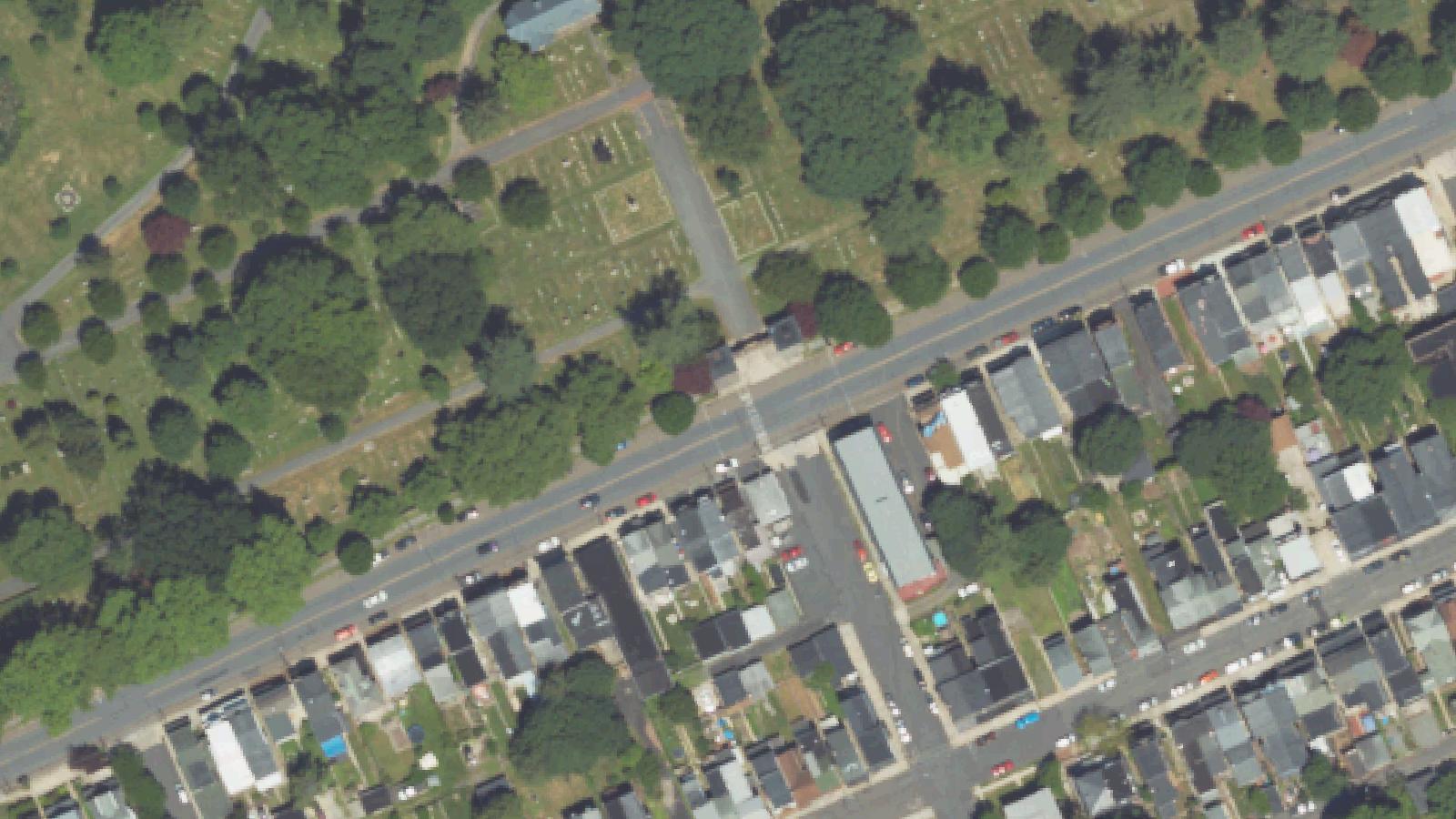
Charles Baber Cemetery occupies twenty-five acres of central Pottsville, running along Market Street between 12th and 16th streets. It was developed in the rural, or garden, cemetery tradition that spread through the United States in the mid-19th century, placing burials in a landscaped park rather than a churchyard.
The cemetery began next to Trinity Episcopal Church's Mt. Laurel Cemetery and developed under the patronage of Charles Baber, a Pottsville benefactor. Between 1876 and 1880 Baber built a grey-stone Gothic chapel — the Chapel of the Resurrection — within the grounds at a cost of about $25,000, and opened the cemetery to the public for burials. When Baber died in 1885, Trinity Episcopal Church was named trustee, and in 1887 the Baber and Mt. Laurel cemeteries were formally merged.
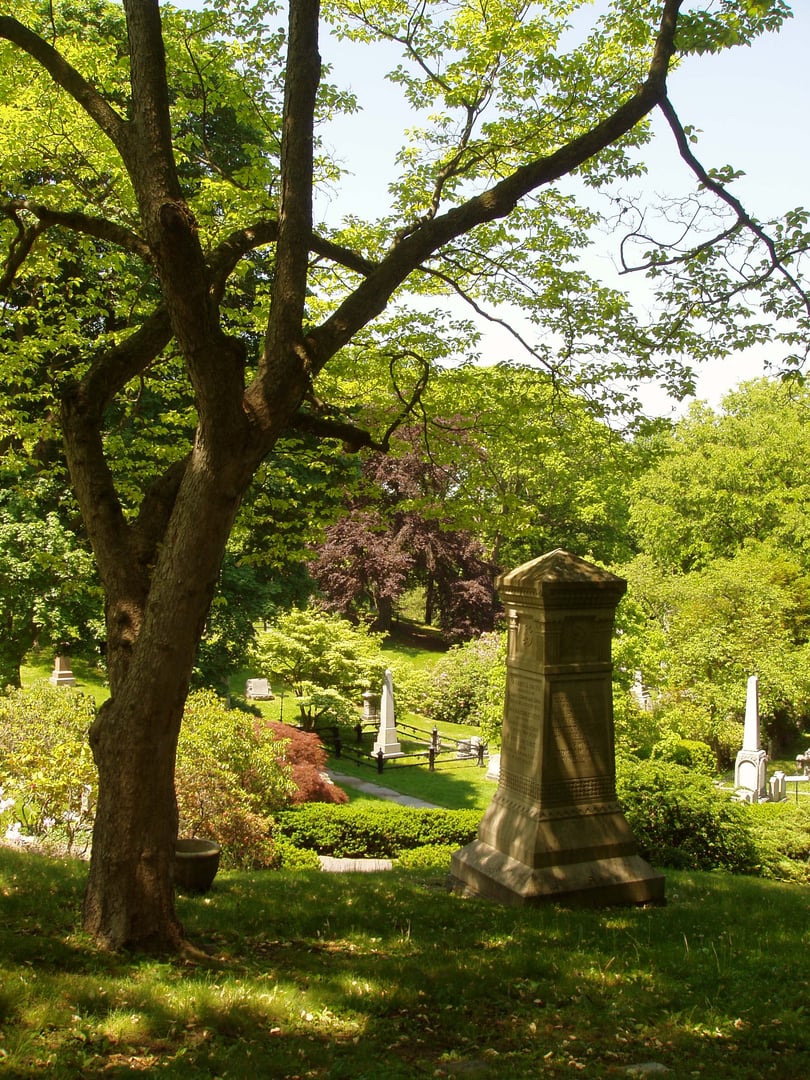
The grounds are entered through an Egyptian Revival gatehouse set on axis with 14th Street, flanked by stone cubes with cavetto cornices, and bounded along Market Street by a long tree-lined stone wall. Mature white oaks and Norway maples shade the monuments. The chapel remains in use for funerals and other services and has historically hosted Sunday services in the summer months.
A preservation trust now maintains the cemetery. It stands as a representative example of the garden-cemetery movement in the anthracite-coal region of Schuylkill County, and its prominence at the western edge of 19th-century Pottsville placed it at the center of one of the town's best-known ghost stories.
Sources
- http://babercemetery.org/baber/the-history-of-charles-baber-garden-cemetery/
- https://en.wikipedia.org/wiki/Charles_Baber_Cemetery
- https://wynninghistory.com/2024/10/31/a-ghost-story-from-pottsville-1865/
ApparitionWhite figureVanishing entityUnexplained light extinguishings
The Charles Baber Cemetery's haunting reputation rests on a specific, dated newspaper account. On December 2, 1865, the Pottsville Miners' Journal reported that several witnesses had seen a white moving figure near Market Street by the cemetery, which then marked the western edge of town, between about 11 p.m. and 1 a.m. The transcription published by Wynning History records that the figure followed people up the road by the cemetery, that one observer described it bowing its head with theatrical solemnity, and that another tried to touch it only for it to vanish on contact.
The same account adds the detail that has kept the story in circulation: pistol balls and stones, it was said, had no effect on the figure. The reporter visited the site himself at midnight on a Tuesday and saw nothing, blaming either the bright moonlight or his own skepticism. The article also mentions two coal-oil lamps in a nearby coach shop that went out at the same moment, prompting the writer to joke about a nest of ghosts up Market Street.
The cemetery is now a featured stop on the Schuylkill County Historical Society's seasonal Haunted History walking tour, whose cemetery route gathers at 14th and Market streets. The pairing of a contemporaneous 1865 press account with a present-day guided tour is what distinguishes the site: the lore is older than most regional ghost stories and is anchored to a printed source rather than oral tradition alone.