Est. 1911 · Largest county relief institution in Oregon · National Register of Historic Places (1990) · Multnomah County Poor Farm · Early-20th-century institutional architecture
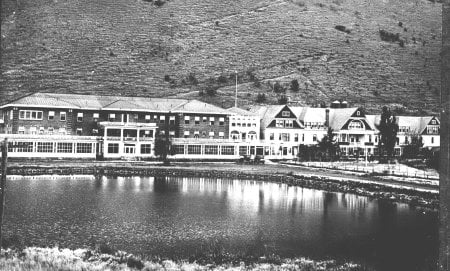
The Multnomah County Poor Farm opened in November 1911 when 211 residents were relocated from Hillside Farm, an earlier and deteriorating poor farm in Portland's West Hills. The new Troutdale facility quickly became the largest county-funded relief institution in Oregon, intended to let the poor support themselves by farming the surrounding land.
At its height during the Great Depression, the property encompassed roughly 345 acres and housed about 614 residents in 1935. The complex included a working farm, an infirmary that treated patients with tuberculosis and mental illness, a jail, and a morgue. Residents grew their own food and contributed labor in exchange for shelter, a model common to American poor farms of the era.
Over the following decades the institution transitioned from a self-sustaining farm to a nursing home known as Edgefield Manor. The facility finally closed in April 1982, and the buildings sat largely vacant and at risk of demolition.
The property was listed on the National Register of Historic Places on June 1, 1990 (reference number 90000844). That same period, brothers Mike and Brian McMenamin acquired the site and undertook a major restoration, converting the historic buildings into a hotel, brewery, winery, distillery, restaurants, gardens, a movie theater, a golf course, and an outdoor concert venue.
Today McMenamins Edgefield is one of the company's flagship destinations, drawing visitors for lodging, dining, music, and its preserved early-20th-century architecture in the Columbia River Gorge gateway town of Troutdale.
Sources
- https://en.wikipedia.org/wiki/Multnomah_County_Poor_Farm
- https://www.mcmenamins.com/edgefield
- https://usghostadventures.com/haunted-places/hauntings-of-mcmenamins-edgefield/
- https://seeksghosts.blogspot.com/2019/08/oregons-spooky-mcmenamins-edgefield.html
- https://www.oregonwinepress.com/spooked-at-mcmenamins
- https://boiseghost.org/resources/forum/topic/ghosts-at-the-mysterious-mcmenamins-edgefield-hotel-troutdale-oregon/
ApparitionsPhantom figures (nurse, janitor)Apparitional dogUnexplained sensations in former morgue
Edgefield's reputation as a haunted property is closely linked to the suffering documented during its decades as a poor farm and nursing home. According to accounts collected by ghost-tour operators and paranormal writers, the heaviest reported activity centers on Room 215, the most-requested room at the hotel precisely because of its reputation, as well as the entire second and third floors.
The winery occupies what was once the property's morgue, and staff and visitors describe unusual sensations and activity in the wine cellars below. McMenamins itself acknowledges the property's ghost stories, and the company's history-and-art program throughout its hotels openly documents reported hauntings.
The most frequently described apparitions include a nurse dressed in white, a former janitor, and a spectral dog seen on the grounds. Staff maintain an informal ghost log at the front desk where guests record their own experiences, a practice that has helped the stories accumulate over decades.
Because the reports are anecdotal and gathered largely through ghost-tour and paranormal-enthusiast channels, they are best understood as part of the property's living folklore rather than verified events. What is well documented is the genuine institutional history that gives those stories their emotional weight.
Notable Entities
Nurse in whiteFormer janitorGhost dog