Self-Guided Visit
Self-guided historic cemetery walk
Daylight visit to read the 'Escape of the 28' interpretive markers, locate Civil War and Black veteran graves, and view the children's marker. Treat as an active burial ground.
- Duration:
- 1 hr
HauntBound archive · catalog record
Reported phenomena, as catalogued
Founded 1843 in Cincinnati's Northside, Wesleyan was Hamilton County's first racially integrated cemetery and a documented Underground Railroad site; lore centers on children buried after an 1900 orphanage fire.
4003 Colerain Avenue, Cincinnati, OH 45223
Research updated June 2026
Age
All Ages
Cost
Free
Free to enter during daylight hours.
Access
Limited Access
Older cemetery with uneven ground, sloped sections, and historic markers; sidewalks along Colerain Avenue edge.
Equipment
Photos OK
Est. 1843 · Oldest continuously operating cemetery in Hamilton County (founded 1843) · First racially integrated cemetery in Hamilton County · National Park Service Network to Freedom site (designated 2014) · Site of the 1853 'Escape of the 28' funeral-procession Underground Railroad rescue led by John Fairfield · Burial place of Black Civil War veterans and Cincinnati abolitionists
Wesleyan Cemetery sits along Colerain Avenue in Cincinnati's Northside (historically Cumminsville). The Methodist Episcopal Church purchased the original twenty-five-acre tract in 1843 after its downtown burial ground behind Wesley Chapel had filled. From its founding, Wesleyan accepted both Black and white burials, making it the first racially integrated cemetery in Hamilton County — a status that mattered enormously in pre-Civil War Cincinnati, an Ohio River city where laws and customs around race were sharply enforced.
That integrated status is what made Wesleyan central to one of the most documented Underground Railroad rescues in the region. In April 1853, the white abolitionist John Fairfield led twenty-eight freedom-seekers from the area around Lawrenceburg, Indiana across the Ohio River and into Cincinnati. To move them through the city in daylight without arousing suspicion, Fairfield disguised the group as a funeral procession bound for Wesleyan Cemetery in Cumminsville — a credible destination precisely because Wesleyan accepted Black burials when other cemeteries did not. From Wesleyan the group was passed to the home of Levi Coffin, the famed Underground Railroad stationmaster, and eventually onward toward Canada. The episode is preserved as the 'Escape of the 28' and was added to the National Park Service's Network to Freedom in 2014.
Wesleyan also holds a significant population of Black Civil War veterans and Cincinnati's nineteenth-century abolitionist community. The cemetery fell into a long period of neglect during the twentieth century — the academic monograph 'The Cemetery Nobody Wanted' chronicles its century of disputed ownership before it formally became part of the City of Cincinnati in 1953 — but it remains in active use, with the city now responsible for maintenance.
A separate strand of local memory ties the cemetery to the 1900 Salvation Army Orphanage fire on Front Street in downtown Cincinnati, in which seven children died. According to local lore captured by Cincinnati's preservation community, those children were buried at Wesleyan with a marker; the children's marker is the focal point of the cemetery's modern ghost stories.
Sources
The dominant ghost story at Wesleyan Cemetery is tied to a real and grim 1900 event: a fire at the Salvation Army Orphanage on Front Street in downtown Cincinnati that killed seven children. According to local accounts collected by Cincinnati preservation outlets and paranormal writers (WVXU; Cincinnati Preservation), those children were buried at Wesleyan and marked with a single memorial. The lore says that people walking the public sidewalk along Colerain Avenue, which passes within feet of the children's section, have at times reported hearing children crying or calling out for help from inside the cemetery (WVXU).
A second strand of the cemetery's reputation is rooted not in supernatural sightings but in cultural memory of the Underground Railroad rescue: visitors describe a heaviness or sense of being watched among the older Black veteran graves and the section associated with the 1853 funeral-procession crossing (Cincinnati Preservation). These reports are framed as 'sensed presence' more than apparition sightings, and they cluster around the markers associated with the Escape of the 28 narrative.
The cemetery's modern paranormal profile was elevated by a Season 3 (2015) episode of the Travel Channel's Mysteries at the Monument, which used Wesleyan as the setting for retelling the Escape of the 28. The show's framing is historical rather than ghost-hunting, and most legitimate sources covering Wesleyan emphasize that this is a site of trauma memory — Underground Railroad escape, child deaths from the 1900 fire, Black Civil War veterans — rather than a 'haunted attraction.'
Notable Entities
Media Appearances
Daylight visit to read the 'Escape of the 28' interpretive markers, locate Civil War and Black veteran graves, and view the children's marker. Treat as an active burial ground.
Some links on this page may earn HauntBound a small commission when you book, at no extra cost to you. Our editorial picks are independent. Full disclosure
Every HauntBound history is researched from documented sources. We clearly separate verified historical fact from paranormal folklore.
Free Guide
11 verified stops, rated for families, mapped in order. Free.
One email to confirm, then the guide link. Unsubscribe anytime.
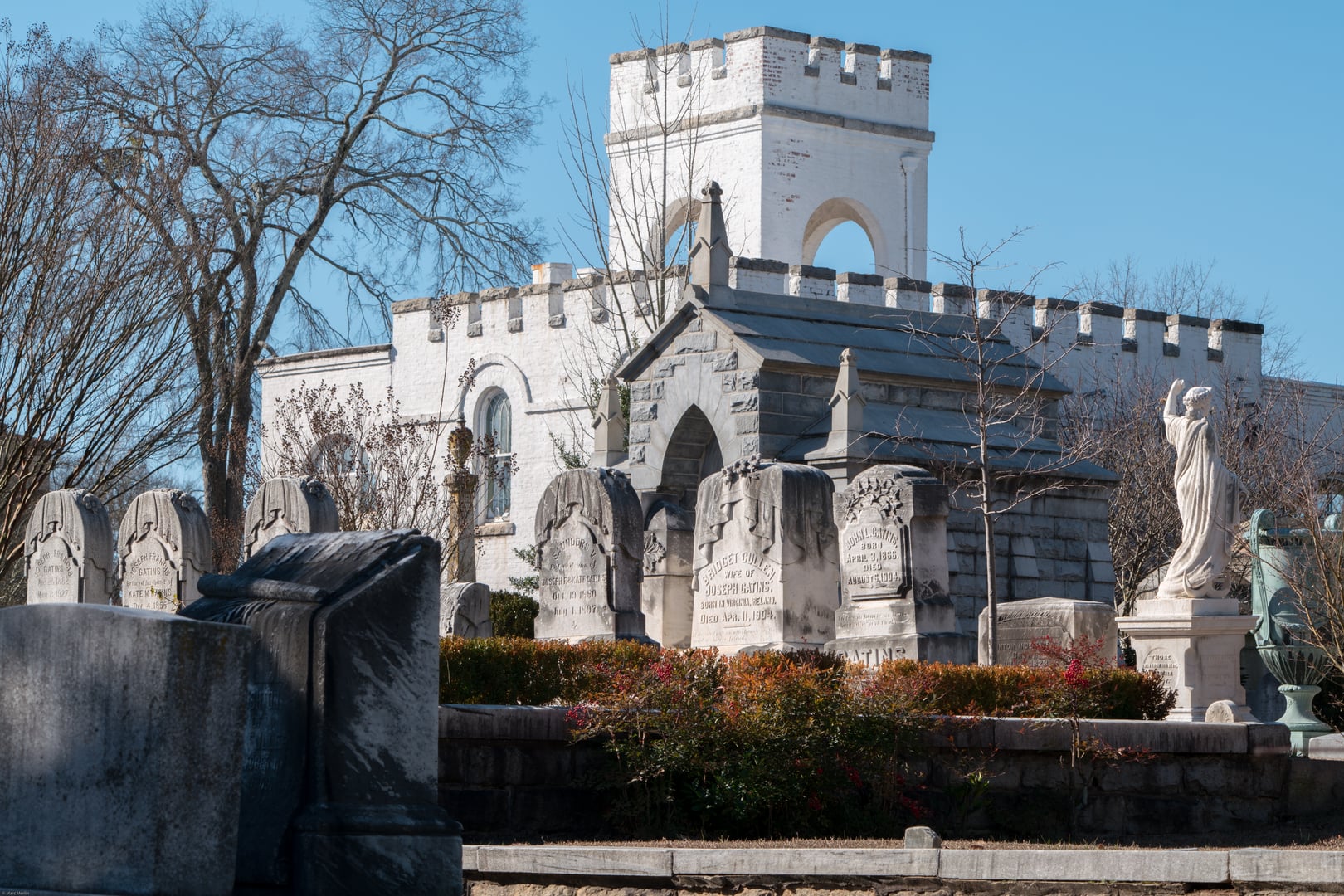
Atlanta, GA
Historic Oakland Cemetery was chartered in 1850 as the six-acre 'Atlanta Cemetery,' renamed Oakland in 1872, and expanded to 48 acres. Approximately 70,000 people are interred, including roughly 6,900 Confederate soldiers (3,000 unidentified), four Confederate generals, six Georgia governors, 27 Atlanta mayors, Margaret Mitchell, golfer Bobby Jones, and Maynard Jackson, Atlanta's first African American mayor. The cemetery was listed on the National Register of Historic Places on April 28, 1976.
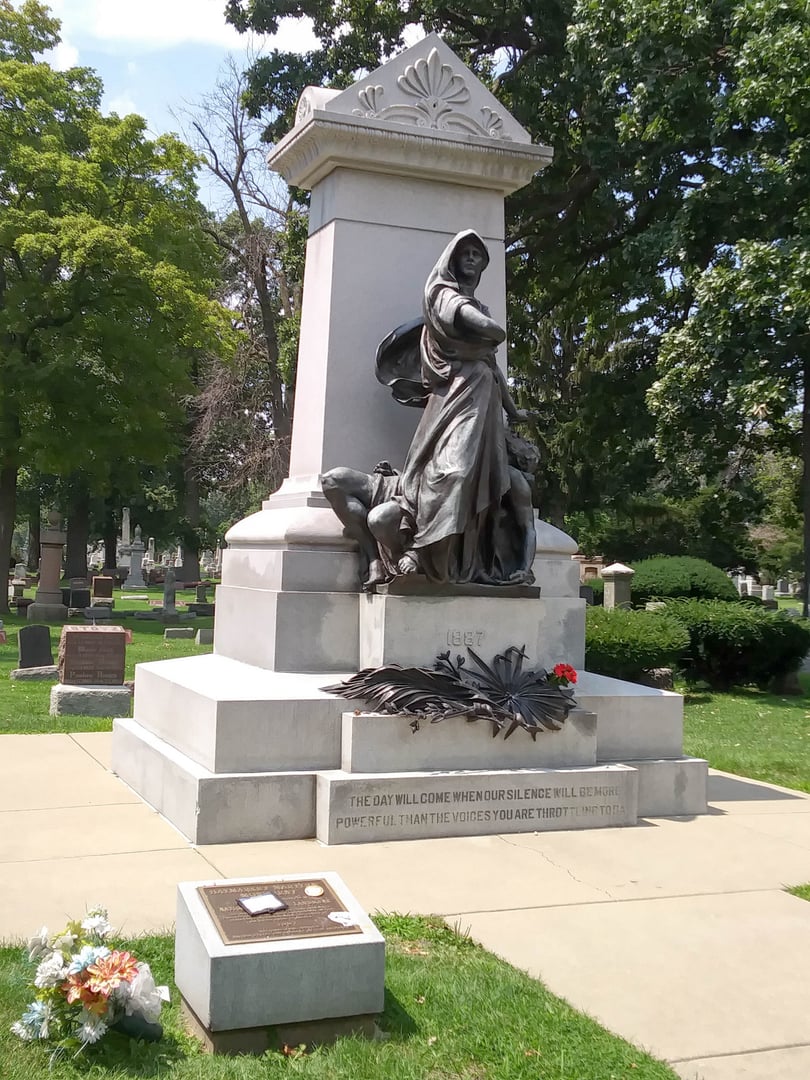
Forest Park, IL
Forest Home Cemetery in Forest Park, Illinois, grew from two adjacent cemeteries — German Waldheim (established 1873) and Forest Home (1876) — which merged in February 1969. The 220-acre site was chosen as a non-denominational burial ground, a policy that made it the only Chicago-area cemetery willing to accept the bodies of the Haymarket defendants in 1887.
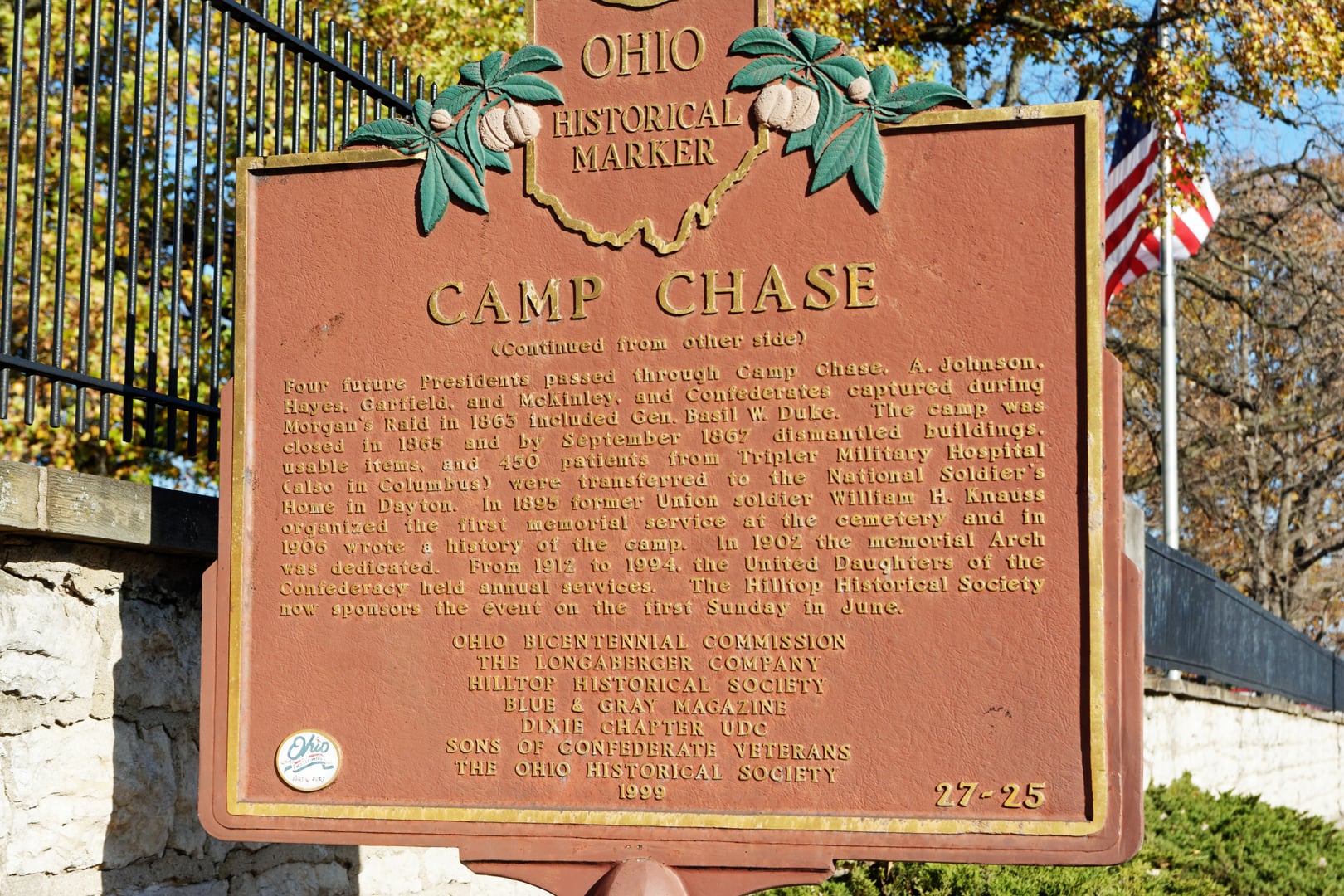
Columbus, OH
Camp Chase was a Union training camp and Confederate prisoner-of-war camp operating in Columbus from May 1861 to 1865. The adjacent national cemetery contains 2,260 graves of Confederate prisoners who died in captivity — primarily from smallpox, dysentery, and pneumonia in overcrowded barracks. The cemetery is now administered by the U.S. Department of Veterans Affairs.