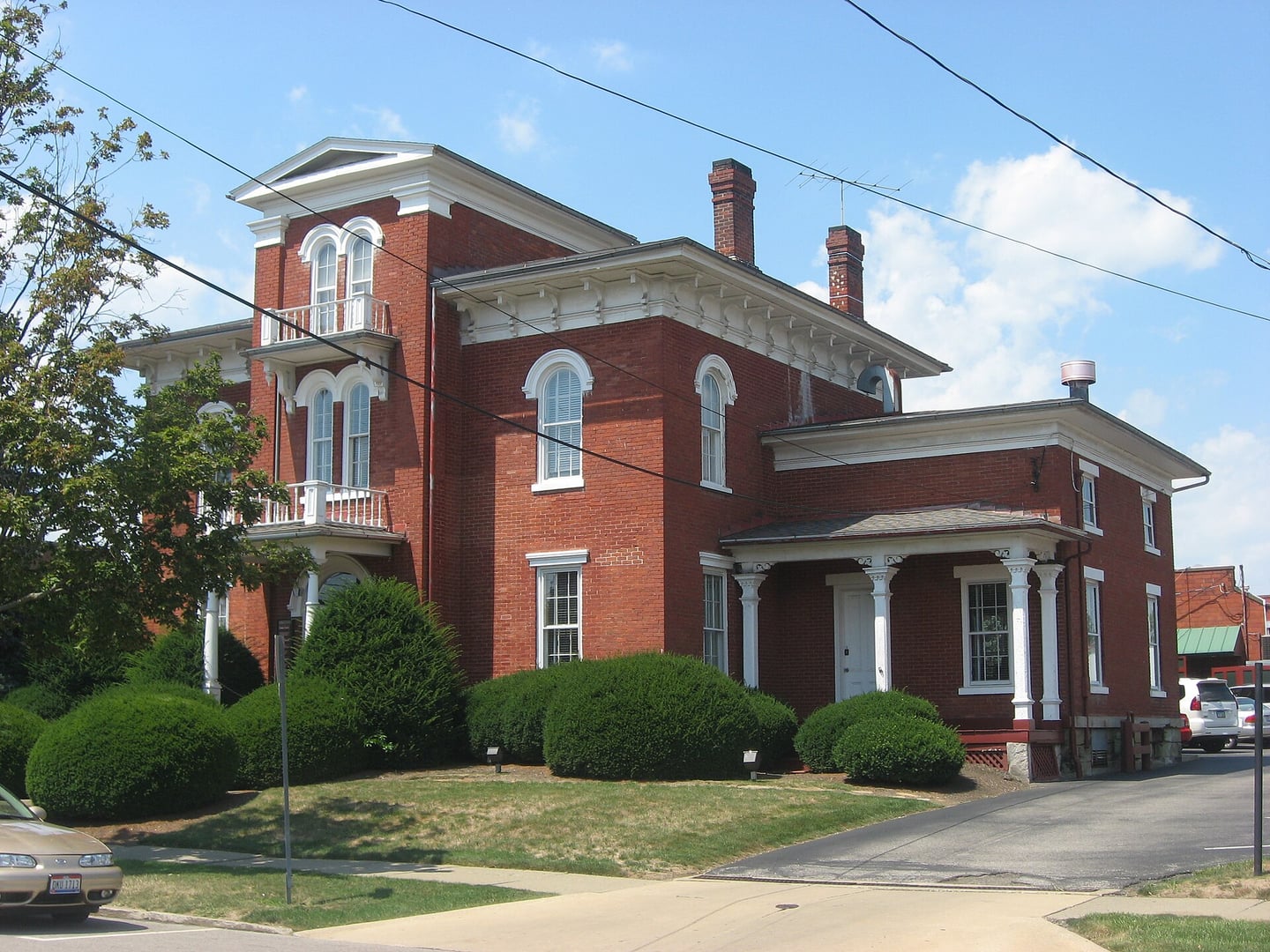
Est. 1875 · Built 1875 as Erie Railroad passenger station · Passenger service ended 1970 · Converted to a restaurant, now Over Easy at the Depot · Original station architecture preserved in restaurant interior
The brick passenger station at Franklin Avenue in Kent was built in 1875 to serve the Erie Railroad's route through Portage County. Railroad traffic through Kent was substantial in the late 19th and early 20th centuries, and the station served both passenger travel and the logistical needs of a growing university town. The station's red brick construction and period details made it one of the more architecturally distinctive railroad buildings in the region.
Passenger rail service through Kent declined through the mid-20th century and ended in 1970. Rather than demolition, the depot was adapted for a new use: the Pufferbelly Restaurant, which took its name from the colloquial term for a steam locomotive, converted the station interior into a dining space. The original waiting-room hall, high ceilings, and period brick became the restaurant's primary character, and the building became a local landmark in downtown Kent.
The basement of the former depot—used for storage and back-of-house operations—is described in paranormal accounts as the most active area. The dungeon-like quality of railroad station basements, combined with the building's age and the anonymous nature of those who passed through its waiting room over nearly a century of service, provides the context for the ghost lore that attached to the building after its conversion.
Sources
- http://www.panicd.com/kent-train-depot.html
- https://www.ourhauntedtravels.com/post/5-interesting-haunted-places-in-kent-ohio
- https://usghostadventures.com/kent-ghost-tour/
ApparitionsObject displacementUnexplained sounds in basementSense of presenceEmployee pranks attributed to spirits
The paranormal accounts attached to the Kent Train Depot center on two figures. The first is described as a devoted conductor who continued to appear in the building after passenger service ended in 1970—a residual presence connected to the station's operational identity rather than to any specific death on the premises. The second figure is a young woman said to have been killed on the tracks adjacent to or near the depot during its railroad years.
The building's basement—used for restaurant storage—is consistently identified as the most active area. Staff accounts collected in the PANICd database describe the basement as 'dungeon-like' and note that ghosts there play harmless pranks on employees: objects moved, sounds without source, the sense of being watched in the confined space. These accounts are employee-reported rather than investigator-reported, which distinguishes the Kent Train Depot's ghost lore as embedded in the daily operation of the building rather than in one-time investigation events.
US Ghost Adventures includes the depot on its Kent ghost tour, positioning it among the city's better-documented haunted sites. The restaurant's position in a former transit hub—a place defined by arrivals and departures, by people passing through—lends the ghost narrative a particular plausibility: the conductor who stayed, the traveler who never left.