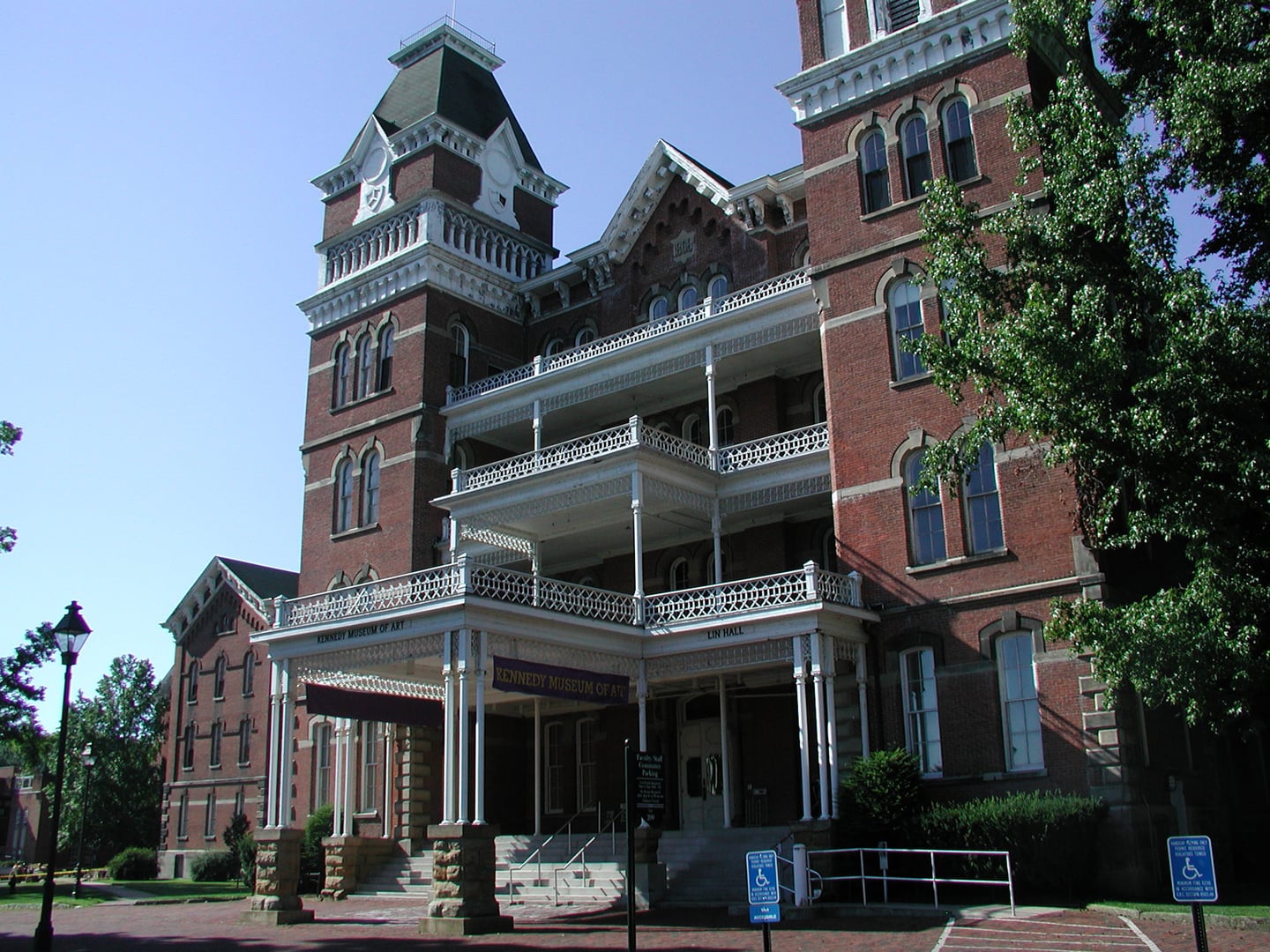
Est. 1855 · Southern Ohio Lunatic Asylum, one of the region's major 19th-century Kirkbride-plan institutions · National Register of Historic Places listing 1979 · Vacated 1978, partially destroyed by fire 1983, converted to senior apartments 1986 · Library of Congress HABS/HAER architectural documentation (item oh0402)
The Southern Ohio Lunatic Asylum was established in 1855 at a 300-acre site in Dayton. It was designed on the Kirkbride plan — named for Philadelphia psychiatrist Thomas Story Kirkbride — which called for a large central administrative building flanked by graded ward wings, set on substantial grounds intended to support therapeutic farming and outdoor activity. The structure was one of the largest institutional complexes in the region in the mid-nineteenth century.
The institution operated under various names through the course of the twentieth century, serving as the Dayton State Hospital for much of that time. The Library of Congress HABS/HAER collection (item oh0402) documents the historic structure. The hospital was vacated in 1978. In 1983, a fire damaged portions of the complex, leaving the surviving main building in partial ruin.
Rather than demolition, the surviving structure was converted: the main Kirkbride building was renovated and reopened in 1986 as 10 Wilmington Place, a senior apartment complex. The conversion preserved the building's exterior and portions of its interior. The NRHP listing, awarded in 1979 before the conversion, documented the Kirkbride design and the building's historical significance.
The Hospice of Dayton subsequently established its facilities on part of the original 300-acre asylum grounds. The site's current footprint is a mix of the converted residential building and hospice operations, with the original landscape largely built over or redeveloped.
Sources
- https://en.wikipedia.org/wiki/Southern_Ohio_Lunatic_Asylum
- https://www.loc.gov/item/oh0402/
Alleged dungeon with iron chains and cages beneath the building, per former staff accountsGeneral reports of unsettling experiences in the converted residential buildingPersistent institutional haunt reputation tied to 123 years of asylum operation
The haunted reputation of 10 Wilmington Place draws on two distinct bodies of lore: the institutional history of the Kirkbride building over its century-plus operational life, and a specific legend about the building's sub-basement.
The most-repeated specific claim concerns an alleged dungeon beneath the structure — described in local accounts as containing iron chains and cages used to restrain patients. Some former staff members, per regional dark-history coverage, have maintained that such a space existed, and that it was sealed or destroyed when the building was converted to apartments. The mask-of-reason.wordpress.com documentation of Ohio haunted sites records these dungeon claims alongside the site's general institutional history.
The physical conversion of the building to senior apartments in 1986 did not end the lore; in some accounts, it intensified it. Residents and visitors have described unsettling experiences in the building, though the active residential use makes systematic documentation difficult.
The dungeon claim itself remains unverified — no independent physical evidence has been publicly documented, and the claims exist primarily in staff oral accounts and regional ghost-history sources. They are presented here as local lore, not confirmed history.