Est. 1712 · Huntington's oldest surviving cemetery; dated markers from 1712 · Site of Fort Golgotha (1782) — built by Colonel Benjamin Thompson on the desecrated burial ground · 100+ gravestones removed for fort construction; used in baking ovens producing 'tombstone bread' · National Register of Historic Places since 1981
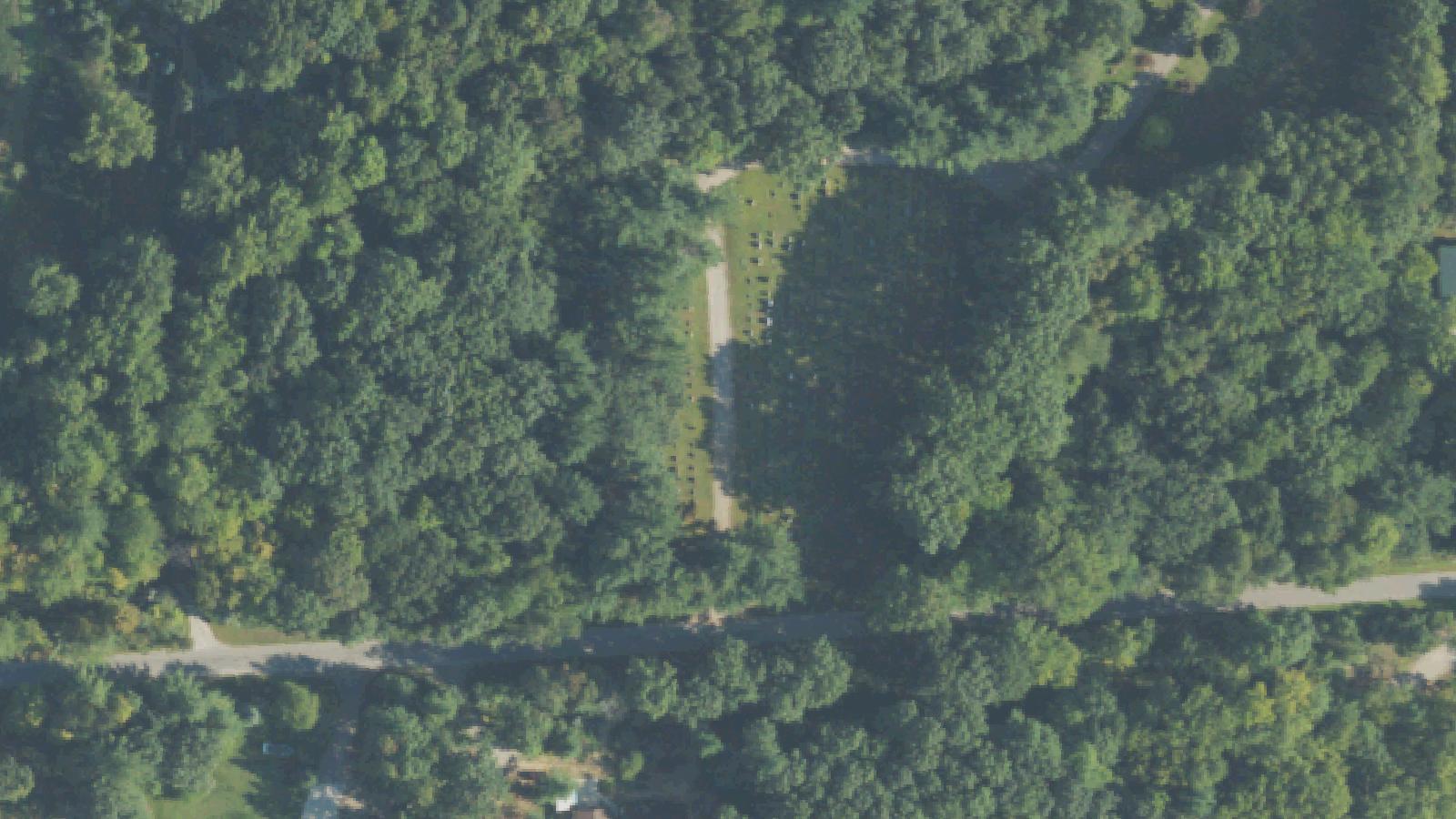
The burial ground on the hill behind Huntington's Soldiers and Sailors Memorial Building is the town's oldest extant cemetery, with the earliest dated gravestone running back to 1712. The Presbyterian Church that stood adjacent to the cemetery was the community's central religious gathering place before the Revolution.
In November 1782 — nine years into the British occupation of Long Island — Colonel Benjamin Thompson, commanding the King's American Dragoons, ordered construction of Fort Golgotha directly on the cemetery site. Thompson gave the order on November 26, and work proceeded rapidly: the church was dismantled for timber, and more than 100 gravestones were removed from the burial ground and repurposed as building material. The stones became flooring, fireplace hearths, and — most memorably — the lining of baking ovens.
The ovens' use created the account that persisted most strongly in local memory: when loaves were removed from the makeshift stone ovens, the reversed inscriptions from the gravestones were pressed into the underside of the crust. This bread, which circulated through the garrison and into the surrounding community, was called 'tombstone bread.' The visual detail — names of the dead pressed in dough — has kept the story alive for more than two centuries.
After British forces withdrew in 1783, the fort was demolished and the burial ground was partially restored; the church was eventually rebuilt. The site was listed on the National Register of Historic Places in 1981. It remains an active community cemetery.
Sources
- https://en.wikipedia.org/wiki/Fort_Golgotha_and_the_Old_Burial_Hill_Cemetery
- https://www.huntingtonny.gov/filestorage/13747/99540/16499/Old_Burying_Ground_&_Fort_Golgotha.pdf
Ghost of Colonel Benjamin ThompsonGhost of Reverend Ebenezer PrimeChildren seen among headstones who vanish before approach
The Old Burial Hill Cemetery carries two named apparitions and one recurring anonymous account. Colonel Benjamin Thompson — the man who ordered the desecration — is reported as a lingering presence on the grounds, a type of haunting narrative in which the perpetrator rather than the victim remains. Reverend Ebenezer Prime, who presided over the congregation whose church was dismantled for fort timber in 1782, is the second named figure.
The children reported by passersby are undescribed in terms of period dress or identity; they are seen moving among the headstones and then absent before any closer look. This type of anonymous child apparition at historic cemeteries is common in the paranormal literature and is presented here as reported without further attribution.
The 'tombstone bread' history — in which names of the buried appeared pressed into bread consumed by the living — has a quality that made it adhere in local tradition. The Long Island Haunted Houses database and multiple regional ghost guides cite the desecration as the animating event behind the cemetery's reputation. Whether the specific spirit accounts are modern constructions on top of the historical event or have older documentary roots is not established in the sources reviewed.
Notable Entities
Colonel Benjamin Thompson (1753–1814; later Count Rumford; ordered the 1782 cemetery desecration)Reverend Ebenezer Prime — minister whose church was demolished for fort timber
Where this legend is told