Est. 1825 · Home of Kit Carson and Josefa Jaramillo (1843-1868) · National Historic Landmark (1963) · Spanish Colonial Architecture · Owned by Bent Lodge No. 42, A.F. & A.M.
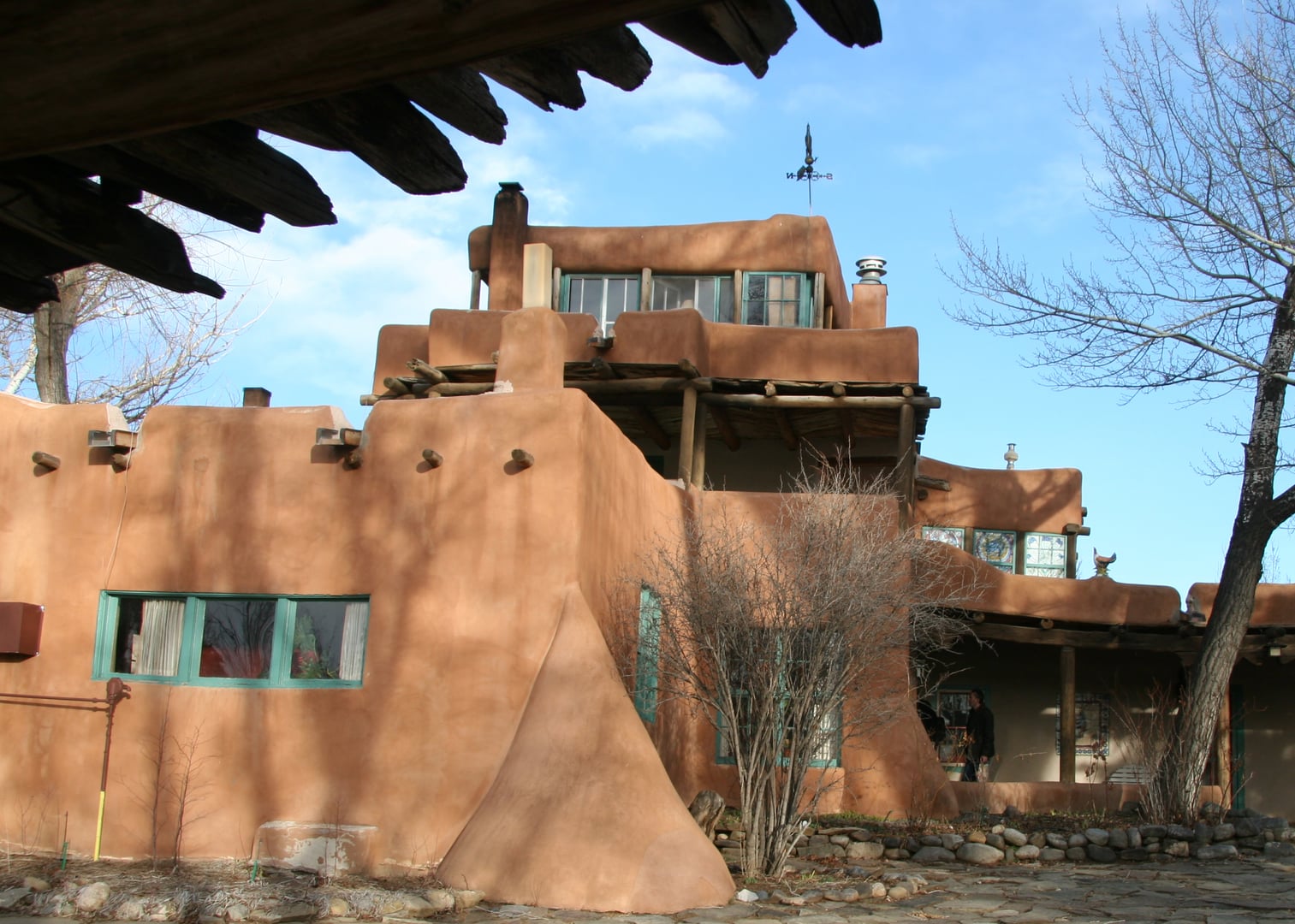
The adobe at 113 Kit Carson Road was built around 1825, an example of the Spanish Colonial building tradition of northern New Mexico. In 1843 the frontiersman, scout, and U.S. Army guide Christopher Houston 'Kit' Carson married Josefa Jaramillo, a member of a prominent Taos family, and acquired the house. It became the couple's principal home for the next quarter century.
Carson's career as a trapper, guide on western expeditions, and military officer made him one of the most widely known figures of the nineteenth-century American frontier, and the Taos house anchored his domestic life through years of long absences. He and Josefa raised their family here until early 1868, when they left for Colorado Territory. Both died there later that year, within weeks of each other.
The property is preserved as the Kit Carson Home and Museum, with four rooms restored and furnished to the mid-nineteenth century. It is owned and maintained by the local Masonic lodge, Bent Lodge No. 42, A.F. & A.M., and operated for the public as a historic-house museum.
In 1963 the National Park Service designated the home a National Historic Landmark as a representative example of Spanish Colonial architecture and for its association with Carson. Kit and Josefa Carson are buried a short distance away in the cemetery at what is now Kit Carson Park.
Sources
- https://en.wikipedia.org/wiki/Kit_Carson_House
- https://www.kitcarsonhouse.org/
- https://www.onlyinyourstate.com/new-mexico/taos-haunted-small-town-nm/
Sensed presenceFeeling of being watched
The paranormal reputation of the Kit Carson Home centers on its most famous resident. Visitors and museum staff have said they sense Carson's presence in the rooms where he lived for twenty-five years, and the accounts consistently describe the feeling as benign — a watchful, settled presence rather than a menacing one.
The story carries weight in Taos because of how completely the house is tied to a single life. Carson left Taos only in 1868 and died soon after in Colorado, and local lore holds that some part of him stayed with the adobe that had been his home for so long. Reports tend toward the quiet end of the paranormal register: a sense of being watched, a feeling that the rooms are occupied when they are empty.
The home appears regularly on Taos's organized ghost walks, where guides pair the building's documented history with these accounts of Carson's lingering presence. As with the town's other haunted stops, the activity has never been tied to a verified event, and the museum presents its history first; the ghost story is the kind of folklore that accumulates around a place this closely identified with one person.
Notable Entities
Kit Carson