Est. 1715 · Last Public Execution in Morris County (1833) · Antoine LeBlanc hanging drew an estimated 12,000 spectators · LeBlanc's tanned skin artifacts still extant in museum collections · Historic civic center of Morris County since colonial period
Antoine LeBlanc arrived in New Jersey from France in the spring of 1833, took work as a laborer for Samuel Sayre at the family's Morristown-area property, and within weeks killed Sayre, Mrs. Sayre, and their servant Phoebe using an ax and a club. The murders were discovered quickly, LeBlanc was apprehended attempting to flee, and the trial moved swiftly through the Morris County court system.
On September 6, 1833, LeBlanc was brought to the Morristown Green for public execution. Contemporary accounts estimated the crowd at 12,000 — an extraordinary figure for a region with a much smaller total population, drawing spectators from across the county and neighboring areas. The hanging was carried out in front of the assembled crowd at the east end of the Green, making it one of the most attended public executions in New Jersey's history.
The post-execution handling of LeBlanc's body became its own notoriety. His corpse was turned over to physicians for anatomical dissection — a practice common at the time for executed criminals and intended as an additional deterrent. Beyond dissection, portions of LeBlanc's preserved skin were made into wallets, purses, and bookbindings, some of which found their way into private collections. The Morris Museum holds an artifact made from LeBlanc's skin. This post-mortem treatment became part of the LeBlanc legend and contributed to the case's sustained presence in Morristown's collective memory.
The 1833 execution was the last public hanging in Morris County. The Green remained Morristown's civic center and is today a public park surrounded by county and municipal government buildings, restaurants, and the downtown commercial district.
Sources
- https://en.wikipedia.org/wiki/Antoine_le_Blanc
- https://morristowngreen.com/2014/09/26/antoine-le-blanc-a-shocking-story-of-murder-and-a-communitys-revenge/
- https://www.tapinto.net/towns/morristown/sections/community-life/articles/a-hanging-on-the-morristown-green-relive-the-183
Unexplained lights near courthouse end of GreenReported unease after dark at the execution siteWalking tour dark history waypoint
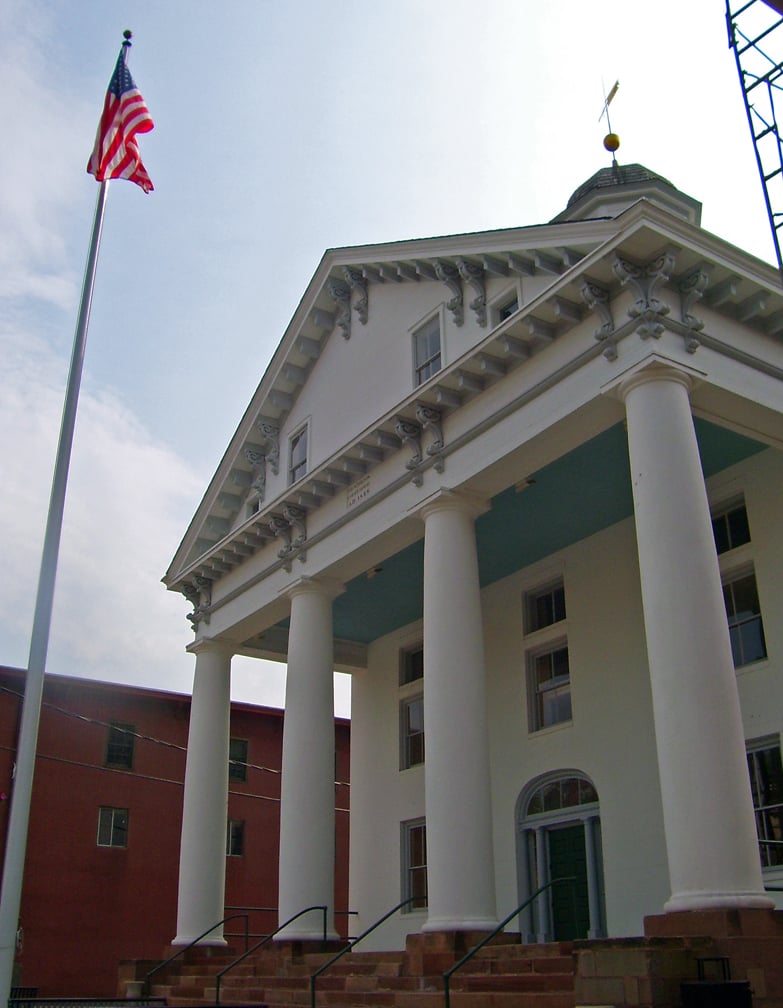
The Morristown Green carries a ghost tradition that is less documented than the underlying crime but persistent enough to surface in multiple local accounts. The execution site at the east end of the Green — the area nearest the county courthouse — is the focus of reported anomalies: lights appearing at night in windows or on the ground of the Green without apparent source, and the general sense of unease that locals associate with the site after dark.
The LeBlanc case's aftermath gives the tradition specific texture. The post-mortem treatment of his body — dissection, then the making of wallets and bookbindings from his skin — was publicly known and widely discussed at the time. Some local accounts suggest the violations of LeBlanc's body in death are the source of whatever spiritual unrest is attributed to the Green. This framing is consistent with how other execution sites with post-mortem desecration are discussed in American folk tradition.
The Morris County Historical Society and the Morristown Green blog have both published accounts of the LeBlanc case that note the site's sustained reputation, without endorsing specific paranormal claims. The Green is also referenced as a stop on walking tour programs covering Morristown's Revolutionary and early American history, with the LeBlanc execution as a primary dark-history waypoint.
Notable Entities
Antoine LeBlanc
Where this legend is told