Drive-By
Mill Complex Exterior & Riverside
Walk the downtown Dover mill district along the Cocheco River and view the historic Cocheco Mills buildings. Interior is largely private (offices and apartments).
- Duration:
- 45 min
HauntBound archive · catalog record
Reported phenomena, as catalogued
+ 1 further entry on record
A sprawling 19th-century cotton-mill complex on the Cocheco River where a catastrophic 1907 fire killed four workers; the restored buildings now host businesses and apartments amid reports of phantom machinery, voices, and unexplained lights.
1 Washington Street, Dover, NH 03820
Research updated June 2026
Age
All Ages
Cost
Free
The complex is a mixed-use property of offices, studios, and apartments; public access is limited to ground-floor businesses during business hours.
Access
Wheelchair OK
Downtown urban mill complex with paved access; riverside walkways.
Equipment
Photos OK
Est. 1908 · Major 19th-century cotton mill complex (Cocheco Manufacturing Company) · Site of the deadly January 26, 1907 Mill No. 1 fire (four fatalities) · Restored mixed-use industrial heritage landmark in downtown Dover
Dover's mills trace to 1812, when John Williams and fellow investors formed the Dover Cotton Factory on the Cocheco (originally 'Cochecho') River. The enterprise became the Dover Manufacturing Company in 1823 and later spun off the Cocheco Manufacturing Company; a clerical error by the state recording the name produced the 'Cocheco' spelling that endures. At its peak the five-story Cocheco Manufacturing Company employed more than 600 workers.
The complex's defining tragedy came on January 26, 1907. With the sprinkler system on the third, fourth, and fifth floors shut off for repairs, a wet but operating leather belt slipped, struck a belt box, and threw sparks into nearby cotton. The fire spread rapidly through Mill No. 1; power was cut, leaving workers to flee through darkness and smoke. The building had only one fire escape, and many workers were injured leaping from windows. Firefighters battled the blaze for thirty-six hours in temperatures near thirty degrees below zero, with water freezing almost instantly. Four lives were lost.
Mill No. 1 was rebuilt in 1908, reportedly reusing portions of the surviving structure. The Cocheco Mills complex was later known as the Clarostat Building and as One Washington Center.
Today the buildings, owned and restored by Chinburg Properties, form the Washington Street Mills / Cocheco Mills, a mixed-use complex at 1 Washington Street in downtown Dover combining offices, artist studios, and 54 residential apartments completed in December 2018. The Cocheco Mills district stands as one of the most significant surviving industrial complexes in New Hampshire's Seacoast region.
Sources
The Dover Mills' haunted reputation is tied directly to the workers who died in the 1907 fire. According to local reporting, including a feature in The Yankee Express, people who have spent time in the complex after hours describe strange lights appearing in higher-level rooms, the unmistakable sound of machinery turning on and off, and disembodied voices echoing through buildings that should be empty.
One persistent account, originating in the Shadowlands submission and echoed in later coverage, describes a single light that remains on in a sealed-off basement no one enters, along with faint, unidentifiable noises heard by anyone sitting alone on the tower stairs. While these specific details trace to anonymous and informal sources, the broader paranormal tradition around the mills is independently noted in regional media and local ghost lore, consistently framed around the tragedy of the 1907 fire and the workers who lost their lives there.
The combination of a documented mass-casualty industrial fire and a labyrinthine 19th-century mill complex has kept the Dover Mills a fixture of Seacoast New Hampshire ghost stories for generations.
Notable Entities
Walk the downtown Dover mill district along the Cocheco River and view the historic Cocheco Mills buildings. Interior is largely private (offices and apartments).
Some links on this page may earn HauntBound a small commission when you book, at no extra cost to you. Our editorial picks are independent. Full disclosure
Every HauntBound history is researched from documented sources. We clearly separate verified historical fact from paranormal folklore.
Free Guide
Verified stops across all fifty states, rated for families. Free.
One email to confirm, then the guide link. Unsubscribe anytime.
Manchester, NH
The R.G. Sullivan 7-20-4 Cigar Factory was built in 1906 at 175 Canal Street in Manchester by Roger G. Sullivan (1854-1918). At its peak the factory employed roughly 400 workers and produced about 12 million cigars per year, making it one of the largest cigar manufacturers in the country. The plant survived a 1947 fire, closed in 1963, and the seven-story building was converted to Class A office space in 1986.
Russellville, AR
Witherspoon Hall houses the Department of Music at Arkansas Tech University in Russellville, Arkansas. The hall is named for Gene Chief Witherspoon, who served as director of bands at the university from 1950 to 1979, and contains practice rooms, classrooms, and an auditorium recently renovated by the university.
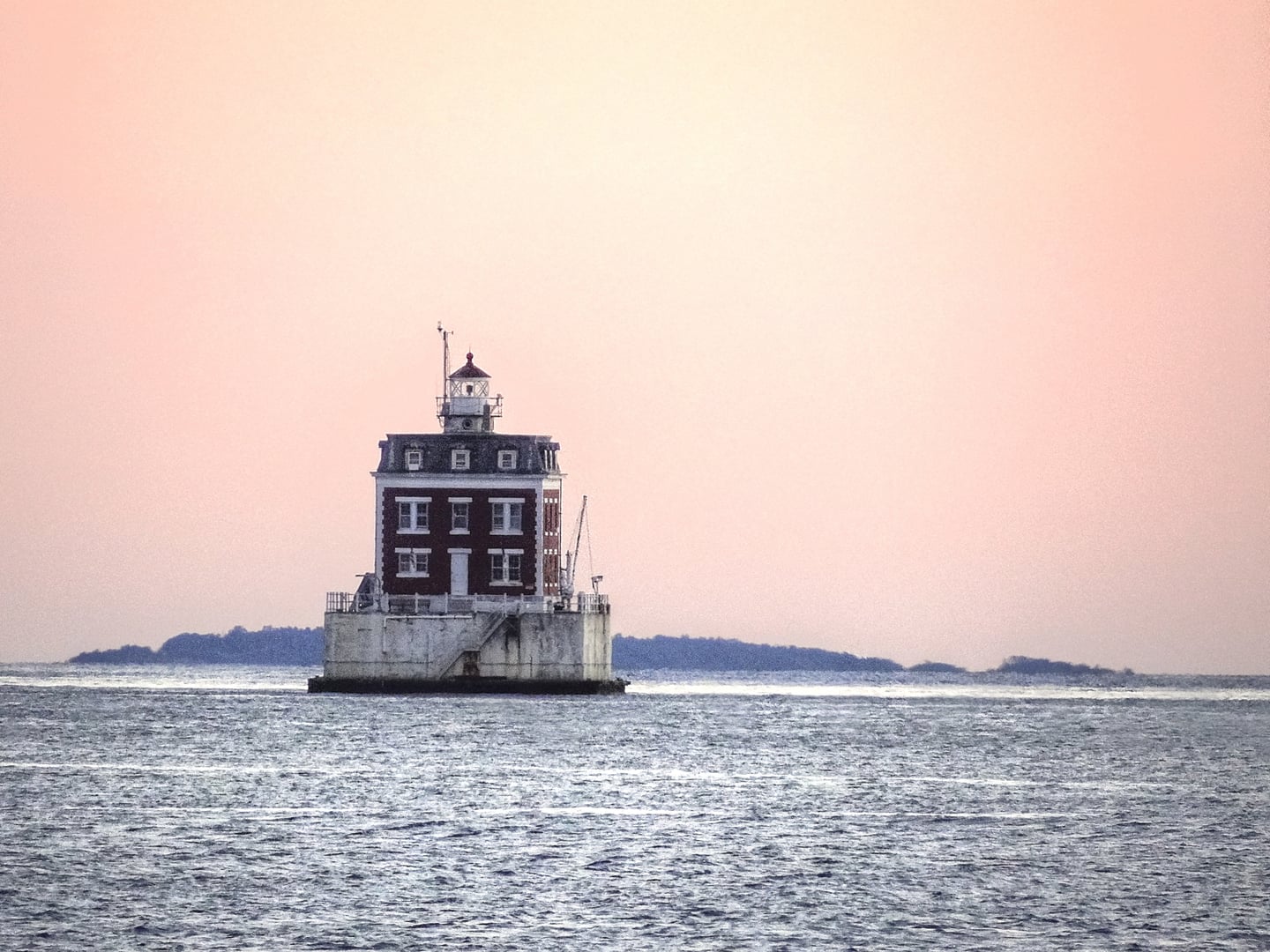
New London, CT
Built in 1909 at the mouth of the Thames River, New London Ledge Lighthouse is a three-story brick structure designed in a French Second Empire style to complement the elegant coastal homes of New London. It served Long Island Sound shipping until automation in 1987 and now operates as a museum under the New London Maritime Society.