Est. 1721 · 1721 Ladd-Gilman House, a National Historic Landmark · 1775 Folsom Tavern; George Washington stopped here in 1789 · Holds a Dunlap Broadside of the Declaration of Independence · Exeter served as New Hampshire's Revolutionary-era capital
The American Independence Museum occupies a campus in downtown Exeter that captures the town's role in the Revolutionary era, when Exeter served as New Hampshire's wartime capital. Its anchor is the Ladd-Gilman House, built in 1721 by Nathaniel Ladd and later home to the Gilman family; it is a registered National Historic Landmark. The Gilmans were central to New Hampshire's revolutionary government, and the house held state records during the war.
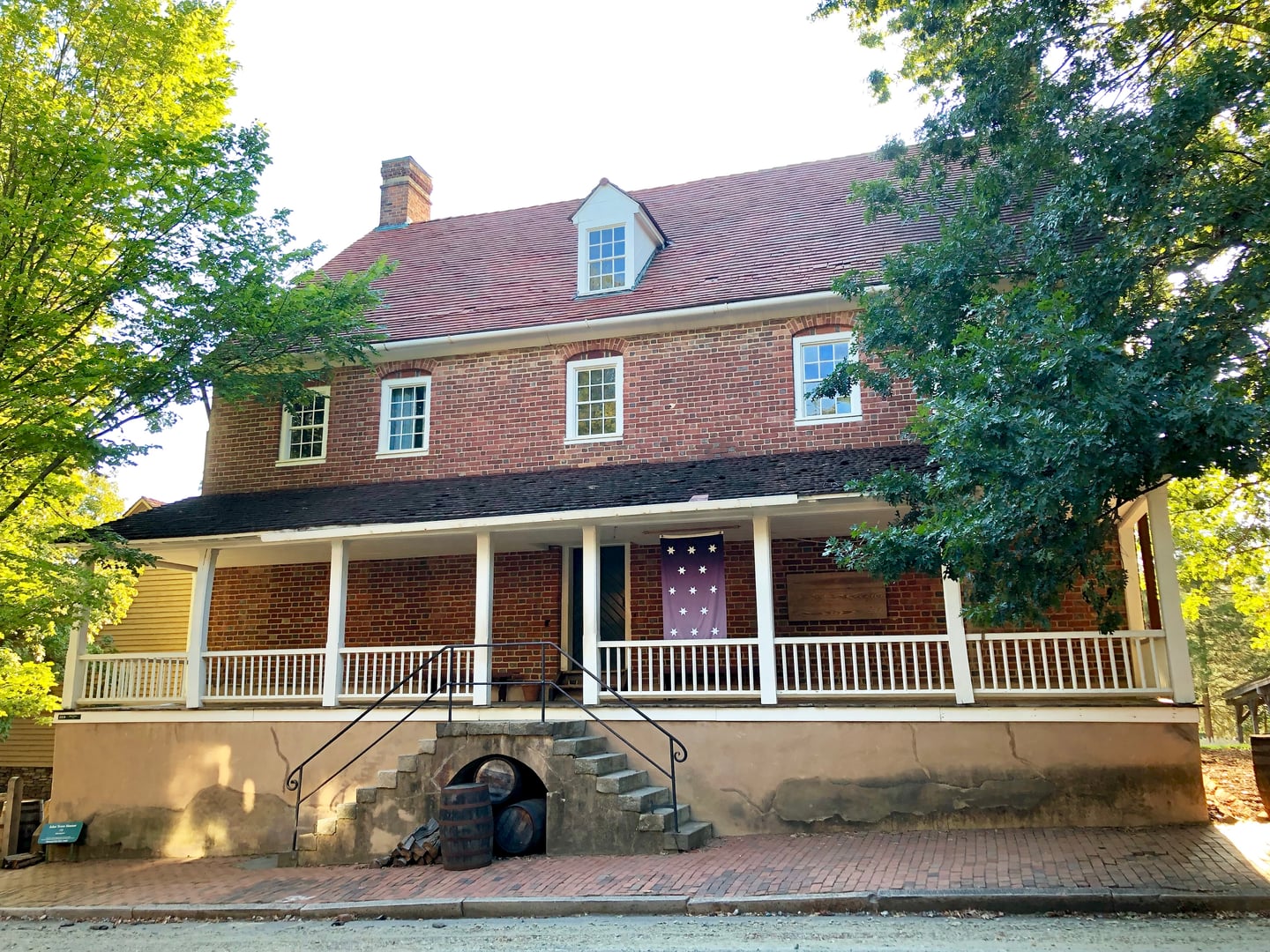
The 1775 Folsom Tavern, built by Colonel Samuel Folsom and listed on the New Hampshire State Register of Historic Places, was moved to the museum campus. The tavern's best-documented moment came on November 4, 1789, when President George Washington stopped there for a meal during his tour of the northern states.
The museum's signature holding is a Dunlap Broadside of the Declaration of Independence, one of the early printings, discovered in 1985. The collection also includes draft copies of the U.S. Constitution and an original Badge of Military Merit, the forerunner of the Purple Heart, along with period furniture, documents, and decorative arts.
In its public programming, the museum runs 'Exeter After Dark: Crime, Haunts, and Local Lore,' a guided evening walking tour that gathers at Folsom Tavern and explores Exeter's history through its documented crime, folklore, and ghost stories, including the spiritualist gatherings once held at the site.
Sources
- https://en.wikipedia.org/wiki/American_Independence_Museum
- https://aicnh.org/american-independence-museum-to-offer-spooky-stroll/
- https://www.independencemuseum.org/american-independence-museum-to-offer-spooky-stroll/
Alleged ghost sightings covered on the museum's after-dark tour
Unlike sites whose hauntings circulate as anonymous folklore, the ghost stories connected to Folsom Tavern and the American Independence Museum are presented by the institution itself. The museum's 'Exeter After Dark: Crime, Haunts, and Local Lore' tour gathers at the 1775 tavern and walks roughly 1.5 miles through historic Exeter, including the Water Street Cemetery, covering alleged ghost sightings alongside true crime and local legend.
The museum's own promotion notes that spiritualists once gathered at the site, part of the nineteenth-century movement that held the living could communicate with the dead. That detail is offered as historical context for the building's reputation rather than as a claim of present-day haunting.
Because the tour is run by the museum and built on documented local history, its supernatural content is framed as storytelling layered onto real places and events. Independent ghost-tour operators have also featured Folsom Tavern and the museum among Exeter's haunted stops, which has reinforced the reputation. Visitors should treat the haunted material as part of an interpretive history walk anchored in Exeter's genuine Revolutionary-era and nineteenth-century past.