Est. 1812 · Named for the Renfrew sisters killed and scalped along the Antietam Creek in 1764 · 1812 Royer House and 1808 Fahnestock House anchor a Pennsylvania German farmstead · Holds one of the largest collections of John Bell pottery in the United States · Became a public museum and 107-acre park in 1975 by bequest of Emma Geiser Nicodemus
Renfrew Museum and Park preserves a historic Pennsylvania German farmstead on 107 acres along the Antietam Creek in Waynesboro, Franklin County, Pennsylvania. The land takes its name from the Renfrew family. According to long-standing local history, in July 1764 -- a period of frontier conflict in the Cumberland Valley -- two young Renfrew sisters were killed and scalped by Native raiders while doing the family wash at the creek. The episode became one of the area's most-remembered colonial tragedies.
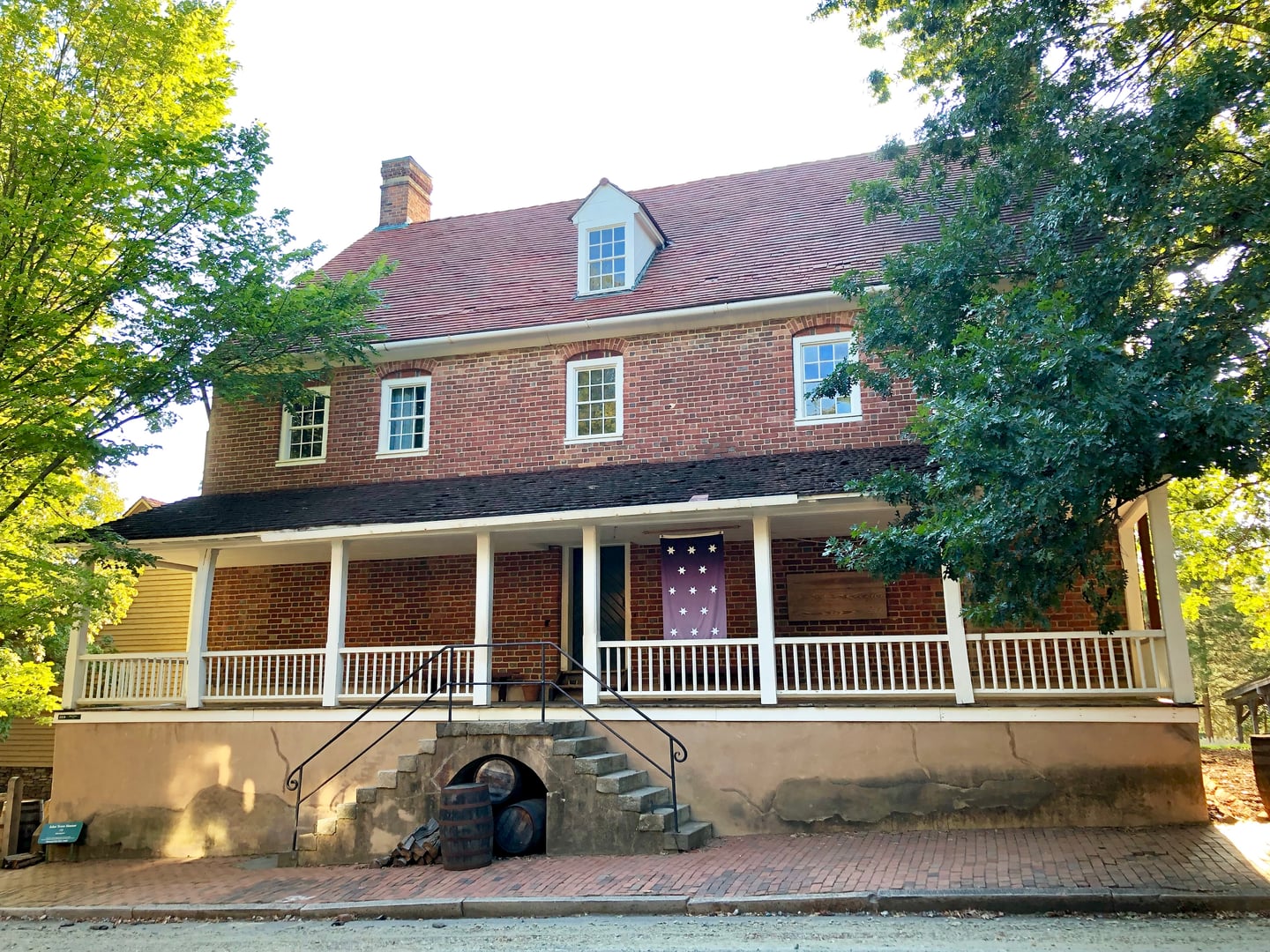
The farmstead itself was developed somewhat later by Daniel Royer, a German-American tanner, who with his descendants built a thriving cottage industry on the land. The main residence, the Royer House, was completed in 1812, and a second dwelling, the Fahnestock House, dates to 1808. Over the nineteenth century the property grew into a substantial farmstead with outbuildings including a grist mill and a lime kiln.
The museum is known for its collection of Pennsylvania German decorative arts, including what is considered the largest collection of John Bell pottery in the country. Renfrew became a public institution in 1975: its last private owner, Emma Geiser Nicodemus, who died in 1973, specified in her will that the house and surrounding 107 acres be given to the Borough of Waynesboro and made into a museum and parkland. Today Renfrew operates as a nonprofit house museum and public park at 1010 East Main Street.
Sources
- https://www.renfrewmuseum.org/about/
- https://celebrategettysburg.com/renfrew/
- https://www.bayjournal.com/travel/natural-cultural-history-abounds-on-pa-md-border/article_6d799998-5316-5610-8f0d-7c038eef4ef5.html
Apparitions of the two Renfrew sisters on the groundsEerie atmosphere near the Antietam Creek washing siteLocal sightings tied to the 1764 tragedy
The paranormal reputation of Renfrew Park is rooted directly in its founding tragedy. Local tradition tells that in 1764 two young Renfrew sisters were attacked and scalped while washing clothes at the Antietam Creek, on land that is now part of the park. That documented colonial-era killing has made the sisters the central figures of the site's ghost lore.
According to an anonymous Shadowlands submission, visitors have reported seeing the two Renfrew sisters as spirits with bloody heads, described as searching for their scalps -- a vivid retelling that mirrors the historical manner of their deaths. The legend has been carried forward in regional ghost-story collections, in Waynesboro-area haunted-places listings, and in a Shepherd University graphic-novel project devoted to 'The Renfrew Sisters,' which dramatizes the 1764 episode.
The museum itself focuses on the documented history rather than the haunting, and the more graphic apparition details come from folklore rather than firsthand verified accounts. HauntBound presents Renfrew as a genuine historic site whose ghost tradition is a respectful echo of a real and tragic frontier event, not a sensationalized invention.
Notable Entities
The Renfrew sisters (killed 1764)