Dinner
Pizza, beer, and the upstairs taproom
Order from the bar and dine in the historic 1920s storefront. The upstairs pool room is where most paranormal reports concentrate, per local ghost-tour accounts.
- Duration:
- 1.3 hr
HauntBound archive · catalog record
Reported phenomena, as catalogued
A 1920s commercial building on Biltmore Avenue now serving pizza and beer — set on ground tied to Asheville's 1906 Will Harris massacre and a series of recurring apparition reports.
42 Biltmore Avenue, Asheville, NC 28801
Research updated September 2026
Age
21+ only; valid ID required for both the upstairs and street-level venue.
Cost
$$
Pizzas, salads, and craft beer at typical Asheville pub prices.
Access
Wheelchair OK
Downtown sidewalk; ground-floor dining is accessible. Upstairs (where pool tables and additional reports are concentrated) has stairs.
Equipment
Photos OK
Est. 1920 · Located on the block of the 1906 Asheville shooting (Will Harris massacre) · 1920s-era commercial building in the downtown Asheville historic district · Long-running restored brewpub and music venue on Biltmore Avenue
The building at 42 Biltmore Avenue dates to the early 1920s and operated for decades as a commercial storefront, including a long tenure as an appliance retailer. The space was restored as a brewpub in the 1990s and has operated as Barley's Taproom & Pizzeria — known for hand-tossed pizza, craft beer, and a second-floor pool hall and music venue — since then.
The block's deeper history is inseparable from the events of November 13, 1906. On that morning, Will Harris, a 29-year-old who had escaped from state custody, purchased a Savage .303 lever-action rifle and clothing in downtown Asheville. By that evening, Harris was firing on officers and bystanders along Eagle Street and Biltmore Avenue, killing two policemen — Patrolman Charles Blackstock and Patrolman J.W. Bailey — and three Black civilians: Tom Neal, Ben Addison, and Jocko Corpening. Captain John Page was wounded in the arm during the initial encounter but survived. Multiple sources (Asheville Paranormal Society; Mountain Xpress retrospective) confirm the two officers killed were Blackstock and Bailey, and that Page survived.
Following the shootings, a posse of several hundred armed citizens — Asheville's largest ever — tracked Harris into the wooded edge of the Biltmore Estate, where he was killed in a gunfight near Buena Vista on November 15. Contemporary news coverage framed the event in heavily racialized terms; modern accounts emphasize that three of the five fatal victims were themselves Black Asheville residents and that the broader history is one of racial-violence trauma in the city's downtown core.
In parts of older Asheville lore, the block is also tied to the location of an antebellum town gallows; the Asheville Terrors writeup notes this oral tradition, though it has not been independently documented in mainstream histories.
Sources
According to Asheville Terrors and the North Carolina Haunted Houses directory, staff and patrons have reported a recurring 'man in black' who appears just inside the Biltmore Avenue entrance and disappears before anyone can speak to him. Passersby and tour groups have described seeing a figure pause briefly in a second-floor window after the upstairs taproom has closed for the night.
A child apparition — described as a young girl in a white dress — is associated with the downstairs restroom corridor. Staff also report that the building's elevator has been observed traveling between floors with no one inside.
Ghost-tour operators connect this body of lore to the 1906 Will Harris violence on this block. We frame that connection cautiously: the Will Harris event is a documented mass-shooting that killed five people including three Black civilians, and any paranormal narrative drawing on it should treat the underlying racial-violence trauma with editorial care rather than as atmosphere. The folklore is presented here as folklore — not as a claim that the named historical victims are themselves the reported apparitions.
Notable Entities
Order from the bar and dine in the historic 1920s storefront. The upstairs pool room is where most paranormal reports concentrate, per local ghost-tour accounts.
Several downtown ghost walks pause at Barley's to recount the 1906 Will Harris event and the building's apparition history.
Some links on this page may earn HauntBound a small commission when you book, at no extra cost to you. Our editorial picks are independent. Full disclosure
This Asheville tour includes Barley's Taproom & Pizzeria on its route.
Every HauntBound history is researched from documented sources. We clearly separate verified historical fact from paranormal folklore.
Free Guide
10 verified stops, rated for families, mapped in order. Free.
One email to confirm, then the guide link. Unsubscribe anytime.
Wilmington, NC
Michael's on the Waterfront occupies a 19th-century building at 5 South Water Street in Wilmington, North Carolina, on the city's downtown waterfront. According to local tour operators and the Wilmington tourism board, the building's earlier life included use as the Blue Post Bar, identified in waterfront folklore as a 19th-century brothel and drinking establishment.
Asheville, NC
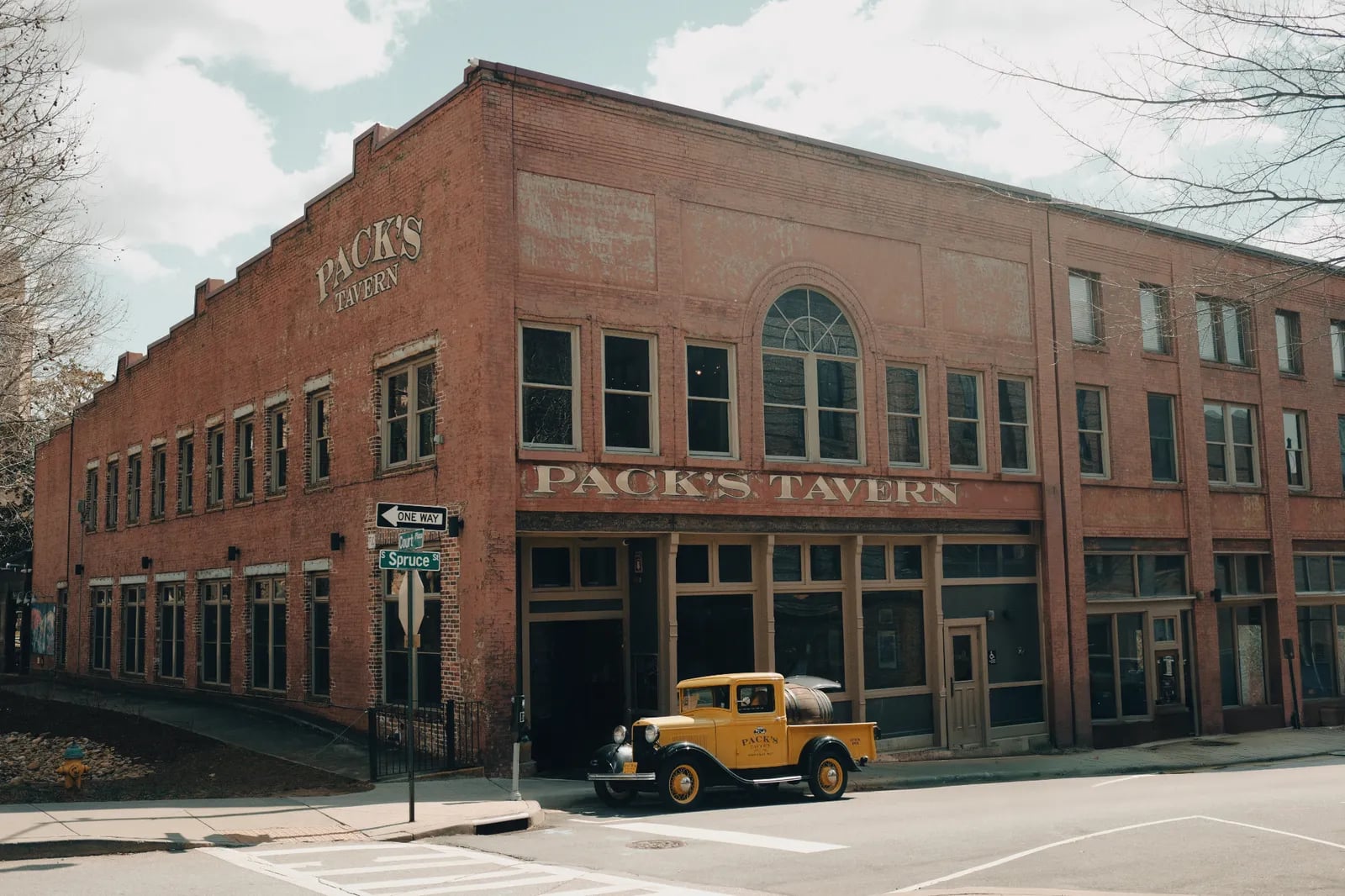
Pack's Tavern occupies the Hayes and Hopson Building, built in 1907 as a lumber supply warehouse behind Pack Square. During Prohibition (1920-1933), the basement was a major moonshine distribution hub linked by an underground tunnel under Eagle Street. The building became Pack's Tavern in 2010.
Baltimore, MD
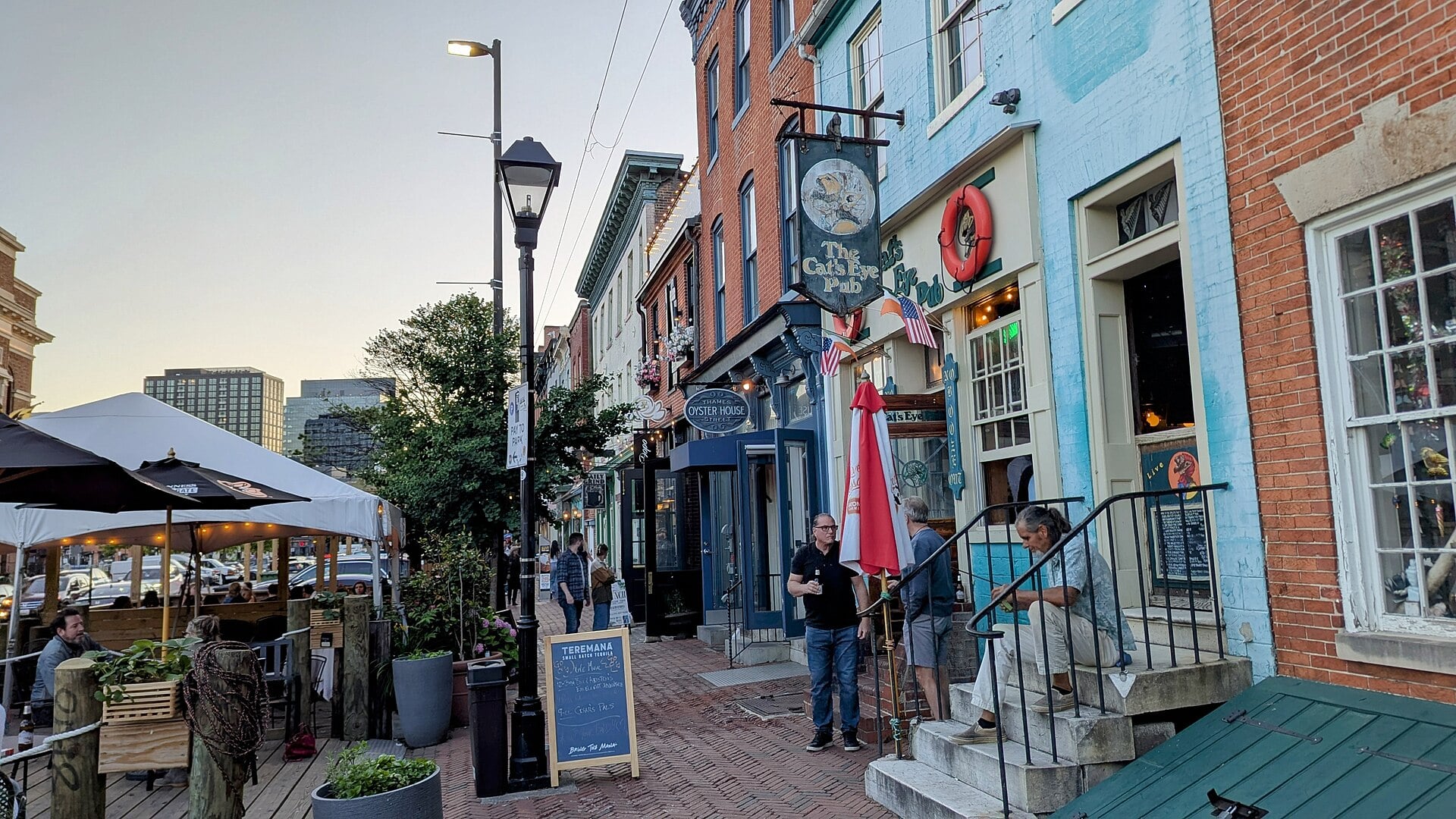
Cat's Eye Pub opened in 1975 in a 19th-century Thames Street building on the Fells Point waterfront, in a structure that earlier served as a private home and, according to local accounts, a mid-20th-century brothel. The bar has been a fixture of Baltimore's blues and roots-music scene for half a century and is a featured stop on Baltimore Ghost Tours' Fells Point Haunted Pub Tour.