Est. 1896 · National Register of Historic Places · First Great Falls High School (1896) · Romanesque Revival architecture
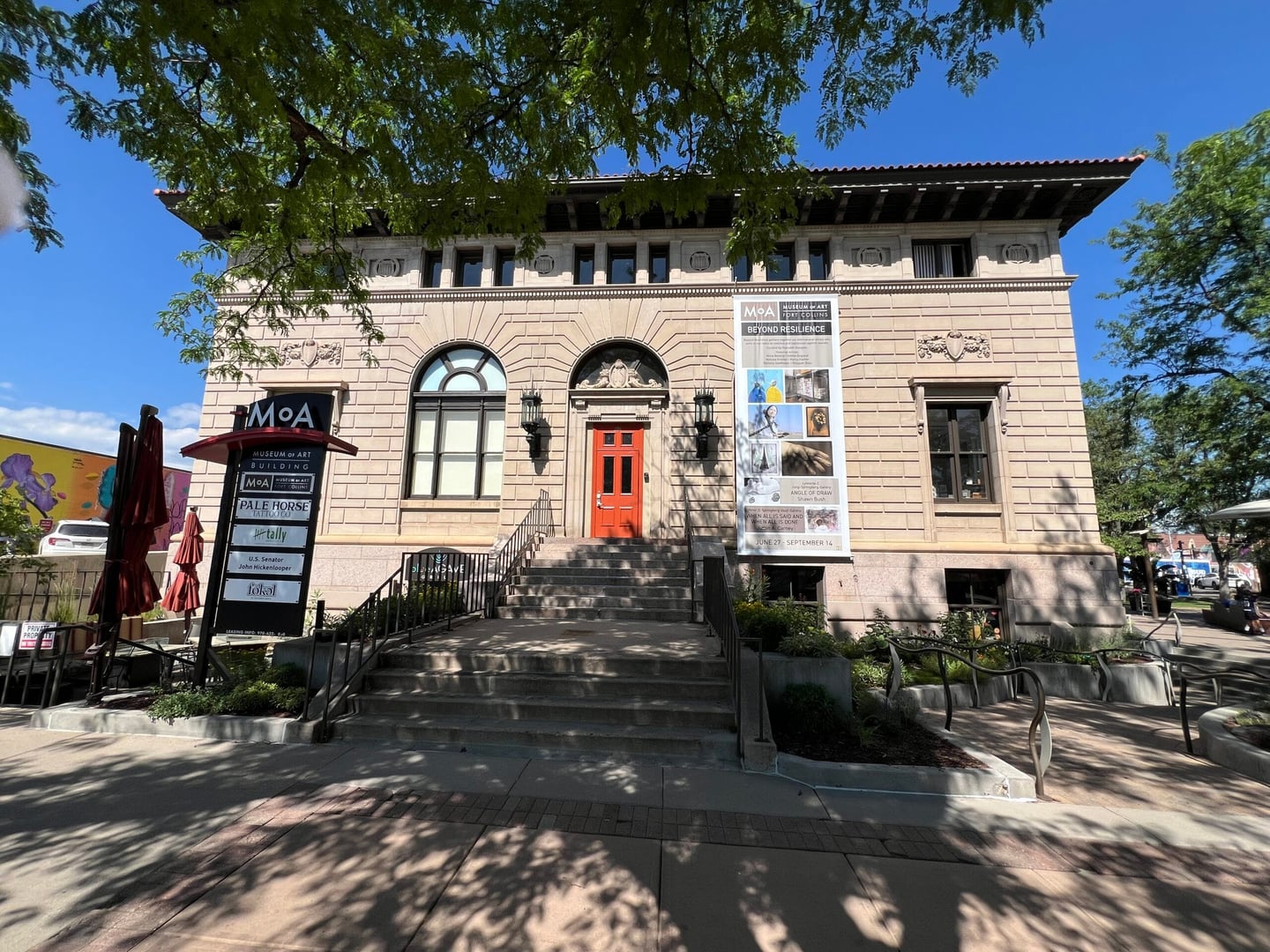
The stone building at 1400 1st Avenue North opened in 1896 as Great Falls High School, the first secondary school in the young Montana city that Paris Gibson had platted in the 1880s. Built in the Romanesque Revival style, it served generations of Great Falls students before the school district outgrew it.
After its years as a school ended, the building was repurposed as a community art center and renamed the Paris Gibson Square Museum of Art, honoring the businessman and city founder for whom Great Falls' early civic institutions are named. The museum operates today as a regional contemporary-art venue with rotating exhibitions and a permanent collection.
The building is listed on the National Register of Historic Places. Local accounts note that a janitor and his family lived in the attic in the early twentieth century, which is sometimes tied to the museum's resident folklore. Great Falls' tourism office and local museum staff have for years documented reports of unexplained sounds tied to the building's century as a school, while taking care to separate the documented history from the legends.
Sources
- https://en.wikipedia.org/wiki/Paris_Gibson_Square_Museum_of_Art
- https://www.the-square.org/our-historic-building
- https://visitgreatfallsmontana.org/5ghoststories/
Disembodied voicesPhantom singingSounds of childrenApparitions
The Paris Gibson Square's best-known stories involve children. Staff and visitors have described the sound of unseen children playing in the upstairs halls and faint singing from the former music room, reports that local accounts say have continued for roughly a century. Great Falls' tourism office notes that some staff members have declined to work alone in the building, while others say they have grown used to it.
The most repeated tale concerns a boy said to have drowned in a swimming pool that once occupied the basement when the building was a school. The Great Falls tourism office addresses this directly, writing that the drowning story 'has since been debunked.' The building's age and its old boiler are offered as more plausible explanations for some of the creaks and noises.
A second piece of folklore involves a schoolgirl, described in some accounts as the daughter of the janitor who lived in the attic around World War I, and a young girl reported in the hallways. As with the drowning story, the museum and local sources present these as long-standing legends rather than verified events. The building is a regular feature of Great Falls ghost-story coverage published around Halloween.
Notable Entities
Children's voicesThe girl in the hallway