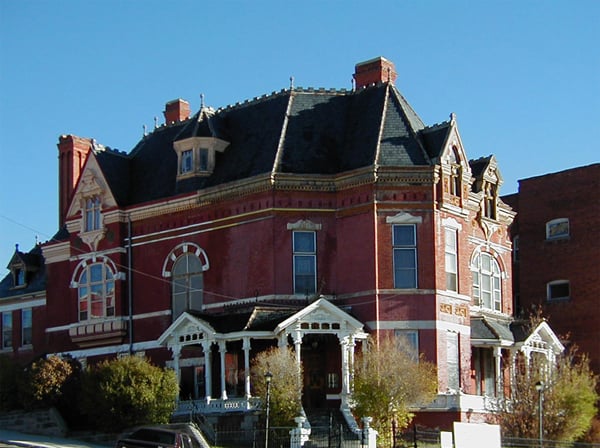
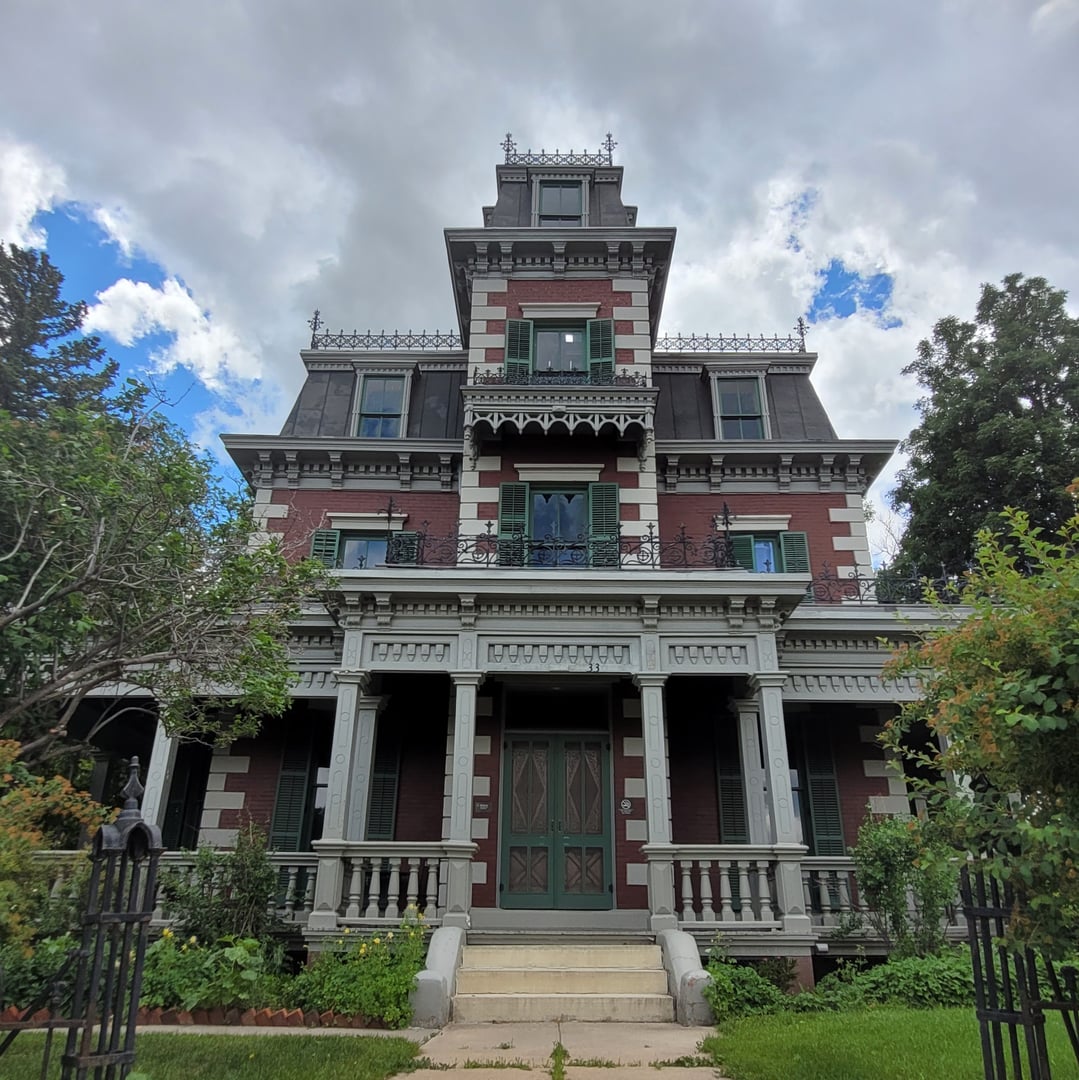
Est. 1876 · Built by German-born banker Henry Elling in 1876 · Ballroom and additions funded by Mary Elling · Virginia City National Historic Landmark District · Now an inn and arts and humanities center
Henry Elling, a German-born banker who made his fortune in Virginia City, built this stone mansion in 1876, the same year the town was transitioning out of its role as Montana's territorial capital. The home's three Gothic windows and substantial masonry reflected Elling's standing as one of the town's wealthiest residents.
When Henry Elling died in 1900, he left behind a fortune that his widow, Mary Elling, directed toward both civic and personal projects. She donated funds toward the construction of a new St. Paul's Episcopal Church, and she nearly doubled the size of the family mansion. Her additions included a large ballroom along with a sitting room, smoking room, maid's quarters, and a second kitchen, turning the house into a setting for Virginia City's social gatherings.
Mary Elling continued to host gatherings in the expanded home for decades. She died on Christmas Eve, 1924, and The Madisonian, Virginia City's newspaper, marked her passing.
The building survived into the modern preservation era as part of Virginia City's National Historic Landmark District. It now operates as the Elling House Inn and as an arts and humanities center, hosting overnight guests, exhibitions, and community events in the rooms Mary Elling built more than a century ago.
Sources
- https://southwestmt.com/ghosts/ghost-stories/elling-house/
- https://historicmt.org/items/show/866
- https://www.ellinginn.com/house-history
Sense of presence in the ballroomWallpaper sample book reopening on its own
The Elling House's ghost stories center on Mary Elling and the ballroom she added to the mansion. According to accounts gathered in regional tourism coverage, her spirit is said to keep watch over the room where she once hosted Virginia City's social gatherings.
The most often-repeated story involves a renovation of the ballroom. A couple working on the room left several books of wallpaper samples behind while they ran errands. When they returned, they found one of the large books open to a floral pattern. The next day the same book lay open to the same pattern. Suspicious, they made a point of closing the book and placing it at the bottom of the stack, only to return again and find it open to the same floral sample. When the layers of paint and wallpaper were finally stripped from the ballroom walls, the workers reportedly discovered that the original wallpaper matched the floral pattern the book kept displaying.
The account is presented as local tradition rather than documented investigation, and it carries the same protective, house-proud tone that runs through other Virginia City ghost stories tied to former residents. Visitors and staff connect the wallpaper episode and a general sense of presence in the ballroom to Mary Elling, framing her as an owner still tending the home she expanded.
Notable Entities
Mary Elling