Est. 1858 · Pony Express Headquarters 1860–1861 · Union Army Provost Marshal Office Civil War · Jesse James Connection · National Register of Historic Places · Antebellum Western Hotel Architecture
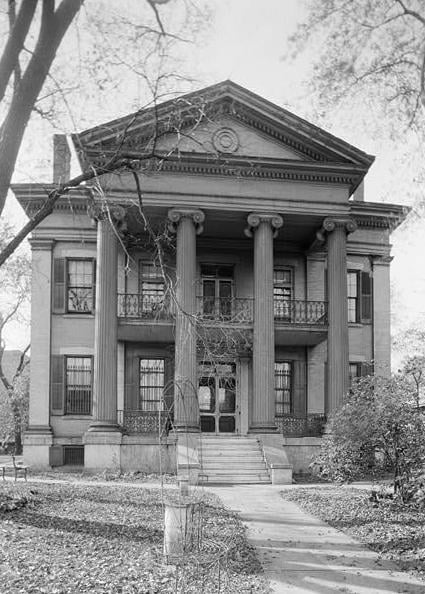
The Patee House opened in 1858 at a cost of $180,000 — a remarkable expenditure for a frontier city — and quickly became the social center of St. Joseph. Its four stories and 140 rooms made it one of the largest hotels between Chicago and San Francisco. Within two years of opening, the building took on a role in American history that had nothing to do with hospitality.
In April 1860, the newly formed Central Overland California and Pikes Peak Express Company — the enterprise behind the Pony Express — established its first headquarters in the Patee House. From these offices, company officials coordinated the relay mail route stretching nearly 2,000 miles to Sacramento. The Pony Express operated for only eighteen months before the transcontinental telegraph made it obsolete, but the Patee House connection anchors St. Joseph's claim as its eastern terminus.
During the Civil War, Federal troops occupied St. Joseph and the hotel became the office of the Union Army's Provost Marshal, who oversaw the occupied city's security operations. After the war and into the 1870s and 1880s, the building saw better days before declining. When Jesse James was shot and killed in April 1882 in a rented house two blocks away at 1318 Lafayette St., his widow Zerelda and their children briefly took refuge at the Patee House. James's body was displayed for public viewing nearby.
The building was used for manufacturing in the early twentieth century and fell into disrepair before the Pony Express Museum acquired it in 1959. It is listed on the National Register of Historic Places and operated today as a combined museum covering the Pony Express, Jesse James, and St. Joseph history.
Sources
- https://www.nps.gov/places/patee-house-museum.htm
- https://historynet.com/patee-house-st-joseph-missouri-headquarters-pony-express/
- https://sylviashults.wordpress.com/2020/03/27/lights-out-the-patee-house/
Unexplained footstepsDisembodied voicesPresence felt near stairwellUnexplained sounds
The most consistently reported paranormal figure at the Patee House is Henry Corbett, identified in local accounts as a caretaker who fell three stories through the building's open stairwell in the late 1890s. Accounts describe unexplained sounds concentrated near the stairs — footsteps, voices, and the occasional sense of a presence — that staff and investigators associate with Corbett's fatal accident.
Paranormal author and researcher Sylvia Shults documented the haunted history of the Patee House in a 2020 piece, describing staff experiences and the building's layered dark history as contributing factors to its paranormal reputation. The museum's long tenure in a building that passed through military occupation, decline, and manufacturing use before restoration gives investigators a broad canvas for interpretation. The hotel's role in the Jesse James story — as shelter for his widow immediately after his murder — adds another layer to its dark-tourism appeal.
Notable Entities
Henry Corbett