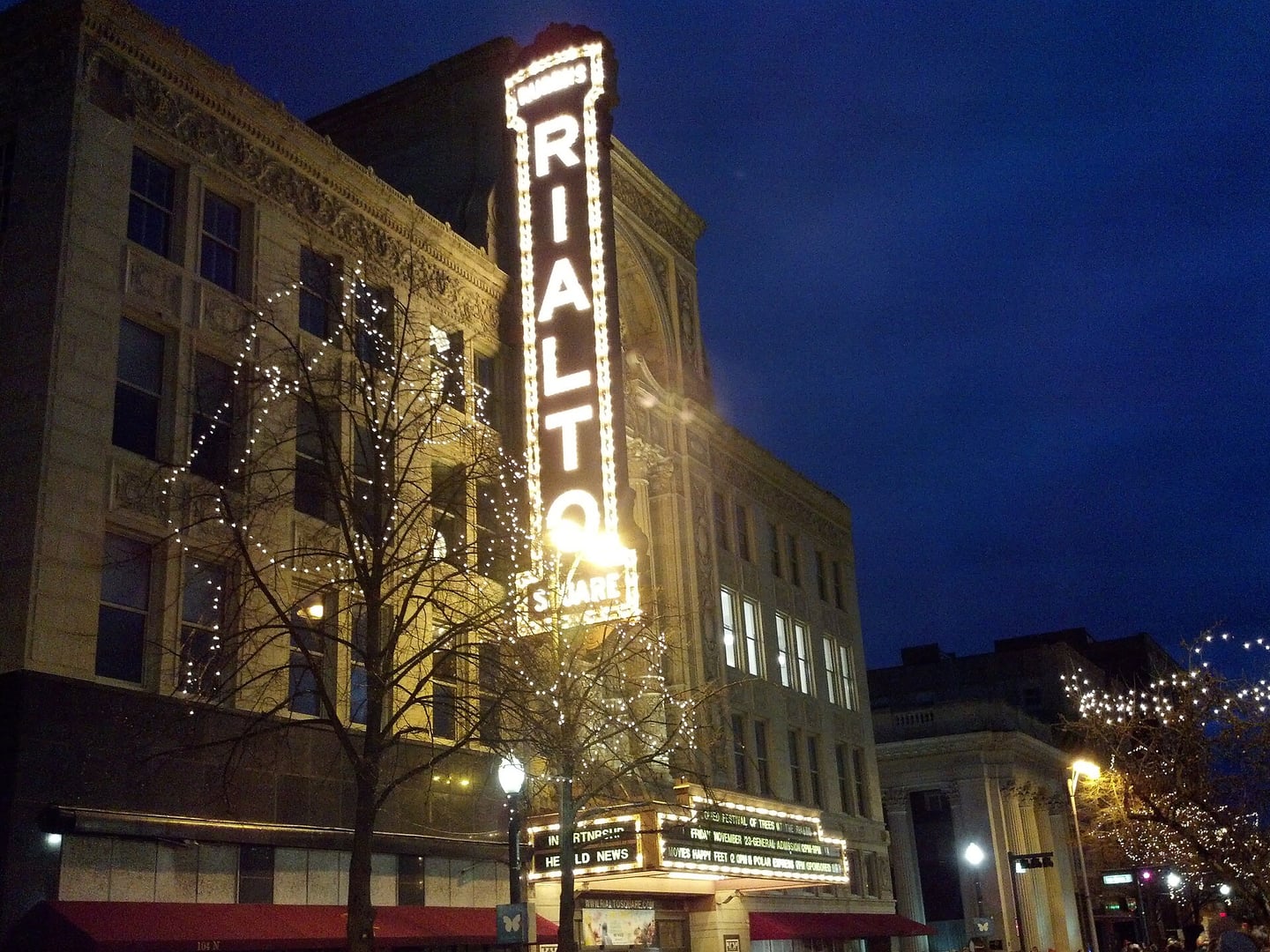
Est. 1926 · 1926 Spanish Colonial Revival theater on Route 66 · Introduced talking pictures to Springfield 1928; Technicolor 1936 · Ronald and Nancy Reagan attended 1952 premiere · National Register of Historic Places 1991 · Restored and reopened 2006 after $1.9 million renovation
Maurice Earnest Gillioz broke ground on his namesake theater in 1926 in downtown Springfield, securing a 100-year lease on a narrow strip of property fronting what would become U.S. Route 66 — the federal highway that Springfield would later claim as its birthplace. The building's Spanish Colonial Revival design featured opulent terra-cotta tile, stained glass, and elaborate plaster detailing, with steel and concrete construction that was intended to stand for generations.
The Gillioz opened October 11, 1926, originally featuring a Wurlitzer pipe organ for silent films alongside vaudeville programming. Within two years it had introduced talking pictures to Springfield (1928) and later added Technicolor (1936). During the Depression, the theater ran 'Beauty with a Voice' singing competitions. Ronald and Nancy Reagan attended a premiere at the venue in 1952. The theater was listed on the National Register of Historic Places in 1991 as part of the Springfield Public Square Historic District.
The Gillioz closed in 1980 after a performance of La Traviata. A nonprofit restoration effort launched in 1990 and spent $1.9 million returning the building to its original condition. The theater reopened in 2006 as a concert and event venue operated by a nonprofit organization. It now anchors Park Central Square in downtown Springfield and books national touring acts alongside local events.
One documented death occurred at the theater: a projectionist died at his post in the projection booth on New Year's Eve 1962, prior to starting a midnight screening. Wikipedia records this event, though the projectionist's name is sourced only from local reporting rather than archival records. That fact grounds the theater's paranormal reputation in a real, if isolated, historical event.
Sources
- https://en.wikipedia.org/wiki/Gillioz_Theatre
- https://www.nps.gov/places/gillioz-theatre.htm
Figure in the projection booth near the area of the 1962 deathChild in period newsie clothing near balcony bathroomsUnexplained cold spots in projection areaObjects moving in unoccupied backstage areas
The projectionist's death on New Year's Eve 1962 — he was found at his post in the projection booth before the midnight screening could begin — is confirmed by Wikipedia's entry on the theater. Local reporting from Ozarks First attributed the projectionist's name as Martin Kirschner and described him as having worked at the theater from its 1926 opening until his death; these biographical details come from local sources rather than archival records and could not be independently verified during this build.
The second reported presence at the Gillioz is a child: local accounts describe a small boy in newsie-style clothing who appears near the balcony bathroom area and then disappears. No historical record connects a child's death to the theater, making this account unverifiable against the building's documented history.
The projection booth and balcony areas are most consistently mentioned in investigator accounts. As a working concert venue, the Gillioz does not offer paranormal tours or after-hours access, and reports come primarily from staff and event attendees rather than organized investigators.