Overnight Stay
W Minneapolis - The Foshay overnight stay
Boutique luxury hotel occupying the 1929 Art Deco tower. Rooms occupy the original office floors; lobby preserves the original ornate ceiling and gold-leaf detailing.
HauntBound archive · catalog record
Reported phenomena, as catalogued
+ 1 further entry on record
32-story Art Deco skyscraper modeled on the Washington Monument, opened in 1929 by utilities tycoon Wilbur Foshay weeks before his empire collapsed in the Great Depression, now operating as the W Minneapolis hotel.
821 Marquette Ave, Minneapolis, MN 55402
Research updated September 2026
Age
21+ to check in as a hotel guest; the museum and observation deck welcome all ages.
Cost
$$$
Hotel room rates vary by season. Foshay Museum and Observation Deck admission is separate; see the museum's reservation page for current pricing.
Access
Wheelchair OK
Marriott's accessible hotel routes include elevators, accessible rooms and accessible paths to common areas. The 31st-floor observation deck itself is reached by two flights of stairs; an interactive webcam is available from the museum level for visitors who cannot climb them.
Equipment
Photos OK
Est. 1929 · Completed August 30, 1929 — 32-story Art Deco tower modeled on the Washington Monument · Tallest building in Minneapolis from 1929 until the IDS Center surpassed it in 1972 · John Philip Sousa composed and conducted a dedication march; the bounced commission check became legendary · Wilbur Foshay's utility empire collapsed weeks after opening; he later served three years at Leavenworth for mail fraud · Setting for the 1932 jury-tampering case Clark v. United States, 289 U.S. 1 (1933) · Added to the National Register of Historic Places in 1978; converted to W hotel in 2008
Wilbur Burton Foshay was a New York-born utilities entrepreneur who built a holdings empire valued at roughly $25 million across 12 states and five countries during the 1920s. To house his headquarters he commissioned an obelisk-shaped tower modeled on the Washington Monument, designed by Léon Eugène Arnal of Magney & Tusler Inc. and constructed in downtown Minneapolis between 1927 and 1929. At 447 feet and 32 stories, the Foshay Tower was for decades the tallest building between Chicago and the West Coast and the tallest in Minneapolis until the IDS Center surpassed it in 1972.
The building's three-day dedication on August 30-September 1, 1929 was famously extravagant. Foshay invited 25,000 guests and commissioned composer John Philip Sousa to write 'Foshay Tower-Washington Memorial March' for the occasion. Within weeks the October 1929 stock-market crash gutted Foshay's holdings. His check to Sousa bounced, leading the composer to forbid further public performance of the march until the debt was eventually paid in the 1980s. In 1931 the U.S. Department of Justice indicted Foshay for mail fraud; he was convicted and sentenced to 15 years at Leavenworth, of which he served about three years before President Franklin D. Roosevelt commuted the balance. Foshay died of a stroke on September 1, 1957 — the 28th anniversary of the tower's dedication — at Oak Ridge Nursing Home near Minneapolis. He never recovered the empire and never lived in the tower.
A secondary documented figure tied to the building is Genevieve Clark, a juror in Foshay's 1932 mail-fraud trial. Clark concealed prior employment with the Foshay Company during voir dire and worked to deadlock the jury; she was convicted of criminal contempt in a case (Clark v. United States, 289 U.S. 1) that the U.S. Supreme Court affirmed in 1933. Ordered to surrender to begin a six-month sentence, Clark, her husband, and their two sons were found dead by carbon-monoxide suicide in a parked car near Prior Lake on April 28, 1933.
The building was added to the National Register of Historic Places in 1978. After decades as office space it was converted by Starwood Hotels into the W Minneapolis - The Foshay, which opened in 2008. The conversion preserved the lobby's original African mahogany walls, brass detailing, gold-leaf ceiling, and the 30th-floor Foshay Museum and 31st-floor open-air observation deck.
Sources
According to American Ghost Walks and Meet Minneapolis, the W Minneapolis - The Foshay is one of the city's most-cited haunted hotels. The dominant report is of a man in a three-piece suit of 1920s vintage who briefly appears in upper-floor corridors, elevator lobbies, and the 30th-floor museum area before vanishing. Tour narrators identify the figure as Wilbur Foshay himself, whose rapid rise and even more rapid ruin made him a figure of local lore. Importantly, the persistent rumor that Foshay jumped from the tower's observation deck after his empire collapsed is false — he died of a stroke at Oak Ridge Nursing Home near Minneapolis on September 1, 1957.
The second commonly named figure on ghost-walk narratives is Genevieve Clark, the lone female juror in Foshay's 1932 mail-fraud trial whose concealment of prior employment with Foshay led to her criminal-contempt conviction and a Supreme Court case bearing her name. Clark and her family died by carbon-monoxide poisoning in a parked car near Prior Lake on April 28, 1933, the morning she was due to surrender. Tour operators connect her to a sensed-presence cluster on certain upper floors, framed as a presence of regret tied to the building's most dramatic legal episode.
Reported phenomena across multiple sources include elevators stopping at random floors without buttons pressed, unexplained electrical malfunctions, lights flickering on hotel guest floors, cold drafts in the museum, and occasional photographs that staff describe as not quite matching what their eyes saw. Most accounts trace to ghost-tour operators and hotel staff testimonials rather than independent investigation, but the underlying historical anchors — Foshay's collapse and the Clark suicide — are documented in court records, MNopedia, and Wikipedia.
Notable Entities
Boutique luxury hotel occupying the 1929 Art Deco tower. Rooms occupy the original office floors; lobby preserves the original ornate ceiling and gold-leaf detailing.
30th and 31st floor museum on Wilbur Foshay's rise and fall, with an open-air observation deck offering 360-degree views of downtown Minneapolis from 447 feet.
Some links on this page may earn HauntBound a small commission when you book, at no extra cost to you. Our editorial picks are independent. Full disclosure
See current room rates and availability at Foshay Tower (W Minneapolis - The Foshay).
Check rates and bookRates come from booking partners, so a small property may not be listed. Book direct with Foshay Tower (W Minneapolis - The Foshay)
This Minneapolis tour includes Foshay Tower (W Minneapolis - The Foshay) on its route.
Every HauntBound history is researched from documented sources. We clearly separate verified historical fact from paranormal folklore.
Free Guide
11 verified stops, rated for families, mapped in order. Free.
One email to confirm, then the guide link. Unsubscribe anytime.
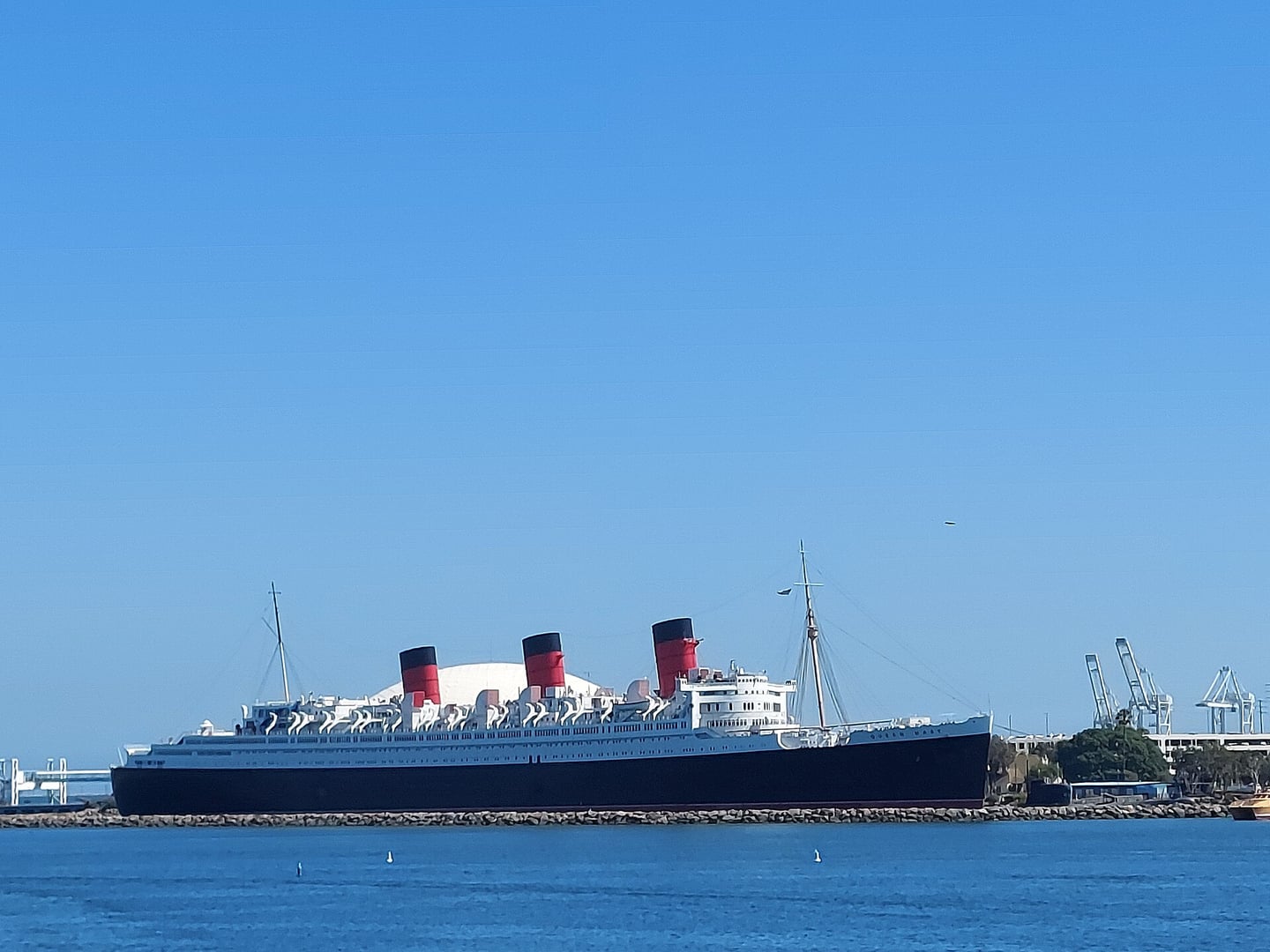
Long Beach, CA
The RMS Queen Mary was constructed at John Brown & Company's Clydebank shipyard beginning in 1930, launched September 26, 1934, and sailed her maiden voyage on May 27, 1936. Requisitioned as a troopship in 1939, she carried 810,000 soldiers under the nickname 'The Grey Ghost.' The ship has been permanently moored in Long Beach, California since December 1967.
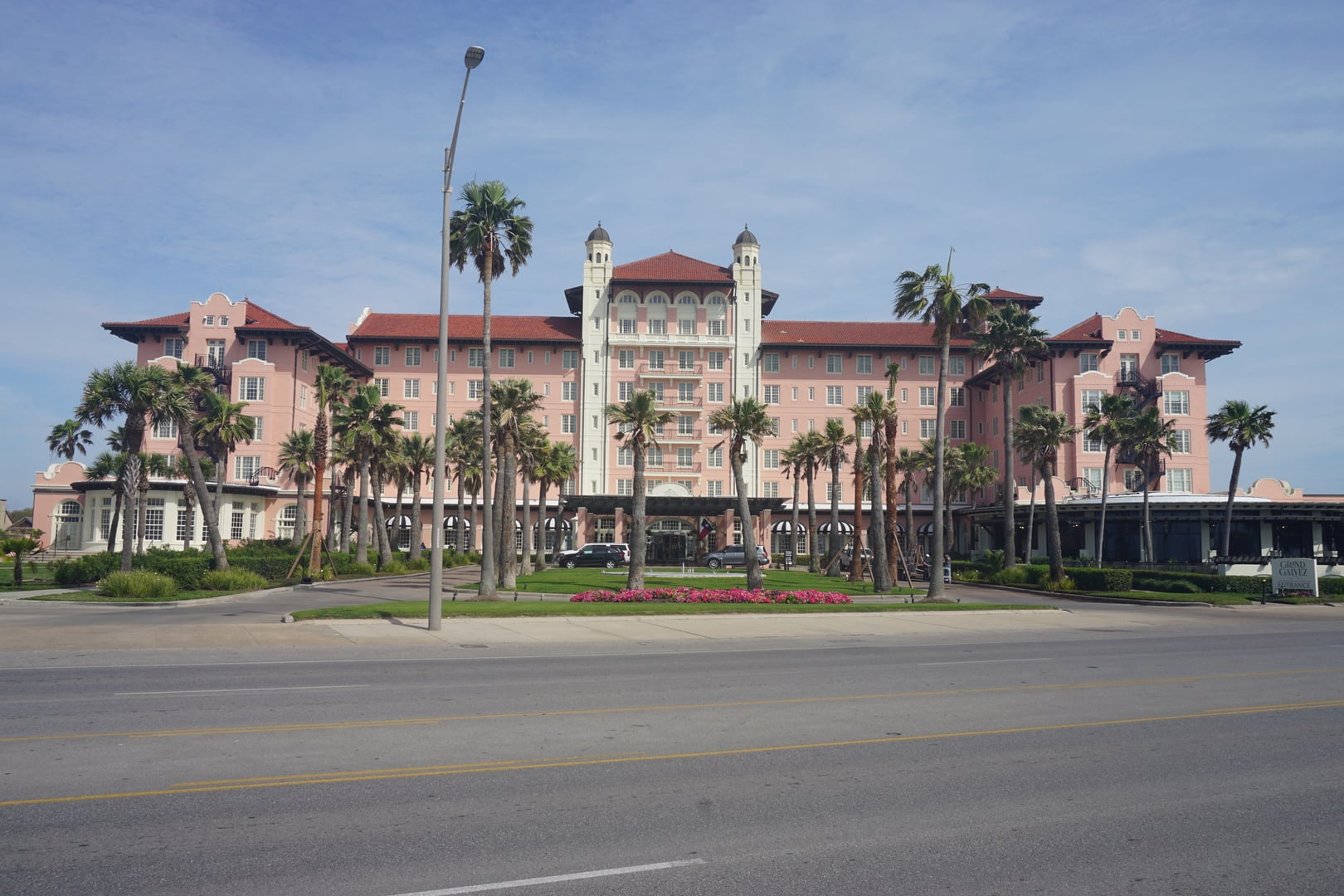
Galveston, TX
Grand Galvez, originally Hotel Galvez, opened in 1911 as part of Galveston's recovery from the catastrophic 1900 hurricane. The Spanish Colonial Revival landmark on Seawall Boulevard is the only historic beachfront hotel on the Texas Gulf Coast and now operates as part of Marriott's Autograph Collection.
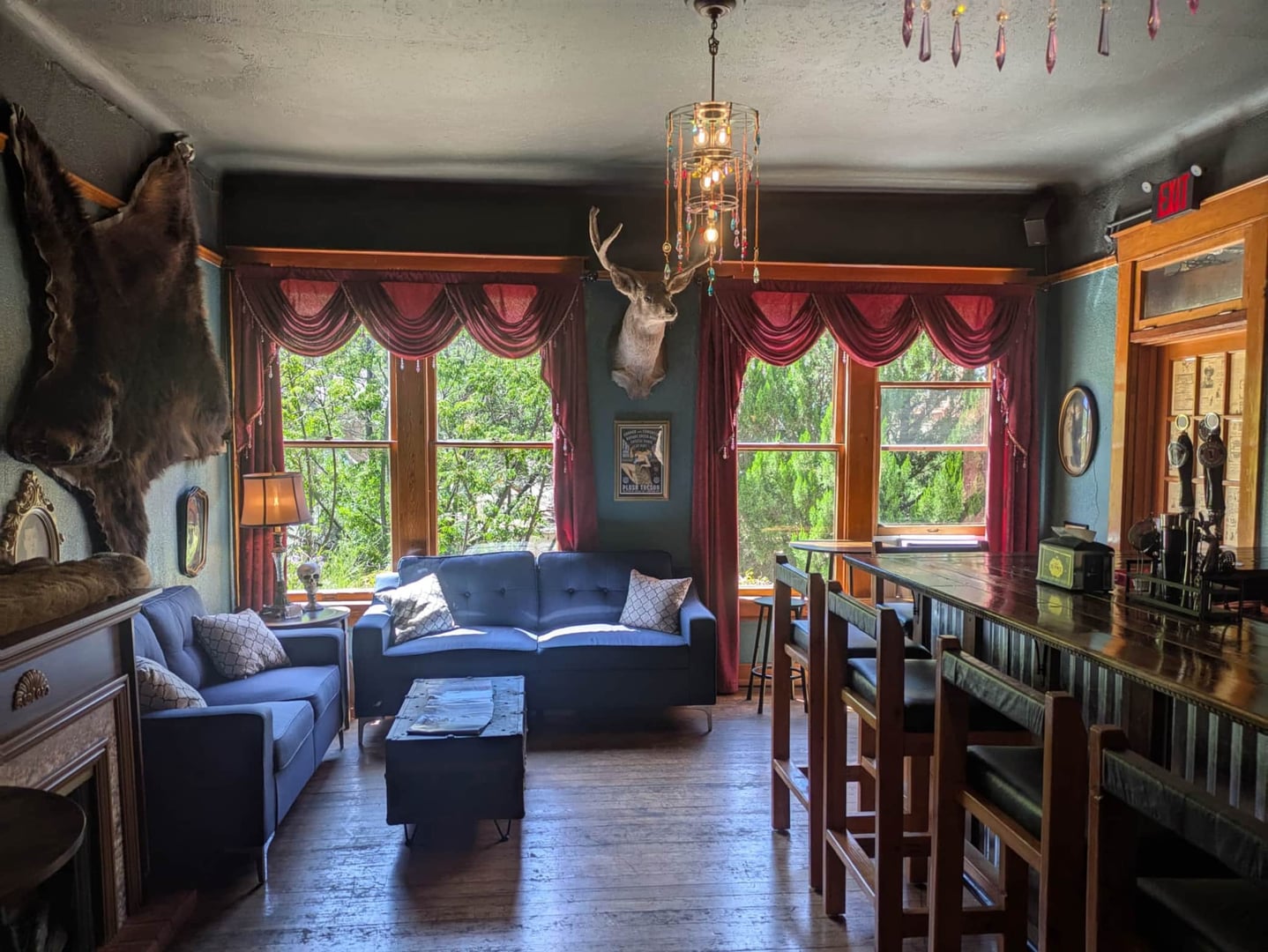
Bisbee, AZ
The Oliver House was built in 1909 by Edith Ann Oliver and her husband Henry Oliver to house executives of the Calumet & Arizona Mining Company. The building was converted to a bed and breakfast in 1986 and operates today as a historic inn in Bisbee, Arizona.