Est. 1919 · Built in 4 months 23 days during summer 1919 · Designed by C. Howard Crane · Internationally recognized concert acoustics · Paradise Theatre jazz/vaudeville venue 1941-1951 · Returned to DSO ownership September 15, 1989 after 20-year preservation effort
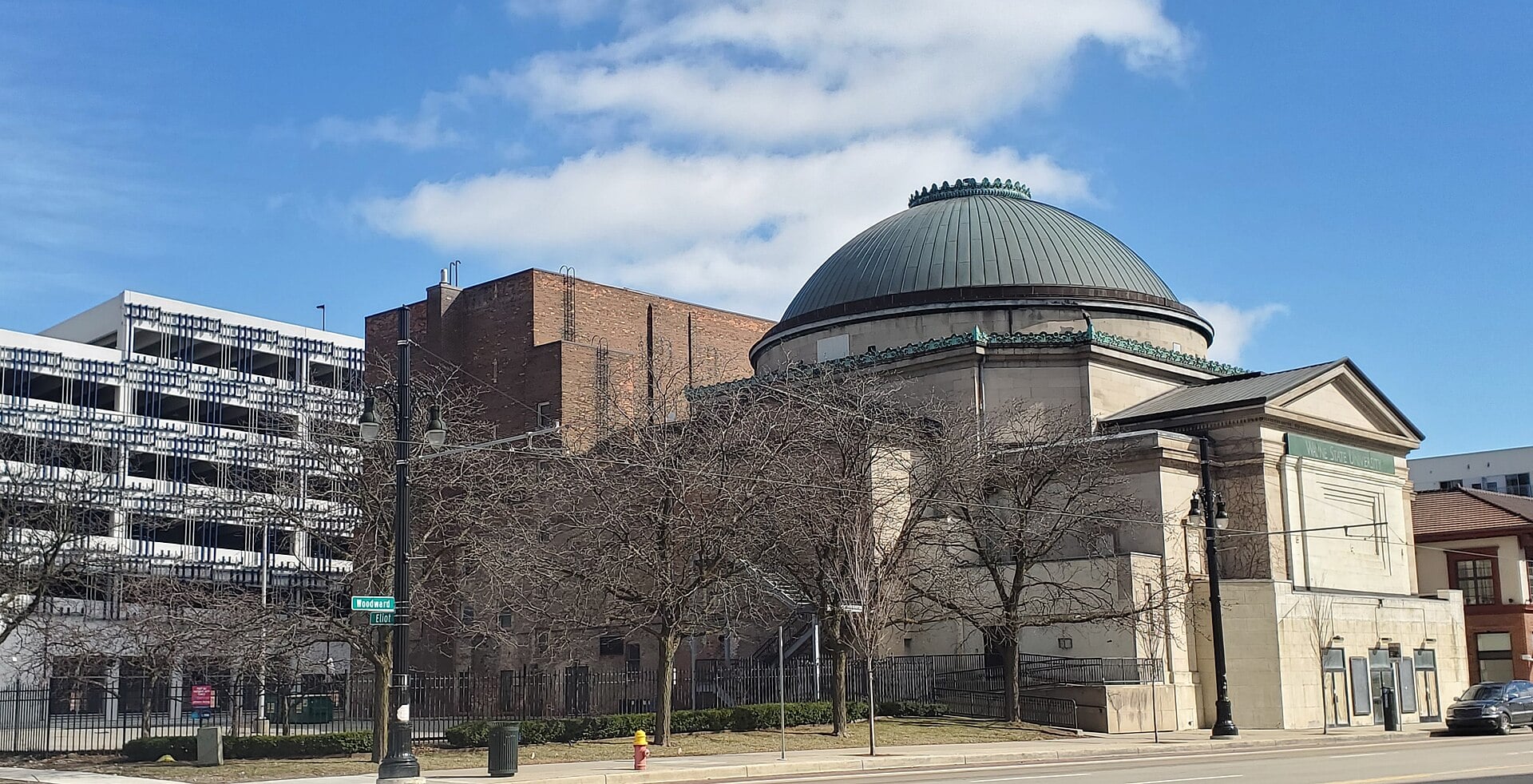
Orchestra Hall stands at 3711 Woodward Avenue, on the corner of Woodward and Parsons Street in Midtown Detroit. It was built in the summer of 1919 — construction took four months and 23 days — at the insistence of conductor and pianist Ossip Gabrilowitsch, who had threatened to resign as music director of the Detroit Symphony Orchestra unless the city built him a worthy concert hall. The hall opened with a sold-out concert on October 23, 1919.
The building was designed by C. Howard Crane, the leading theater architect in early-twentieth-century Detroit. Its simply detailed limestone exterior conceals a fan-shaped auditorium with Art Deco ornamentation and an asymmetrical interior geometry that — combined with sound-isolation features developed to defeat the noise of heavily-trafficked Woodward Avenue — gives the hall its internationally recognized acoustics.
Gabrilowitsch served as the DSO's music director from 1918 until his death from stomach cancer on September 14, 1936, in Detroit. The DSO moved to the larger Masonic Temple Auditorium in 1939. Two years later the hall reopened as the Paradise Theatre, presenting jazz and vaudeville performances through the 1940s; it closed in 1951 and sat dark and deteriorating for nearly two decades.
A grassroots preservation effort begun in 1970 — the Save Orchestra Hall campaign — raised $6.8 million across nineteen years to rescue and restore the building. The DSO returned permanently on September 15, 1989. In 2003 the hall was incorporated into the larger Max M. Fisher Music Center, which added an adjoining auditorium for jazz and chamber music.
Sources
- https://en.wikipedia.org/wiki/Orchestra_Hall_(Detroit)
- https://www.dso.org/about-the-dso/our-history/orchestra-hall
- https://detroithistorical.org/learn/encyclopedia-of-detroit/orchestra-hall
- https://historicdetroit.org/buildings/orchestra-hall
- https://detroithistorical.org/learn/encyclopedia-of-detroit/gabrilowitsch-ossip
Unexplained footsteps in empty hallsDisembodied voicesCold spots backstageMusic heard with no performance in sessionApparition resembling Ossip Gabrilowitsch backstage and in officesUnfamiliar smells
The Detroit Symphony Orchestra itself has formally adopted the haunting as cultural programming. Each Halloween week, the DSO presents 'The Ghost of Orchestra Hall' — a family concert series in which Ossip Gabrilowitsch is introduced as the friendly resident ghost of the venue, guiding young audiences through the orchestra's repertoire. This is explicitly an educational and entertainment program rather than a paranormal claim by the institution.
Independent of the DSO's official program, regional media and paranormal-heritage coverage corroborate the organic staff and visitor tradition. SEEN Magazine's metro Detroit haunted-places feature specifically documents that 'musical ghosts, or footsteps, voices and a cold presence have been reported by past employees and guests' at the DSO, and that 'an apparition of the ghost was even reported backstage and in building offices.' The accounts focus on Ossip Gabrilowitsch, the Russian-born conductor who served as DSO music director from 1918 until his death on September 14, 1936.
Reported phenomena include unexplained footsteps in empty corridors, distant voices when no one is present, cold spots in specific backstage locations, occasional unfamiliar smells, and snatches of music heard when no rehearsal is in session.
All paranormal reports for the venue are framed warmly — Gabrilowitsch, who fought to build the hall and conducted there until his final illness, is described in the lore as continuing to watch over the building he willed into existence.
Notable Entities
Ossip Gabrilowitsch (DSO music director 1918-1936, d. Sept 14 1936)
Media Appearances
- DSO 'Ghost of Orchestra Hall' annual Halloween family concert
- SEEN Magazine, 'Haunted Metro Detroit' feature
- Detroit Historical Society Gabrilowitsch biography
Where this legend is told