Est. 1846 · First Racially Integrated Cemetery in the Midwest · Site of 1763 Battle of Bloody Run (Pontiac's War) · Olmsted Firm Landscape Influence · Civil War Veteran Burials · Randolph Rogers 'Veiled Lady' Sculpture (1876)
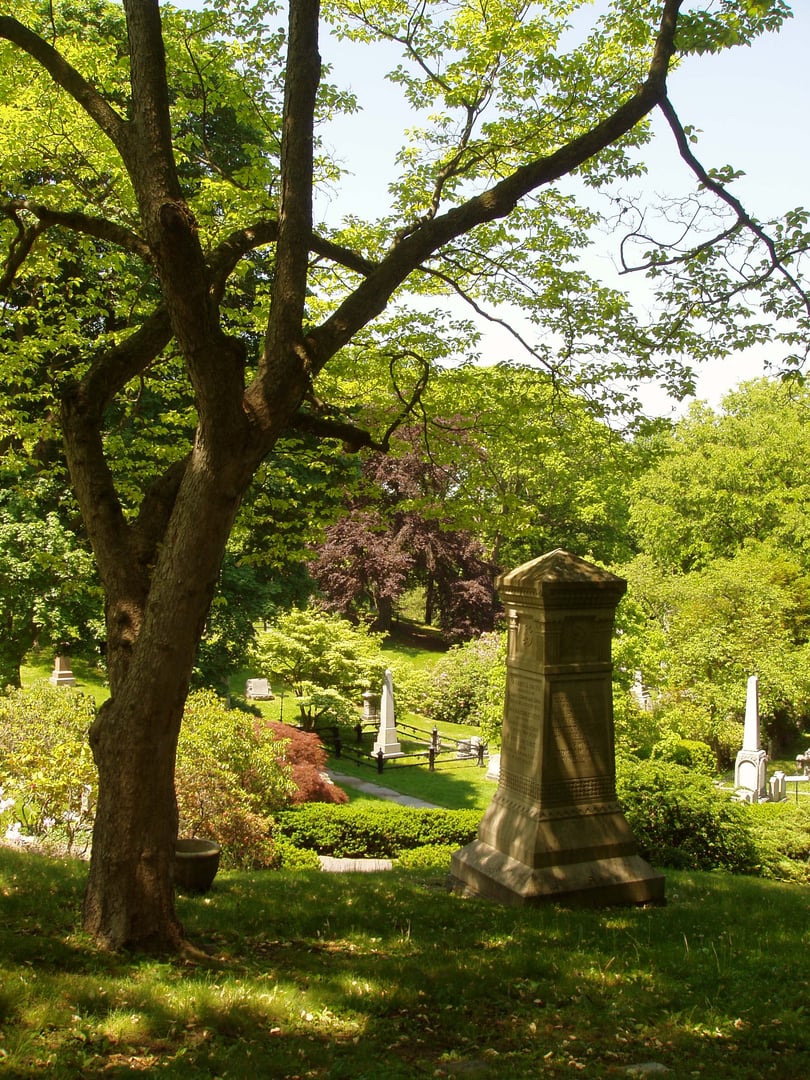
Elmwood Cemetery was founded in 1846 by a group of Detroit civic leaders as one of the first 'rural' or garden cemeteries in the American Midwest, modeled on Boston's Mount Auburn. Its 86-acre layout combined gently rolling terrain along Parent's Creek with mature trees and curving carriage drives. The cemetery was racially integrated from its founding — believed to be the first such burial ground in the region — and has continuously interred Detroiters of all backgrounds since.
In 1891 the cemetery was redesigned under the influence of the Olmsted firm, with refinements to the carriage system, plantings, and viewsheds that integrated the existing topography rather than imposing new grading.
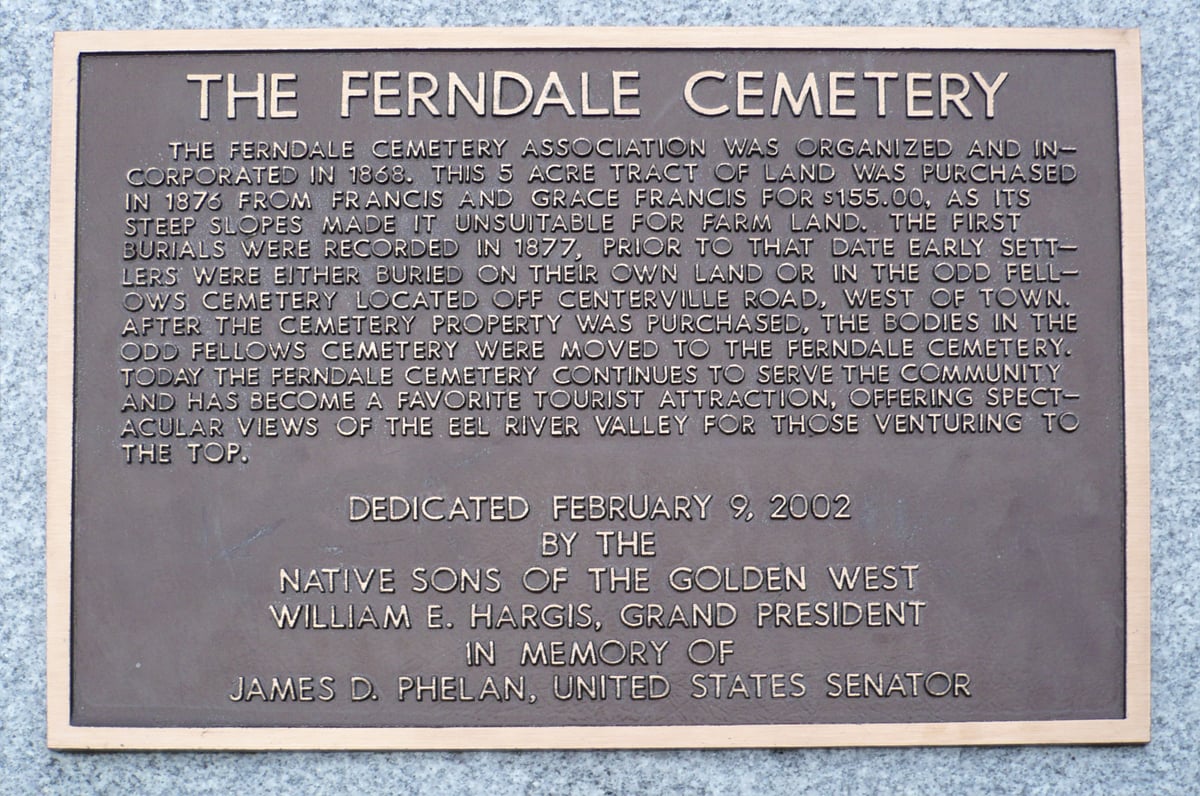
A significant portion of the cemetery covers the ground where the Battle of Bloody Run took place on July 31, 1763, during Pontiac's War. Approximately 250 British troops under Captain James Dalyell attempted a pre-dawn surprise attack on Pontiac's encampment two miles east of Fort Detroit. Pontiac's forces — possibly forewarned by French settlers in the area — were waiting at Parent's Creek and inflicted a sharp defeat on the British column. Dalyell was among 20 British dead, with 41 wounded. The creek was said to have run red, giving the engagement and the stream its enduring name. The cemetery trustees have preserved a historic plaque marking the battle, and Elmwood remains the only place in Detroit where the now largely-underground Bloody Run remains visible above ground.
Notable burials include Michigan governors, Civil War officers and soldiers (including Brevet Brig. Gen. Russell A. Alger), several Detroit mayors, abolitionists, and 19th-century industrialists. The Eliza Davenport Waterman monument — a 12-foot Carrara marble Veiled Lady carved in 1876 by Randolph Rogers of Ann Arbor on commission from Eliza's husband Joshua — is among the cemetery's most photographed sculptures. The Elmwood Historic Cemetery Foundation today maintains the grounds, archives, and tour programming.
Sources
- https://www.elmwoodhistoriccemetery.org/foundation/history-of-elmwood-cemetery
- https://www.detroithistorical.org/learn/online-research/encyclopedia-of-detroit/elmwood-cemetery
- https://detroithistorical.org/blog/2015-07-31-battle-bloody-run-and-pontiacs-tree
- https://en.wikipedia.org/wiki/Battle_of_Bloody_Run
- https://www.findagrave.com/memorial/91653122/eliza-cameron-waterman
ApparitionsBritish-soldier figures in fogPhantom gunfire soundsVeiled female figureCold spotsSense of being followedShadow figures
Two distinct legend traditions cluster at Elmwood. The first is military and historical: visitors walking the low-lying ground along the former Parent's Creek bed — now Bloody Run, largely culverted underground — report fleeting figures in British red coats in early-morning fog, indistinct shapes running, and the distant sound of gunfire. The cemetery sits directly over the engagement ground of the July 31, 1763 Battle of Bloody Run; Captain James Dalyell and 19 other British soldiers died on this terrain. The basin's natural fog patterns and the documented body count make this the most environmentally grounded of the cemetery's ghost stories.
The second cluster centers on the Veiled Lady monument. Eliza Davenport Waterman died on December 29, 1865; her husband Joshua W. Waterman commissioned Randolph Rogers in 1876 to carve a 12-foot Carrara marble veiled female figure as her memorial. Joshua later married Eliza's sister Fanny Davenport. The popular legend, repeated by Visit Detroit, Mysterious Michigan, and several haunted-Detroit guides, holds that Eliza's spirit — angered by her widower's remarriage to her sister — roams the cemetery, appearing as a figure in a torn white dress with veil obscuring her face, sometimes following visitors back toward the cemetery gates.
The monument itself has a notably eventful biography: it was carved in Rome and lost at sea when the ship transporting it sank near Spain; salvaged after roughly two years, it was lost again briefly on the Hudson River before being recovered and finally installed; in 1919 a fierce storm toppled and broke the sculpture. Each disruption is sometimes folded into the haunting narrative.
Reports from cemetery staff and tour participants describe cold spots near the Waterman plot, the sense of being followed along certain paths, and shadow figures glimpsed among the mature oaks at dusk. The lore is widely circulated in local outlets, but specific apparition descriptions trace to second-hand visitor reports rather than to documented investigations.
Notable Entities
Captain James Dalyell and Bloody Run soldiers (1763)Eliza Waterman / The Veiled Lady
Media Appearances
- Visit Detroit — Famous Haunted Hikes
- Mysterious Michigan — Strange Stones: The Veiled Lady
- US Ghost Adventures — Detroit
- Elmwood Endures: History of a Detroit Cemetery by Michael S. Franck (1996)