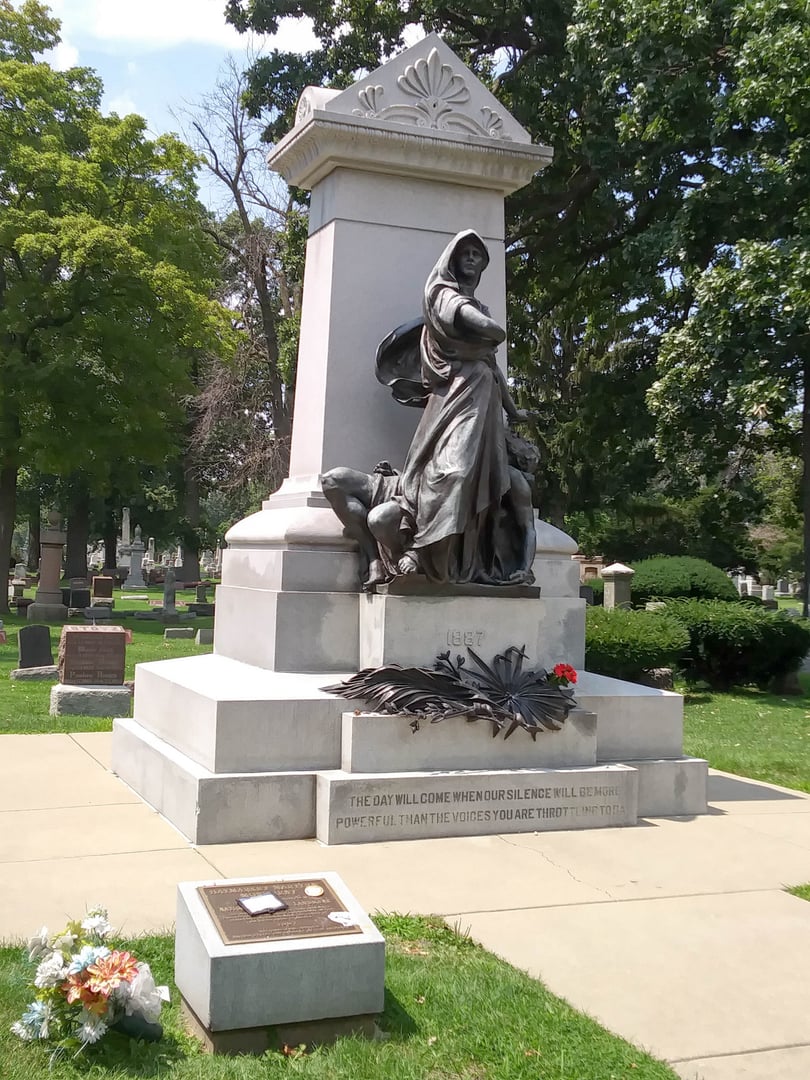
Burial place and 1870 monument of Bucksport founder Colonel Jonathan Buck · One of Maine's most famous folklore landmarks · Long-documented roadside attraction
Buck Cemetery is a small, historic 18th-century graveyard on a hill along US Route 1 (Main Street) in Bucksport, Maine. It is maintained by the town, which has added off-street parking on Hinks Street and a short path so visitors can reach the cemetery's centerpiece: the monument to Colonel Jonathan Buck.
Jonathan Buck (February 20, 1719 - March 18, 1795) founded the town that bears his name, settling what was known as Plantation No. 1, building the first sawmill and opening the first general store. He served as a justice of the peace. He died in 1795, and seventy-five years later, in 1870, his descendants erected a tall granite monument in his memory in the cemetery.
The monument is famous far beyond Bucksport because of a discoloration on the granite roughly in the shape of a woman's lower leg and foot. According to the town and to geologists, the mark is a natural defect in the granite caused by oxidation of iron in the stone — a common feature of quarried granite. The town states the stone is original and has not been replaced.
The site has been written up by Wikipedia, Atlas Obscura, Roadside America, and Maine's NewsCenter Maine 'Maine Mysteries' series, all of which treat it as one of the state's best-known pieces of folklore. It remains a popular free roadside attraction, especially around Halloween.
Sources
- https://en.wikipedia.org/wiki/Jonathan_Buck_(Bucksport)
- https://www.atlasobscura.com/places/cursed-memorial-colonel-buck
- https://www.roadsideamerica.com/story/6159
- https://www.newscentermaine.com/article/news/local/maine-mysteries-the-buck-curse-of-bucksport/97-344968552
- https://fringeparanormal.wordpress.com/2011/07/13/buck-cemetery/
Leg-and-foot-shaped stain said to reappear after cleaning or replacementReputation as a 'cursed' grave
The Buck curse is among Maine's most retold ghost stories. According to the legend, Jonathan Buck — acting as a magistrate — condemned a woman to death for witchcraft, and as she was executed she cried out a curse that her sign would forever mark his tombstone. The leg-and-foot-shaped stain on the 1870 granite monument is said to be that mark, and the story claims it has returned every time the town tried to scrub it away or swap the stone.
Historians and the town of Bucksport are firm that the legend has no factual basis. No witches were ever tried or executed in Maine; Colonel Buck, as a justice of the peace, had no authority to try or execute anyone for sorcery; he was born in 1719, decades after the last witch executions in New England (the Salem trials ended in 1692, and no one in America was ever burned for witchcraft); and the stained stone is a memorial erected in 1870, seventy-five years after Buck's 1795 death. The town and geologists attribute the mark to natural iron oxidation in the granite.
HauntBound presents the curse strictly as folklore. The historical Jonathan Buck was a town founder and justice of the peace; there is no documented witch trial, execution, or victim associated with him, and visitors should treat the 'curse' as one of New England's most durable legends rather than recorded history.
Notable Entities
The unnamed 'witch' of the legend (folkloric; no historical victim documented)
Media Appearances
- Atlas Obscura
- Roadside America
- NewsCenter Maine 'Maine Mysteries' series
- Astonishing Legends podcast