overnight-stay Booking Required
Overnight stay at the Tidewater Inn
Book a room at the operating Tidewater Inn, where staff and guests have reported encounters attributed to founder Arthur Grymes.
- Duration:
- 12 hr
HauntBound archive · catalog record
Reported phenomena, as catalogued
Easton's 1949 Colonial Revival hotel, built on the site of the fire-destroyed Hotel Avon; staff report its founder, Arthur Grymes, still watching over the service.
101 E Dover Street, Easton, MD 21601
Research updated September 2026
Age
All Ages
Cost
$$$
Operating hotel with overnight rooms and a restaurant; rates vary by season. See the hotel website for current pricing and reservations.
Access
Wheelchair OK
Downtown Easton sidewalks; the hotel has accessible entrances and elevators.
Equipment
Photos OK
Est. 1949 · Built on the site of the 1891 Hotel Avon, destroyed by fire in 1944 · Opened September 3, 1949 after a 1947 groundbreaking delayed by postwar shortages · North addition added in 1953 · Listed on the National Register of Historic Places in 2007 · Long-running social and lodging center of downtown Easton
Easton's principal hotel for the first half of the twentieth century was the Hotel Avon, built in 1891 on this Dover Street corner. The Avon served the town for roughly fifty years until it was destroyed by fire in 1944.
Local businessman A. Johnson Grymes, commonly remembered as Arthur Grymes, set out to replace it. Postwar shortages of steel and plumbing materials slowed construction after the 1947 groundbreaking, and the Colonial Revival brick hotel opened on September 3, 1949. A north addition followed in 1953. The inn was built to be the social and lodging center of Easton and the surrounding Eastern Shore, a role it has largely kept.
The Tidewater Inn was listed on the National Register of Historic Places in 2007. It continues to operate as a hotel and restaurant in downtown Easton and is a fixture of the town's hospitality scene.
The spine of the modern ghost lore is the founder himself. Staff accounts collected by Easton ghost-walk operators describe Grymes as a presence still attentive to the quality of service in the building he created — the through-line that ties the inn into the town's evening ghost walks.
Sources
The Tidewater Inn's lore centers on its founder. The travelhag.com account of Easton's ghosts reports that nearly every employee has a story about an encounter with Mr. Grymes. Chesapeake Ghost Walks describes him as 'still demanding fine service of the staff at the Tidewater Inn,' and US Ghost Adventures presents him as the builder of the inn who is still seen walking the halls and encouraging employees to stay vigilant about service.
Three independent ghost-walk and travel sources carry the same core legend: a founder whose attention to the hotel's standards is said to outlast him. US Ghost Adventures also notes a reported account of a little girl running through the lobby, a secondary detail that does not appear in the other accounts.
The reports come from staff anecdotes relayed on guided ghost walks rather than from paranormal investigation. As an operating hotel, the Tidewater Inn folds the Grymes legend into the broader Easton evening walks, where it serves as one of the most repeated stories in town.
Notable Entities
Book a room at the operating Tidewater Inn, where staff and guests have reported encounters attributed to founder Arthur Grymes.
The Tidewater Inn is a stop on guided Easton ghost walks operated by Chesapeake Ghost Walks and US Ghost Adventures, which narrate the Grymes legend; the Chesapeake walk meets in front of the inn.
Some links on this page may earn HauntBound a small commission when you book, at no extra cost to you. Our editorial picks are independent. Full disclosure
See current room rates and availability at Tidewater Inn.
Check rates and bookRates come from booking partners, so a small property may not be listed. Book direct with Tidewater Inn
Every HauntBound history is researched from documented sources. We clearly separate verified historical fact from paranormal folklore.
Free Guide
9 verified stops, rated for families, mapped in order. Free.
One email to confirm, then the guide link. Unsubscribe anytime.
Frostburg, MD
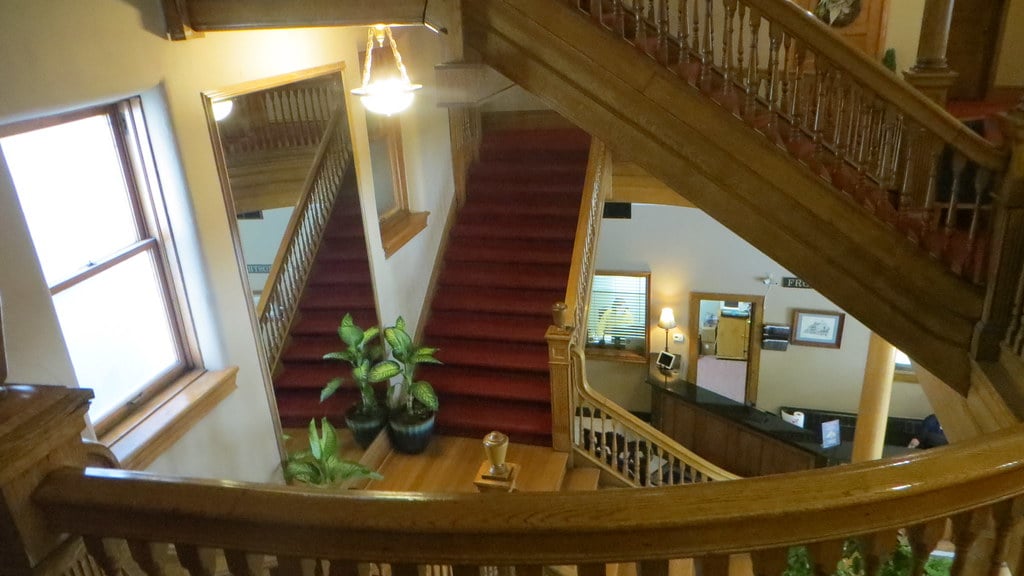
The hotel opened on New Year's Day 1897, built by William R. Percy, and after his death that year was run as the Hotel Gladstone. William R. Gunter bought it around 1900, renamed it, and over two decades added electric lighting, a 175-seat dining room, a pressed-tin ceiling and a mahogany bar. The basement once held prisoners in transit on the National Road and an underground Prohibition-era bar; it was restored beginning in the 1980s and again under owners who purchased it in 2019.
Ketchikan, AK
The Gilmore Hotel opened in 1927 on Front Street in downtown Ketchikan and is described as the oldest hotel in the city. It is listed on the National Register of Historic Places, sits near the cruise docks and Creek Street, and continues to operate as a hotel with a ground-floor restaurant.
Birmingham, AL
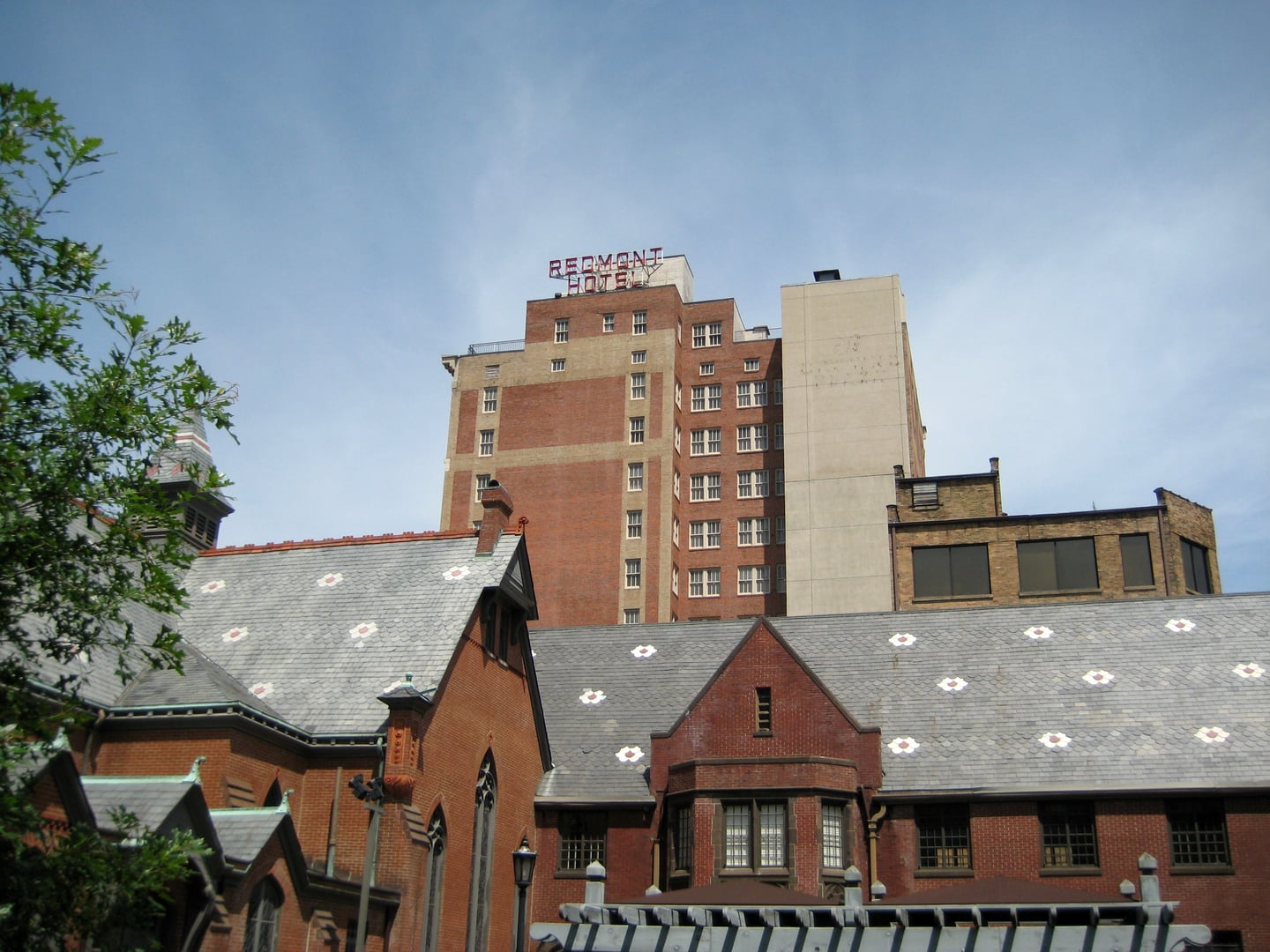
The Redmont Hotel opened in 1925 as a 200-room downtown hotel — Birmingham's oldest continuously operating hotel. Designed by Atlanta architect G. Lloyd Preacher in Chicago School style, it was purchased in 1946 by hotelier Clifford Stiles, who converted the top floor into a private penthouse for his family in 1947. Country music legend Hank Williams Sr. spent his last night at the Redmont before his death en route to a January 1, 1953 show. The hotel was added to the National Register of Historic Places in 1983 and operates today as a Curio Collection by Hilton property.