Est. 1858 · Kirkbride-plan state psychiatric hospital · Brewster v. Dukakis deinstitutionalization consent decree · Patient cemetery with numbered graves · Old Main demolished 2006-07; site redeveloped as Village Hill
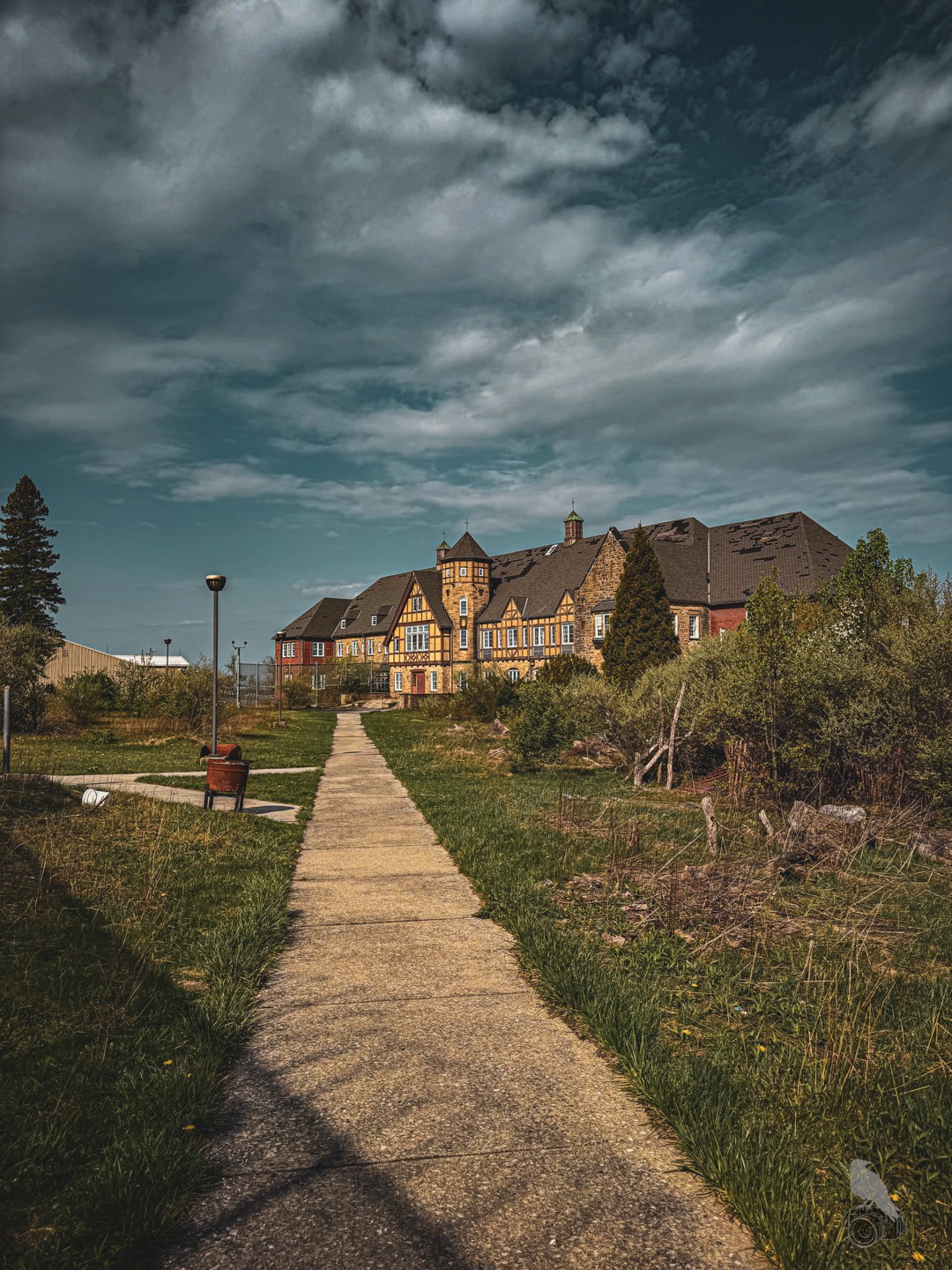
Northampton State Hospital opened in 1858 as the Northampton Lunatic Hospital, one of Massachusetts's nineteenth-century state asylums built on the Kirkbride plan, a design by physician Thomas Story Kirkbride that called for long staggered wings, abundant light, and ventilation as part of a then-progressive 'moral treatment' model.
The institution was built to house several hundred patients. Like most Kirkbride hospitals, it was overwhelmed as state populations grew, and at its peak in the mid-twentieth century it held well over 2,000 patients in conditions that deteriorated badly from the founders' intentions. Overcrowding, understaffing, and the broader failures of large-scale institutional psychiatry made the hospital a subject of reform pressure in its later decades.
A 1978 federal consent decree, Brewster v. Dukakis, ordered the state to move patients into community-based care and wind the hospital down. Northampton State Hospital closed in 1993. Its central Kirkbride building, known locally as Old Main, stood vacant and decaying for years before it was demolished in 2006 and 2007.
The site was redeveloped as Village Hill, a mixed-use neighborhood of housing and commercial space on the former Hospital Hill. Set apart from the new construction is the hospital cemetery, where many patients were buried under markers identifying them by number rather than name, a common practice at state institutions of the era.
Sources
- https://en.wikipedia.org/wiki/Northampton_State_Hospital
- https://www.kirkbridebuildings.com/buildings/northampton/
Reports of muffled crying in the abandoned wards (pre-demolition)Faint sounds in empty corridors
The reputation of Northampton State Hospital rests less on a single famous ghost story than on the long, documented record of the institution itself and the years its abandoned Kirkbride building stood open to the weather and to trespassers. People who got inside the decaying Old Main before its demolition reported muffled crying and other faint sounds carrying through the empty wards, accounts that circulated in regional ghost-lore writeups and urban-exploration circles.
Those stories are folk reports gathered from a building that no longer exists, and they cannot be verified. What can be documented is the harder history they grew from: a hospital built for a few hundred people that came to hold thousands, and a cemetery where the dead were marked with numbers. The patients buried there were real people whose names were, in many cases, recorded only in institutional ledgers.
Visitors today encounter a redeveloped neighborhood rather than ruins. The most honest way to engage with the site is as a place of difficult social history, treating the cemetery with the respect owed to any burial ground.