Est. 1754 · Built 1754 by loyalist Edward Winslow, great-grandson of Pilgrim Edward Winslow · Site of Ralph Waldo Emerson's 1835 second marriage · Headquarters of the General Society of Mayflower Descendants
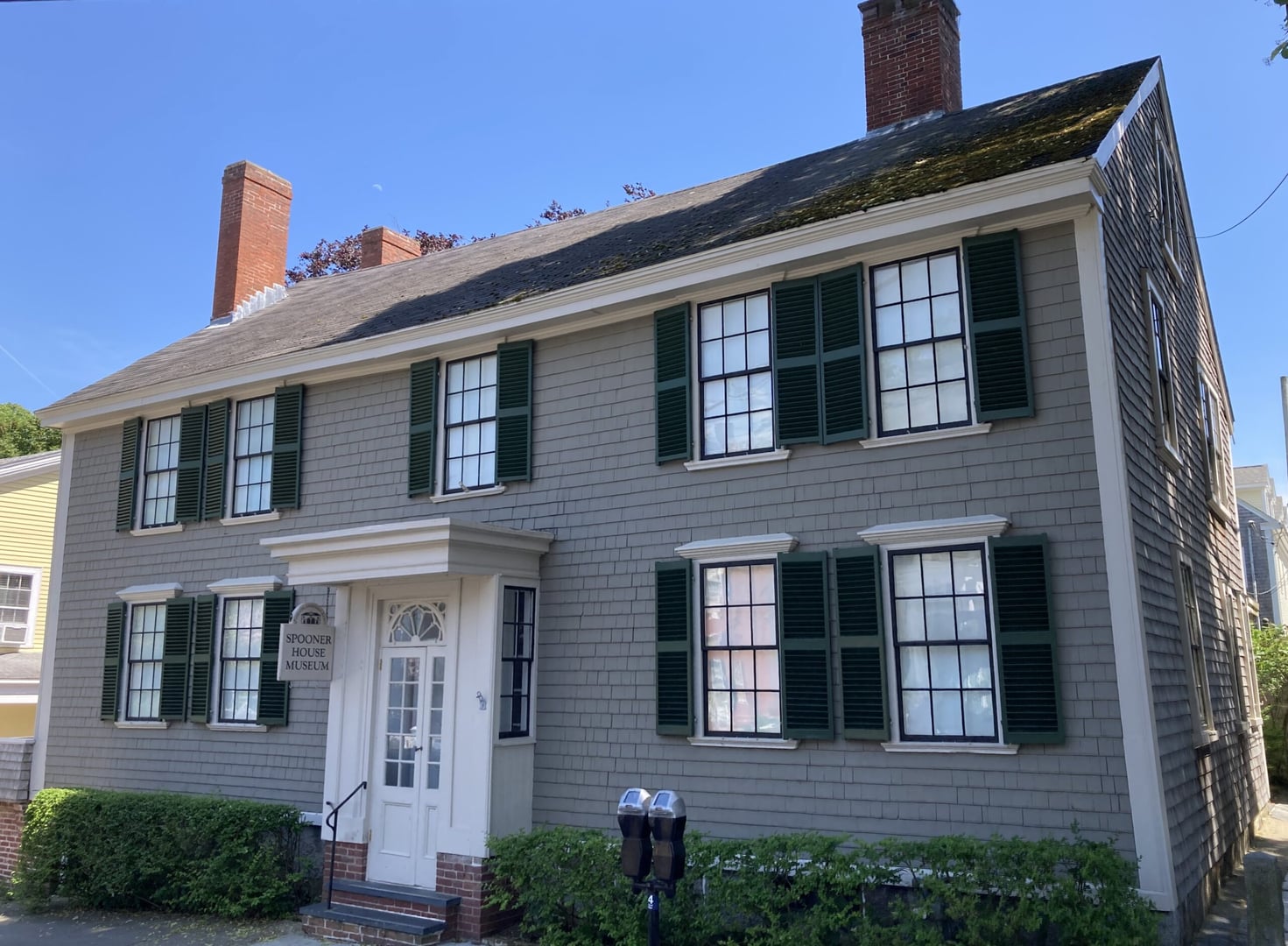
The mansion at 4 Winslow Street was built in 1754 by Edward Winslow, a Plymouth loyalist and scholar who was the great-grandson of Edward Winslow, the third governor of Plymouth Colony. When the Revolution turned against the Crown, the loyalist Winslow left Plymouth — moving his family to New York and then to Halifax after the British evacuation of Boston in 1776.
The house passed through later owners over the following century and a half. On September 14, 1835, Ralph Waldo Emerson married his second wife, Lidian Jackson, in the parlor, giving the house a literary footnote alongside its colonial pedigree.
In 1941 the General Society of Mayflower Descendants purchased the Edward Winslow House and made it the organization's headquarters and a historic house museum. The Society's offices and library are located behind the mansion. The house is furnished with 18th-century period decorations and is open for tours during its season.
The building sits a short walk uphill from Plymouth Rock, Cole's Hill, and the harbor, in the cluster of historic sites at the center of Plymouth. Its long continuous use — colonial residence, private home, and now a descendants' society museum — has kept it intact for more than 270 years, and it is one of the regular subjects of Plymouth's ghost-tour circuit.
Sources
- https://en.wikipedia.org/wiki/Mayflower_House_Museum
- https://themayflowersociety.org/visit/mayflower-society-house/
- https://bostonghosts.com/plymouth-americas-haunted-hometown/
Phantom organ music in the libraryDoors opening on their ownObjects moved between roomsDisembodied footsteps
The most-repeated story at the Mayflower Society House is the phantom organ. Visitors and staff have reported hearing a large organ playing in the library, sometimes faintly, with no one seated at the instrument and no source for the music. The library is the room these accounts consistently point to.
Beyond the organ, local accounts describe smaller disturbances through the house: doors found ajar after being securely closed, objects moved from one room to another, disembodied footsteps, and a scent of lavender drifting through the halls. Plymouth ghost lore most often attributes these to a 19th-century resident said to have cared deeply for the house and to have stayed on after death, rather than to the original loyalist builder.
These reports are anecdotal, drawn from visitor and tour accounts rather than formal investigation, and the Society presents the house first as a museum of Mayflower and colonial history. The haunting sits as a folklore layer over a well-documented building, and the organ in the library remains its signature image on Plymouth's ghost-tour routes.
Notable Entities
A 19th-century resident said to remain in the house