Est. 1798 · Oldest Cemetery in Rapides Parish · National Register of Historic Places (1979) · Grave of George M. Graham — Father of Louisiana State University · Grave of Governor James Madison Wells (Reconstruction Era) · Spanish Colonial Military Outpost Site (c. 1722)
The bluffs above the Red River in Pineville have been a site of European colonial activity since approximately 1722, when Spanish colonial records document a military outpost at this location. The precise establishment of formal burials at the site is placed between 1774 and May 19, 1798, when early local records confirm the designation of the ground for burial purposes. The elevated position was chosen deliberately: bluff burials were standard practice in the Mississippi and Red River valleys to prevent grave flooding during seasonal high water.
The cemetery's roll of notable interments reflects the concentrated weight of Louisiana's early political and educational history. George M. Graham (1807-1891) is buried here and is credited as the 'Father of Louisiana State University' for his foundational role in establishing the institution. James Madison Wells (1808-1899), Governor of Louisiana during the Reconstruction period, is interred alongside U.S. Senator Josiah S. Johnson (1784-1833), Congressman Isaac Thomas (1784-1859), and U.S. Senator John R. Thornton (1846-1917). Pierre Paul Baillio (1771-1824), the builder of the Kent Plantation House, is also buried here.
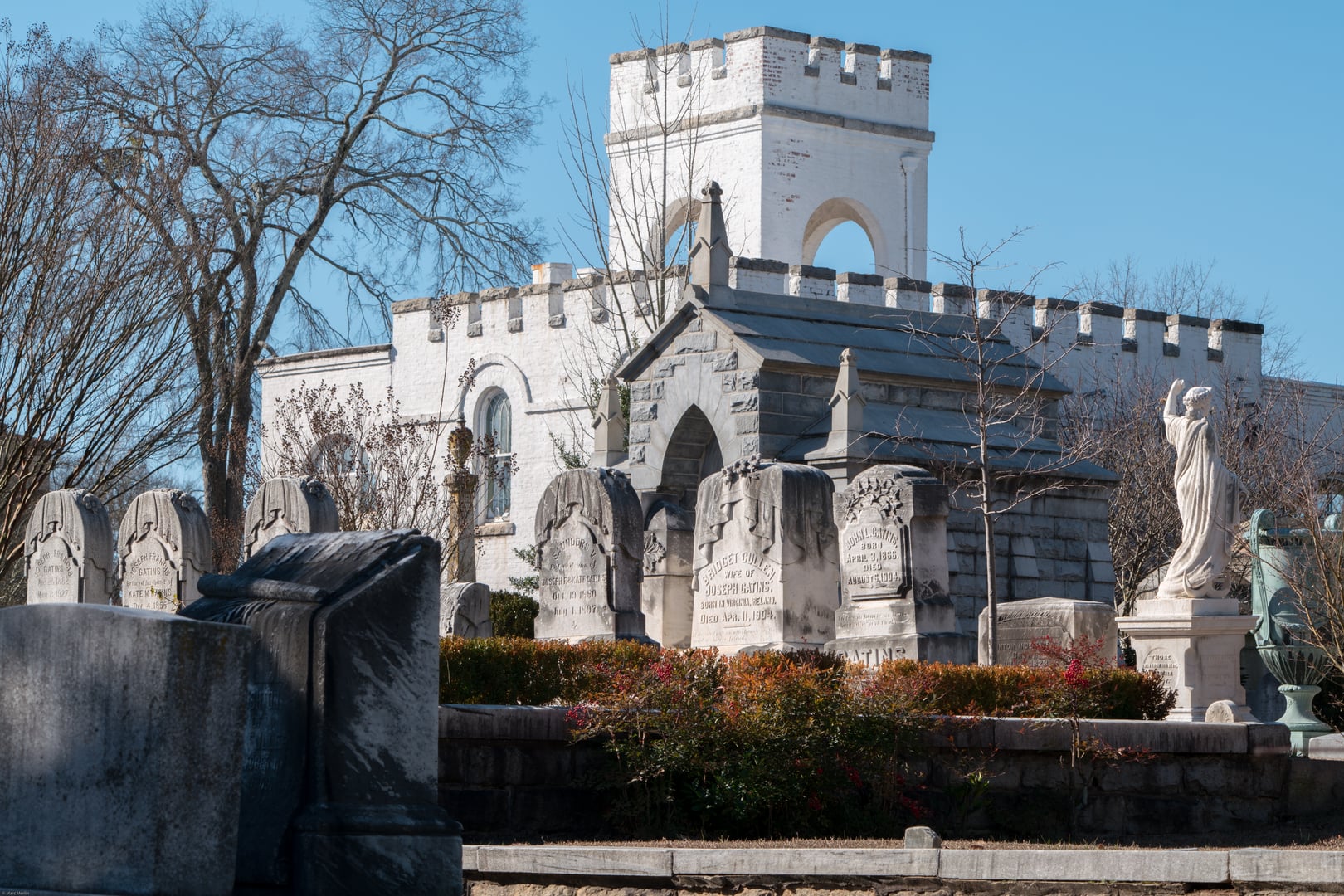
The oldest marked grave belongs to Pierre Baillio, son of Kent House founder Pierre Baillio II, dated 1809. The cemetery's architectural features include examples of what is described as 'some of the finest 19th century ornamental cast iron fence in the state' and a 25-foot imported granite obelisk in the Mead family plot.
The Rapides Cemetery Association was founded in 1872 to restore and maintain the grounds after the Civil War. The National Register of Historic Places added the cemetery on June 15, 1979.
Sources
- https://en.wikipedia.org/wiki/Rapides_Cemetery
- https://explorealexandriapineville.com/listings/rapides-cemetery/
Unexplained soundsApparitions (traditional)
Rapides Cemetery appears in the Louisiana History Museum's annual Halloween ghost scavenger hunt as one of fourteen sites in the Alexandria-Pineville area. The event is organized around documented historical figures at each location rather than invented supernatural narratives — a format that suits a cemetery where the historical record is more thoroughly documented than the paranormal one.
The cemetery's claim to haunted status rests on the character common to sites of this age and historical density: a place where the dead have names and documented lives, where the graves of U.S. Senators and Louisiana governors stand on bluffs above the same river that carried their era's commerce, is a place where the past does not feel entirely past. The specific reported phenomena at Rapides Cemetery are not well-documented in public sources beyond its inclusion in the scavenger hunt circuit.
The site's age — burials documented from 1809, colonial activity from 1722 — makes it among the oldest continually significant sites in Rapides Parish, and its cast-iron fencing and granite obelisk give it the physical character of a place that takes its history seriously. For visitors to the Alexandria-Pineville area interested in historic dark tourism, it functions as an anchor site rather than a destination for specific paranormal experiences.