Est. 1927 · Baton Rouge General Hospital (1927–1950) · First Location of WAFB-TV Channel 9 (1964) · Guaranty Broadcasting / Guaranty Media Headquarters
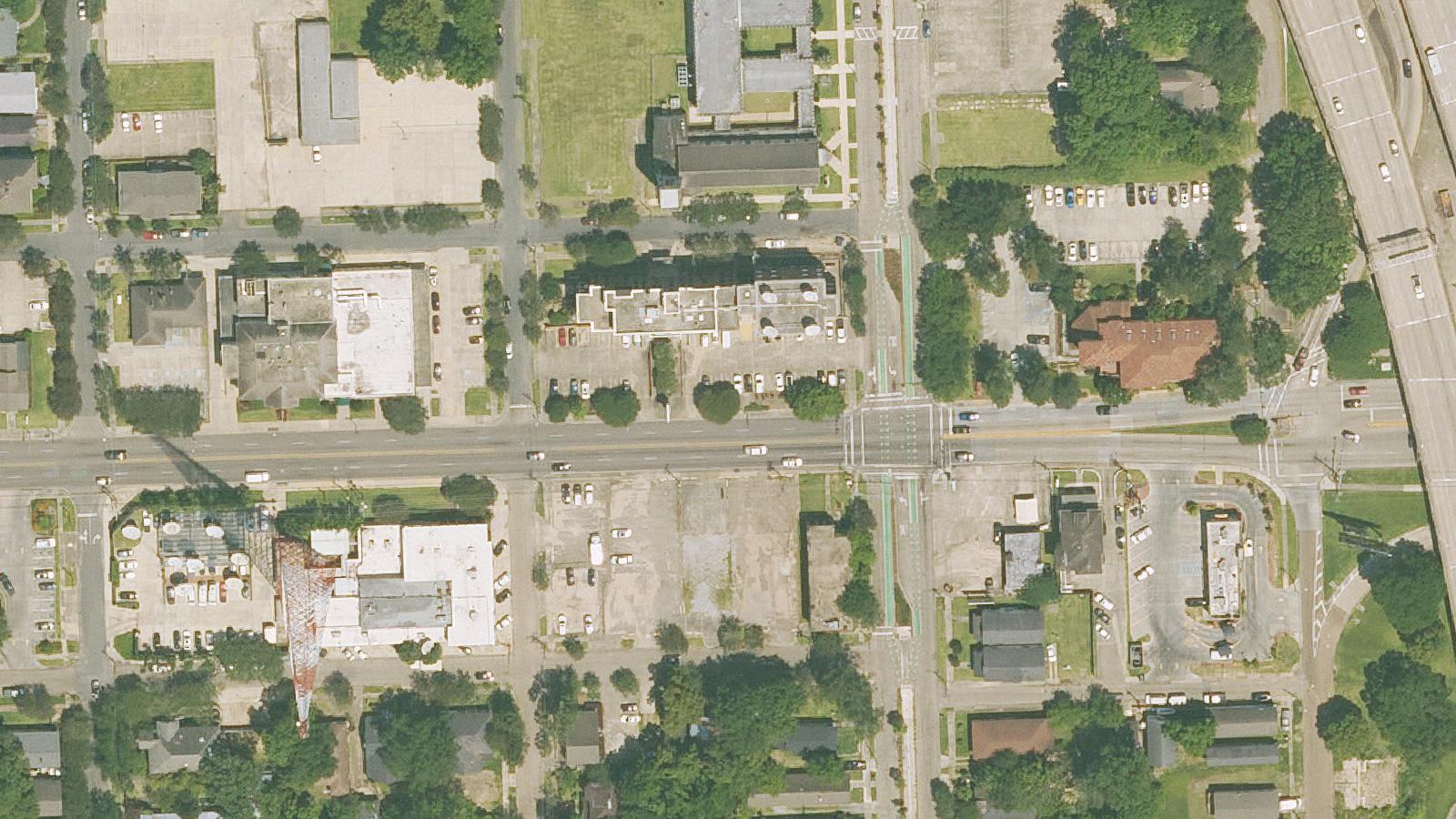
The building at 929 Government Street in Baton Rouge served as Baton Rouge General Hospital from 1927 until January 30, 1950, when the hospital relocated. The facility operated as a 62-bed hospital, and the ground floor contained the hospital morgue — a feature that would become central to the building's later reputation. The hospital had previously occupied a different location at 315 Florida Street, operating as The Sanitarium.
After the hospital's departure, the building was acquired by Guaranty Broadcasting, established in 1964 when it became home to WAFB-TV Channel 9, Baton Rouge's first television station. During that transition the former morgue space on the ground floor was converted first into a cafeteria and subsequently into a file storage room, with the original walk-in freezer repurposed for document storage.
The building remains in use today as the headquarters of Guaranty Media Group. There is no public access to the interior, and the company operates entirely as a commercial broadcasting entity with no tourism-facing programming related to the building's history.
Sources
- https://www.guarantymedia.com/about/
- https://www.brgeneral.org/about/history
- https://www.visitbatonrouge.com/blog/most-haunted-places-in-baton-rouge/
Cold spots (ground floor / former morgue)Apparitions of uniformed hospital staffAutonomous elevator movementUnexplained sounds and footsteps
The haunting accounts for 929 Government Street cluster on the ground floor, the former morgue space. Night-shift security guards have described entering the area and encountering a sudden and pronounced temperature drop, distinctly colder than the rest of the building. Several guards report seeing figures in hospital uniforms who disappear when approached or addressed.
Elevator activity has been cited as particularly unnerving: elevators reported moving between floors without any occupant pressing controls. Workers have described hearing unexplained sounds — footsteps, doors, and unidentified mechanical noises — emanating from the lower level when the building is otherwise empty.
The accounts — sourced from local journalism and tourism documentation — indicate that multiple security personnel, independently of one another, have declined to patrol the first floor during overnight shifts. No paranormal investigation group has published a formal report on this building. The site offers no public access and is not a designated tourism destination.