Drive-By
Pea Farm Drive-By
The vine-covered ruins are partially visible from West 70th Street. The property is private and posted — observation from the public road only.
- Duration:
- 15 min
HauntBound archive · catalog record
Reported phenomena, as catalogued
+ 1 further entry on record
Vine-covered ruins of the 1905 Caddo Parish penal farm, built on a Reconstruction-era Black politician's plantation; visitors report moaning, shadow figures, and screams from the crumbling women's section.
W 70th St, Shreveport, LA 71129
Research updated September 2026
Age
All Ages
Cost
Free
No admission — exterior/drive-by only; property is privately owned and posted
Access
Limited Access
Dense vegetation, no cleared path; ruins are structurally unsafe
Equipment
Photos OK
Est. 1905 · Built on the former plantation of Caesar C. Antoine, Louisiana's Black Reconstruction-era Lieutenant Governor · Predecessor to the Caddo Correctional Center · Model self-sustaining parish penal farm; phased out 1960s
The land on which the Caddo Parish Penal Farm stands was once the cotton plantation of Caesar Carpentier Antoine, who served as Louisiana's Lieutenant Governor from 1873 to 1877 — one of three Black Republicans to hold that office during Reconstruction. Caddo Parish purchased Antoine's plantation and in 1905 constructed the penal farm on the property, representing a then-fashionable model of self-sustaining incarceration: inmates cultivated crops, and the surplus was sold to fund jail operations.
The facility, which became universally known as 'The Pea Farm' (a shortening of 'Penal Farm,' not a reference to any crop), served as the predecessor to the modern Caddo Correctional Center. It housed the parish's most violent offenders and became notorious for brutal conditions — inmates were reportedly beaten and starved as punishment, and guards were said to be extremely harsh. A separate women's section stood adjacent to the main building.
A Potter's Field cemetery for inmates who died in custody adjoined the property. The penal farm was phased out in the 1960s and has since fallen into ruin. The main building's vine-covered shell is visible from West 70th Street, but the surrounding acreage has been developed into an industrial area that includes General Motors and General Electric facilities. The ruins are privately owned and posted against trespass.
Dr. Cheryl White of LSU Shreveport, a local historian, has addressed the Pea Farm's history in a Red River Radio commentary (2018), noting that its legends connect to broader historical and community memory in Caddo Parish.
Sources
The Pea Farm's reputation as a haunted site derives directly from its documented history of harsh conditions and prisoner deaths, and is corroborated by multiple independent sources.
KTBS television news (Shreveport) published an article specifically investigating the haunting ('What's Behind the Haunting of Caddo Parish's P-Farm'), noting that visitors and investigators describe hearing moaning and screaming from within the ruins, seeing shadow figures, and experiencing unexplained cold spots. Dr. Cheryl White of LSU Shreveport addressed the Pea Farm's legends and community memory in a July 2018 Red River Radio commentary, framing them within the site's documented history of harsh prison conditions. The women's section is consistently identified across these sources as the most actively reported area, attributed to the documented brutality prisoners endured there.
Paranormal investigators have documented orbs and unexplained photographic phenomena at the site. The Shadowlands submission also describes a 'hand-crank electric chair' in the basement; this specific detail could not be independently verified and is not included here as a factual claim — Caddo Parish would not have had execution authority, which was reserved to the state at Angola. The Potter's Field graves adjacent to the main building are documented, and some investigators believe additional unmarked burials may exist on the property.
Note: The property is privately owned and actively patrolled. Trespassing is not recommended and may result in arrest.
Notable Entities
The vine-covered ruins are partially visible from West 70th Street. The property is private and posted — observation from the public road only.
Some links on this page may earn HauntBound a small commission when you book, at no extra cost to you. Our editorial picks are independent. Full disclosure
Every HauntBound history is researched from documented sources. We clearly separate verified historical fact from paranormal folklore.
Free Guide
11 verified stops, rated for families, mapped in order. Free.
One email to confirm, then the guide link. Unsubscribe anytime.
Pittsburgh, PA
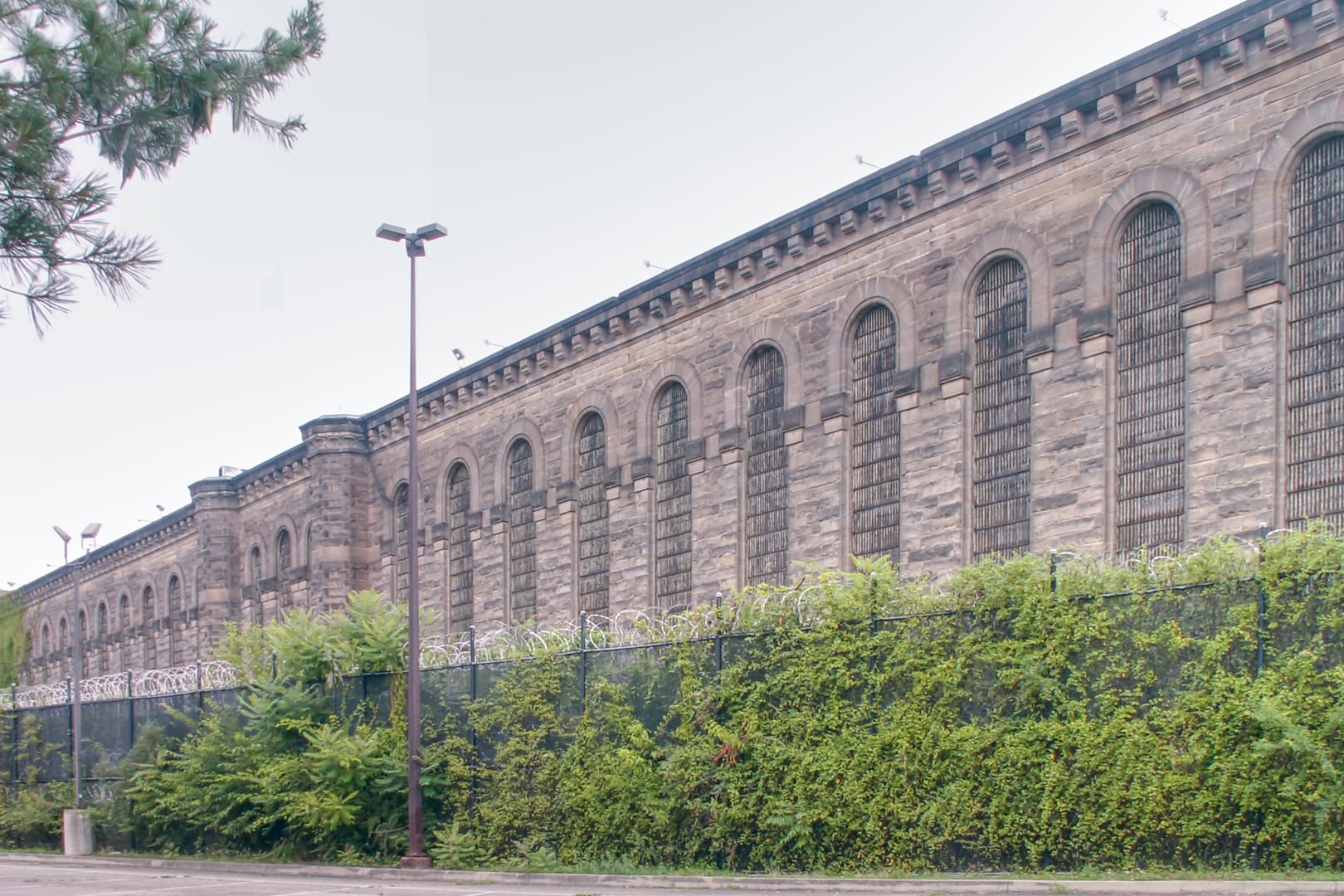
Pennsylvania opened its first penitentiary west of the Appalachians in Pittsburgh in 1826, operating under the Pennsylvania System of solitary confinement. The original facility was replaced by a 21-acre complex constructed at the Ohio River waterfront beginning in 1882, known variously as Western Penitentiary and SCI Pittsburgh. During the Civil War, Confederate prisoners from Morgan's Raid were held in the original structure. The facility operated continuously until 2017, when it was permanently closed. It was listed on the National Register of Historic Places in 2022.
Phoenix, AZ
Arizona State Prison Complex - Phoenix, specifically the Flamenco Unit, opened in 1985 as a 105-bed psychiatric hospital for adult males. The facility's primary function is housing inmates with mental health issues and those in protective or maximum security custody. The Flamenco Unit represents a contemporary correctional mental health facility rather than a historical institutional site.
Florence, AZ
Arizona State Prison Complex - Florence is Arizona's oldest operational state prison, established in 1910. The death house, located in Housing Unit 9, contains the execution chamber. Arizona has carried out approximately 100 death sentences since 1910, using hanging (until 1934), gas chamber, and lethal injection methods. The original execution method was hanging with a trap-door system; gas chamber replaced hanging in 1934 following a botched execution in 1930.