Outdoor Exploration
Haunted Woods Exploration
A self-guided exploration of the Frances Slocum State Forest area known locally as Okie Pinokie, the setting for some of Indiana's most-told woodland legends.
- Duration:
- 1 hr
 Aerial survey · USDA NAIP · public domain
A stretch of Frances Slocum State Forest along the Mississinewa River near Peru is one of Indiana's most notorious 'haunted woods,' famous for whistling games, phantom screams, and legends that local historians have worked to debunk.
Frances Slocum State Forest, off CR 510E near State Road 124, Peru, IN 46970
Research updated May 2026
Age
All Ages
Cost
Free
No cost to enter the state forest. Standard state-forest rules apply; the gravel access road and trails are remote.
Access
Limited Access
Gravel forest road, dense tree cover, low/marshy areas; trails are unimproved.
Equipment
Photos OK
Section of Frances Slocum State Forest along the historically significant Mississinewa River corridor · Site of Miami communities and a War of 1812 engagement nearby · One of Indiana's most widely told 'haunted woods' legends, examined in local news
Okie Pinokie refers to a tract within Frances Slocum State Forest in Miami County, in north-central Indiana, along the Mississinewa River near the city of Peru and not far from Mississinewa Lake. Visitors typically reach it by a gravel road branching off CR 510E near State Road 124, ending in a turnaround deep in the trees.
The Mississinewa corridor carries genuine history: it was home to Miami communities, and the area saw a military engagement during the War of 1812. That layered past has helped fuel an outsized body of folklore about the forest, which over the decades has become one of the best-known 'haunted woods' destinations in the state, drawing legend-trippers from across north-central Indiana.
Local news has documented both the legend and the effort to separate it from fact. A WISH-TV report on 'Peru's haunted woods' interviewed Jeff King of Truth Seekers Paranormal Investigations and the Miami County Historical Society, who stated plainly that the most lurid claims — a tortured child and bodies buried on the property — are myth, not history. The area's reputation rests on atmosphere and storytelling rather than any verified events.
HauntBound presents Okie Pinokie as a real and locally famous folklore site while explicitly noting that its most disturbing claims have been investigated and dismissed by local historians. Because the corridor includes Indigenous history, we avoid 'ancient curse' or 'Indian burial ground' framing, which is unsupported and disrespectful.
Sources
The Okie Pinokie legends cluster around sound and suggestion. The best-known is the whistling game: visitors who whistle in the forest say a whistle answers from deep in the trees. Others report pig-like squeals, dog barking that seems to come from right beside them, and — in the most extreme tellings — the screams of a child (https://authorbobfreeman.wordpress.com/2021/05/14/ghost-hunting-tales-okie-pinokie/). Some visitors point to odd indentations on certain trees and to the dense, intertwining canopy over the gravel road as part of the unsettling atmosphere.
Many competing origin stories circulate: settlers killed in conflict, a man murdered in the 1970s, and a young girl said to have been harmed in the woods. These are folklore, and the most disturbing of them have been directly refuted. Jeff King of the Miami County Historical Society told WISH-TV that the tortured-girl story and the claim of bodies found on the property are simply myth (https://www.wishtv.com/news/investigating-perus-haunted-woods/).
HauntBound includes Okie Pinokie because it is a genuine, locally famous legend site with documented news coverage, but we present the lore as folklore — and specifically flag the debunked claims rather than repeat them as fact. We likewise avoid the unsupported 'Indian burial ground' trope attached to the site.
Notable Entities
Media Appearances
A self-guided exploration of the Frances Slocum State Forest area known locally as Okie Pinokie, the setting for some of Indiana's most-told woodland legends.
Some links on this page may earn HauntBound a small commission when you book, at no extra cost to you. Our editorial picks are independent. Full disclosure
Every HauntBound history is researched from documented sources. We clearly separate verified historical fact from paranormal folklore.
Free Guide
11 verified stops, rated for families, mapped in order. Free.
One email to confirm, then the guide link. Unsubscribe anytime.
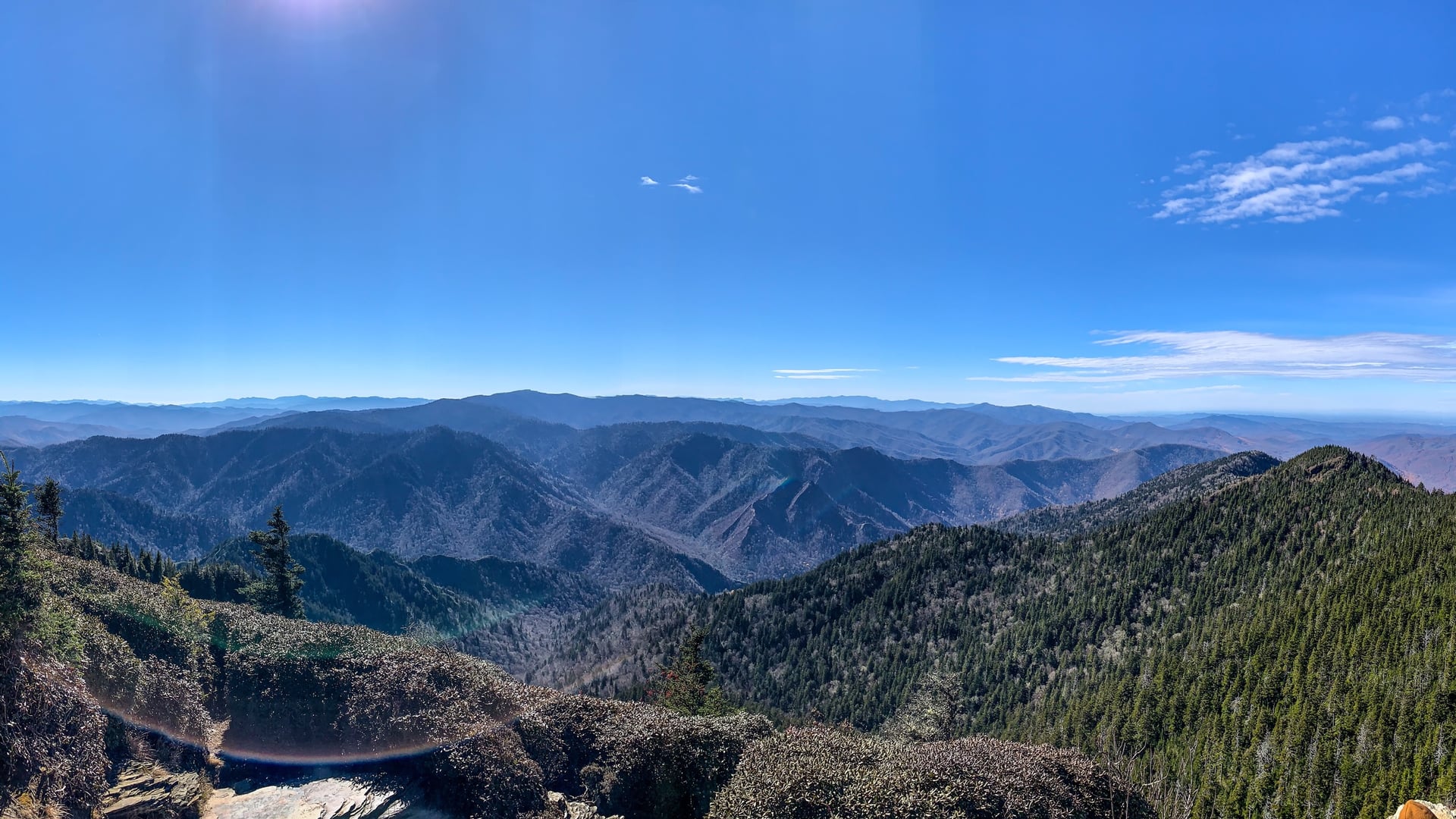
Gatlinburg, TN
Great Smoky Mountains National Park preserves 522,427 acres of southern Appalachian terrain across Tennessee and North Carolina. The land was the heart of the Cherokee Nation before forced removal in 1838 along what became the Trail of Tears, and home to Appalachian Scots-Irish and English settler communities through the early twentieth century. Congress authorized the park in 1926; it was formally dedicated by Franklin D. Roosevelt on September 2, 1940.

Stowe, VT
The Gold Brook Covered Bridge, locally called Emily's Bridge, was built in 1844 over Gold Brook in Stowe, Vermont. Its National Register nomination identifies it as Vermont's only timber-Howe-truss bridge carrying a public highway at that time, and it was listed on the National Register of Historic Places in 1974.

Porter, IN
Indiana Dunes National Park preserves fifteen miles of Lake Michigan shoreline in northwestern Indiana. The park was designated as a National Lakeshore in 1966 and elevated to National Park status in 2019. Alice Mabel Gray, the University of Chicago scholar known as 'Diana of the Dunes,' lived on the shoreline from 1915 to 1925 and helped build public support for preservation.