Outdoor Exploration
Battlefield and Marker Visit
Visit the historical marker and rural setting of the 1812 Battle of the Mississinewa near Marion, Indiana.
- Duration:
- 30 min
HauntBound archive · catalog record
Reported phenomena, as catalogued
The site of the December 1812 Battle of the Mississinewa in Grant County, Indiana, where U.S. dragoons clashed with Miami warriors, and where reenactors and visitors report the sounds of battle still echoing from the woods.
State Road 15 at County Road 600 N (battlefield marker), Marion, IN 46952
Research updated June 2026
Age
All Ages
Cost
Free
The battlefield area is rural and largely undeveloped; the annual Mississinewa 1812 reenactment (held at a nearby site) is a separate ticketed event.
Access
Limited Access
Rural roadside, fields, and wooded ground
Equipment
Photos OK
Est. 1812 · Site of the December 1812 Battle of the Mississinewa during the War of 1812 · Commemorated by an Indiana state historical marker · Home of the long-running Mississinewa 1812 living-history reenactment
The Battle of the Mississinewa took place on December 17-18, 1812, along the Mississinewa River in what is now Grant County, Indiana. As part of the War of 1812, a force of U.S. mounted troops under Lt. Col. John B. Campbell was dispatched to destroy Miami villages in the region. After striking the villages on December 17, Campbell's encamped dragoons were assaulted before dawn on December 18 by a band of Miami warriors.
The roughly hour-long counterattack left the dragoons with about a dozen men killed, dozens more wounded, and many horses lost. The expedition is remembered as one of the significant frontier engagements of the war in the Indiana Territory.
The battlefield is marked today by an Indiana historical marker on State Road 15 north of Marion. Each October the area hosts Mississinewa 1812, one of the largest War of 1812 living-history reenactments in the United States, held in recent years at a site near La Fontaine a short distance from the original ground. A small historic cemetery associated with the battlefield is recorded in the area.
Note on location: rural folklore and aggregator listings sometimes place the 'battle grounds and graveyard' near Wabash to the north, but the documented battlefield and its commemorative marker lie in Grant County near Marion; the coordinates here reflect the verified battlefield/cemetery location.
Sources
The Mississinewa battlefield appears in Indiana haunted-places writing as a residual-haunting site, where the violence of the 1812 engagement is said to replay itself. The recurring, multiply-reported element is auditory: those who have camped or lingered near the battlefield woods after dark describe hearing the sounds of battle, gunfire, shouting, and the noise of conflict echoing through the trees. One 1992 camper account describes being awakened by what sounded like firecrackers, smelling sulfur, seeing smoky fog along the river, and hearing the sound of running feet in the water.
The site has been the subject of independent paranormal investigation by documented creators: GhoulyTV (a named paranormal investigation channel) published a 'Haunted Battlefield of Mississinewa' investigation video via Facebook and YouTube, describing it as 'definitely one of the scariest investigations we have been on so far.' A second independent YouTube investigation, titled '1812 MISSISSINEWA BATTLEGROUNDS | PARANORMAL INVESTIGATION | S1 E3 [Jalapa, IN]' (uploaded June 28, 2018), documents a field visit to the Jalapa-area battlefield site by investigators named Ghouly and Preston.
A single anonymous Shadowlands submission adds far more specific and unverified claims: groaning and physical contact, an apparition on film, fresh blood on tombstones, and areas of woods closed off by the state. These details are geographically inconsistent with the documented Grant County battlefield and are flagged as unconfirmed single-source lore; they are not relied upon for this entry's publication.
Notable Entities
Media Appearances
Visit the historical marker and rural setting of the 1812 Battle of the Mississinewa near Marion, Indiana.
Some links on this page may earn HauntBound a small commission when you book, at no extra cost to you. Our editorial picks are independent. Full disclosure
Every HauntBound history is researched from documented sources. We clearly separate verified historical fact from paranormal folklore.
Free Guide
11 verified stops, rated for families, mapped in order. Free.
One email to confirm, then the guide link. Unsubscribe anytime.
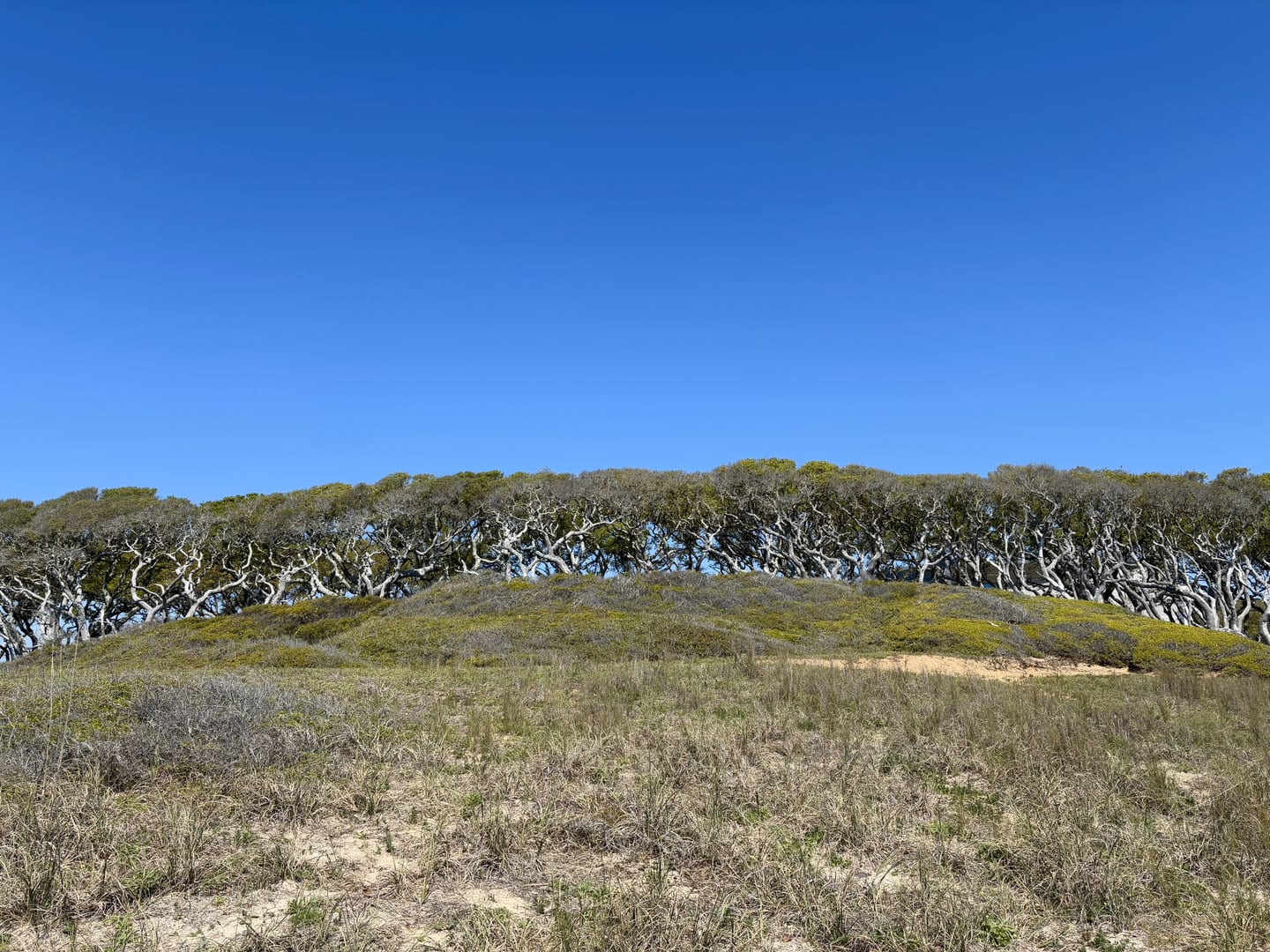
Kure Beach, NC
Fort Fisher was the largest earthwork fortification of the Civil War, built by the Confederacy beginning in 1861 to protect blockade-running traffic into the port of Wilmington. After a failed Christmas Eve 1864 assault, a combined Union land and naval bombardment captured the fort in January 1865. Fort Fisher's fall closed the last open Confederate seaport.
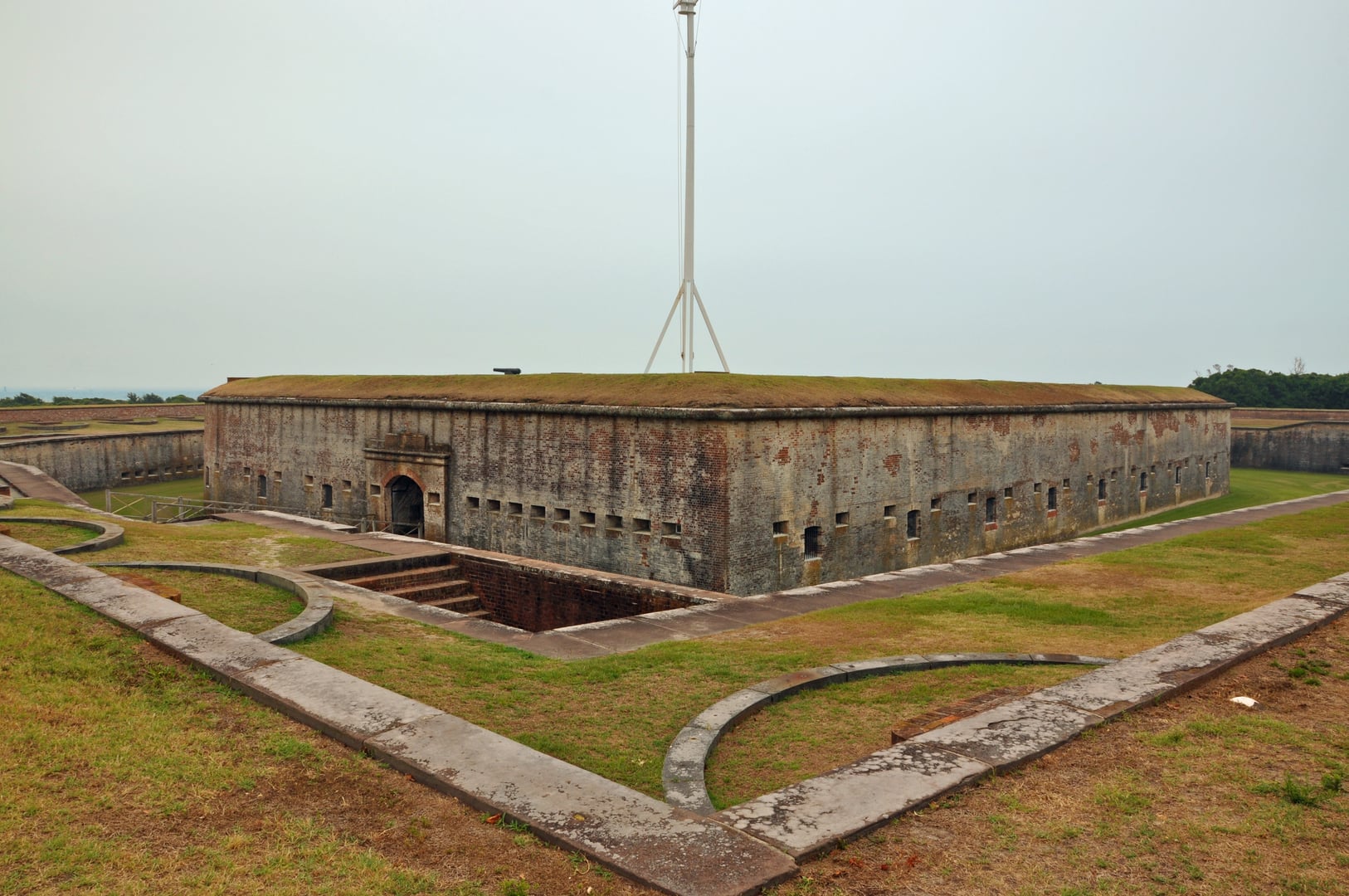
Atlantic Beach, NC
Fort Macon is a Third System brick coastal fort built between 1826 and 1834 to guard Beaufort Inlet on the North Carolina coast, named for U.S. Senator Nathaniel Macon. North Carolina militia seized the fort for the Confederacy in April 1861, and Union forces under Major General Ambrose E. Burnside recaptured it in 1862. It is now the centerpiece of Fort Macon State Park.
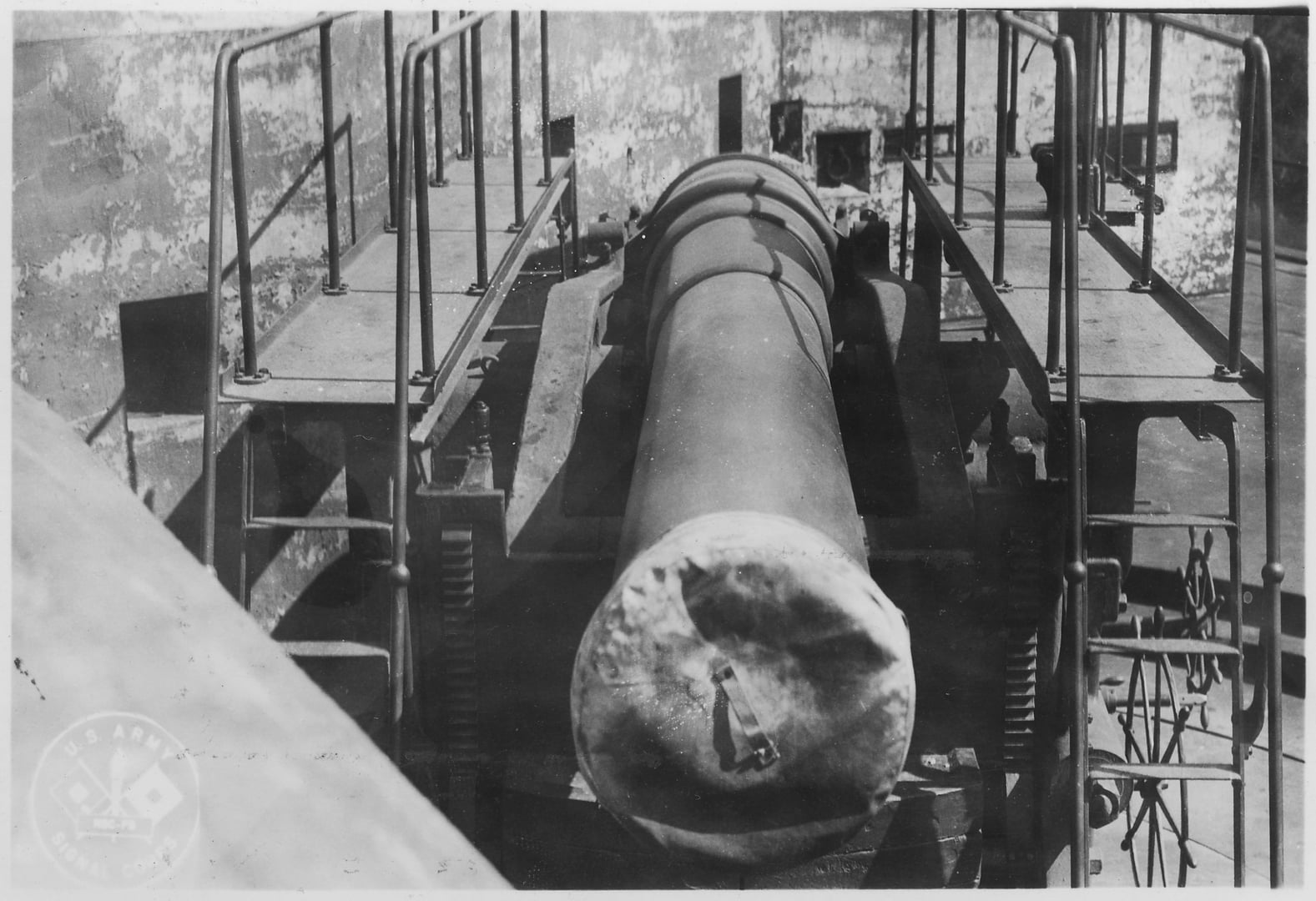
Hammond, OR
Battery Russell is one of nine concrete coastal-artillery emplacements built between 1897 and 1906 to defend the mouth of the Columbia River as part of Fort Stevens. Completed in 1904 and named for Civil War Brig. Gen. David A. Russell, the battery mounted two 10-inch M1888 'disappearing' rifles. It was decommissioned in 1944. On the night of June 21-22, 1942, the Japanese submarine I-25 surfaced offshore and fired roughly 17 shells in the direction of the fort — the first foreign attack on a mainland U.S. military installation since the War of 1812. The site is preserved within Fort Stevens State Park, Hammond, Oregon.