Live Performance
Programmed Performance or Film Screening
Attend a programmed performance or film screening in a fully restored 1927 Egyptian Revival auditorium with lotus-bud pillars and pharaonic frescoes inspired by King Tutankhamun's tomb.
HauntBound archive · catalog record
Reported phenomena, as catalogued
+ 3 further entries on record
1927 Egyptian Revival movie palace at Capitol and Main in downtown Boise, still operating; haunted by Joe, a projectionist who died on the stairs to the booth.
700 W Main St, Boise, ID 83702
Research updated October 2026
Age
All Ages
Cost
$$
Ticket prices vary by event - promoters control ticket prices, ticketing fees, seating and show times.
Access
Wheelchair OK
Historic theater with main level access; balcony reached by stairs.
Equipment
No Photos
Est. 1927 · Opened April 19, 1927 as a flagship Egyptian Revival movie palace · Designed by Frederick C. Hummel of Tourtellotte and Hummel · National Register of Historic Places (added November 21, 1974) · Operated as Fox Egyptian, the Ada Theater, and now the Egyptian · Home venue for Opera Idaho performances
The Egyptian Theatre opened in 1927 as part of the wave of Egyptian Revival cinemas built across the United States following Howard Carter's 1922 discovery of King Tutankhamun's tomb. Frederick C. Hummel of the Boise firm Tourtellotte and Hummel - the same office that designed the Idaho State Capitol and several other Boise landmarks - designed the building at 700 West Main Street, on the corner of Capitol Boulevard and Main. The theater opened on April 19, 1927.
The interior leans heavily into the Egyptian Revival vocabulary: lotus-bud pillars with ornate polychrome frescoes drawn from those at Karnak, truncated pyramid forms framing the proscenium, and pharaonic mural cycles around the auditorium walls. Local press at the opening described the building as embodying 'the characteristic features of the land of the Nile, from the truncated pyramids which form the great pylons, to the lotus bud pillars.'
The theater operated under several names through the twentieth century - Fox Egyptian, simply 'Fox,' and from 1937 to 1979 as the Ada Theater - before reverting to its Egyptian Theatre name in 1979. The building was added to the National Register of Historic Places on November 21, 1974. A major remodeling in 1999 and restoration work by Conrad Schmitt Studios returned much of the original Egyptian interior to view.
In the current era the Egyptian operates as a mixed film, concert, and performing-arts venue. It has hosted Bourne franchise premieres (Identity, Supremacy, Ultimatum), and in 2013 Boise native Aaron Paul livestreamed a Breaking Bad episode 14 watch party from the auditorium. Opera Idaho stages performances at the venue.
Sources
The Egyptian Theatre's named-entity case is Joe, a projectionist who according to ghost-directory and walking-tour retellings worked at the theater from the 1920s into the 1950s and died of a heart attack while climbing the stairs to the projection booth. The story is repeated consistently across Idaho Haunted Houses, the Haunted Places listing, US Ghost Adventures' Boise top-ten roundup, and on-stage tour narration, though contemporary newspaper documentation of the death has not been independently located in publicly accessible archives.
Reports attributed to Joe cluster in three areas of the building: the stairs and projection booth, the upper balcony, and the area near the stage. Staff and patrons describe lights turning on and off, doors opening and closing on their own, disembodied laughter, phantom touches, and unexplained shifts in aroma. A widely-told retelling notes a 2016 incident during a Brothers Osborne concert when sections of the ornate plaster ceiling fell to the stage; in the room's narrative tradition this was attributed to Joe expressing displeasure.
A second, separate apparition is described as a cheerful female figure thought to date to the late 1920s. She is reported in the aisles and is sometimes accompanied by a distinctive scent, according to the local ghost-directory and walking-tour narratives.
As an active, well-attended performing-arts venue, the Egyptian's paranormal lore is delivered primarily through ghost-walk narration and seasonal coverage rather than through staff-led ghost-hunt programming. Boise rock station 1035 KISS FM has published the projectionist legend as part of its Boise haunted-places coverage.
Notable Entities
Attend a programmed performance or film screening in a fully restored 1927 Egyptian Revival auditorium with lotus-bud pillars and pharaonic frescoes inspired by King Tutankhamun's tomb.
The Egyptian is a primary stop on the US Ghost Adventures Boise Ghost Tour and Lizzie Borden Ghost Tours Boise. Guides discuss the Joe-the-projectionist legend from the public sidewalk at Capitol and Main.
Some links on this page may earn HauntBound a small commission when you book, at no extra cost to you. Our editorial picks are independent. Full disclosure
This Boise tour includes The Egyptian Theatre on its route.
Every HauntBound history is researched from documented sources. We clearly separate verified historical fact from paranormal folklore.
Free Guide
Verified stops across all fifty states, rated for families. Free.
One email to confirm, then the guide link. Unsubscribe anytime.
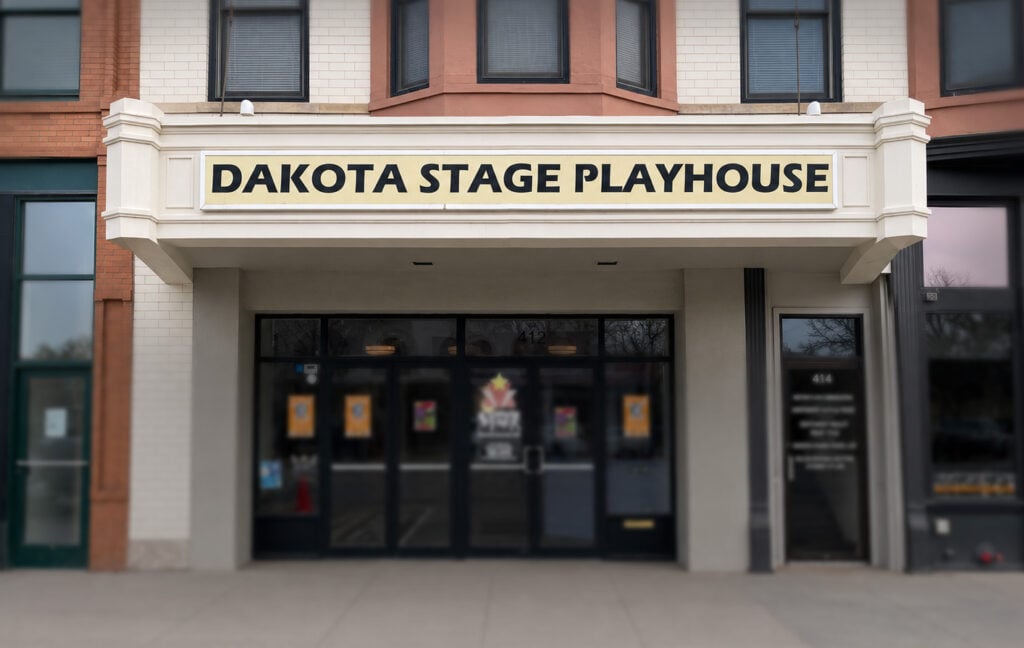
Bismarck, ND
The E. G. Patterson Building was designed by Fargo architect Milton Earl Beebe for Bismarck businessman Edward G. Patterson and built in 1905-06 at 412-414 East Main Avenue. Its west storefront has housed a succession of movie theaters since about 1910: the Gem, the Orpheum (renamed in 1911), the Capitol (around 1937) and the Cinema Theater. The building was listed on the National Register of Historic Places in 1982 and currently houses the Dakota Stage Playhouse community theater.
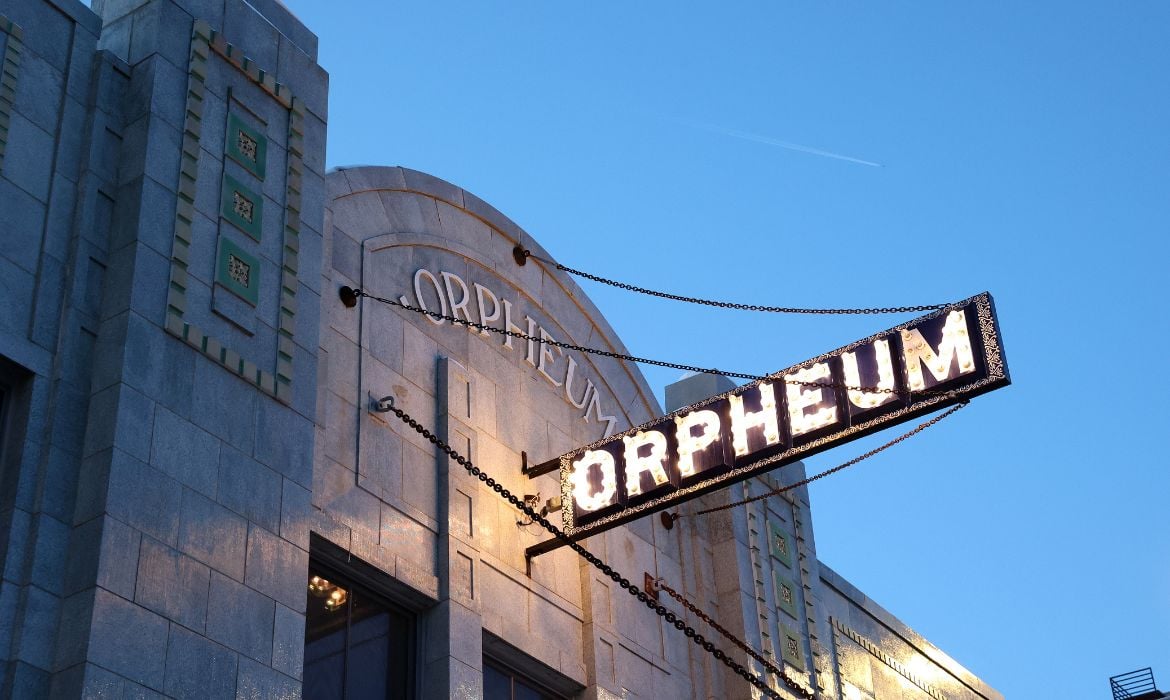
Sioux Falls, SD
The Orpheum Theatre opened October 2, 1913, at 315 North Phillips Avenue in downtown Sioux Falls, built by the Solari brothers as a vaudeville house. The Sioux Falls Community Playhouse ran it from 1954 until the city purchased the complex in 2003. Listed on the National Register of Historic Places in 1983, it is Sioux Falls' oldest surviving theater and has operated under Washington Pavilion Management since 2019.
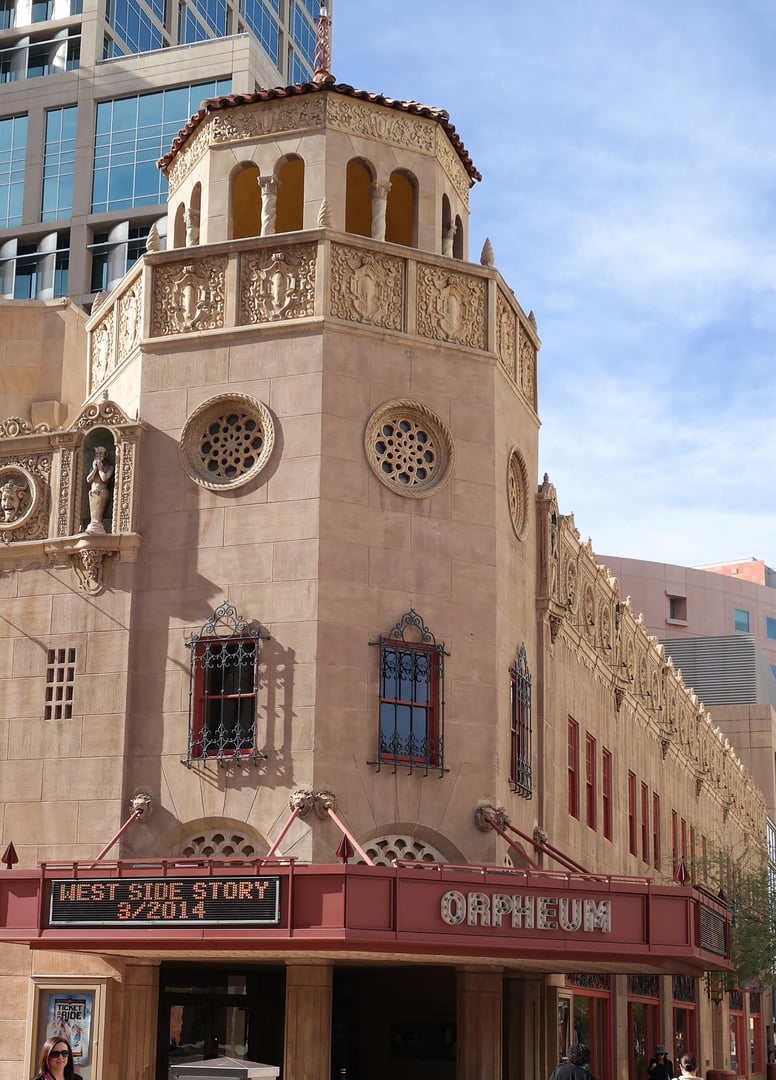
Phoenix, AZ
The Orpheum Theatre opened January 5, 1929 as a 1,800-seat vaudeville and movie palace built by partners Jo E. Richards and Harry Nace during Hollywood's golden age. Designed in Spanish Baroque Revival style with an atmospheric ceiling simulating a starlit Mediterranean sky, it operated as a movie theater under various names through the 20th century before being acquired by the City of Phoenix in 1984, restored, and reopened in 1997 as a performing arts venue. It is listed on the National Register of Historic Places.