Est. 1855 · 19th-century Marshall County burial ground · Victorian-era funerary architecture and monuments · Civil War era interments
Marshalltown established itself as a significant county seat town along the Iowa River in the mid-nineteenth century. Riverside Cemetery developed as the primary burial ground serving the growing community, accumulating monuments from the Civil War period onward.
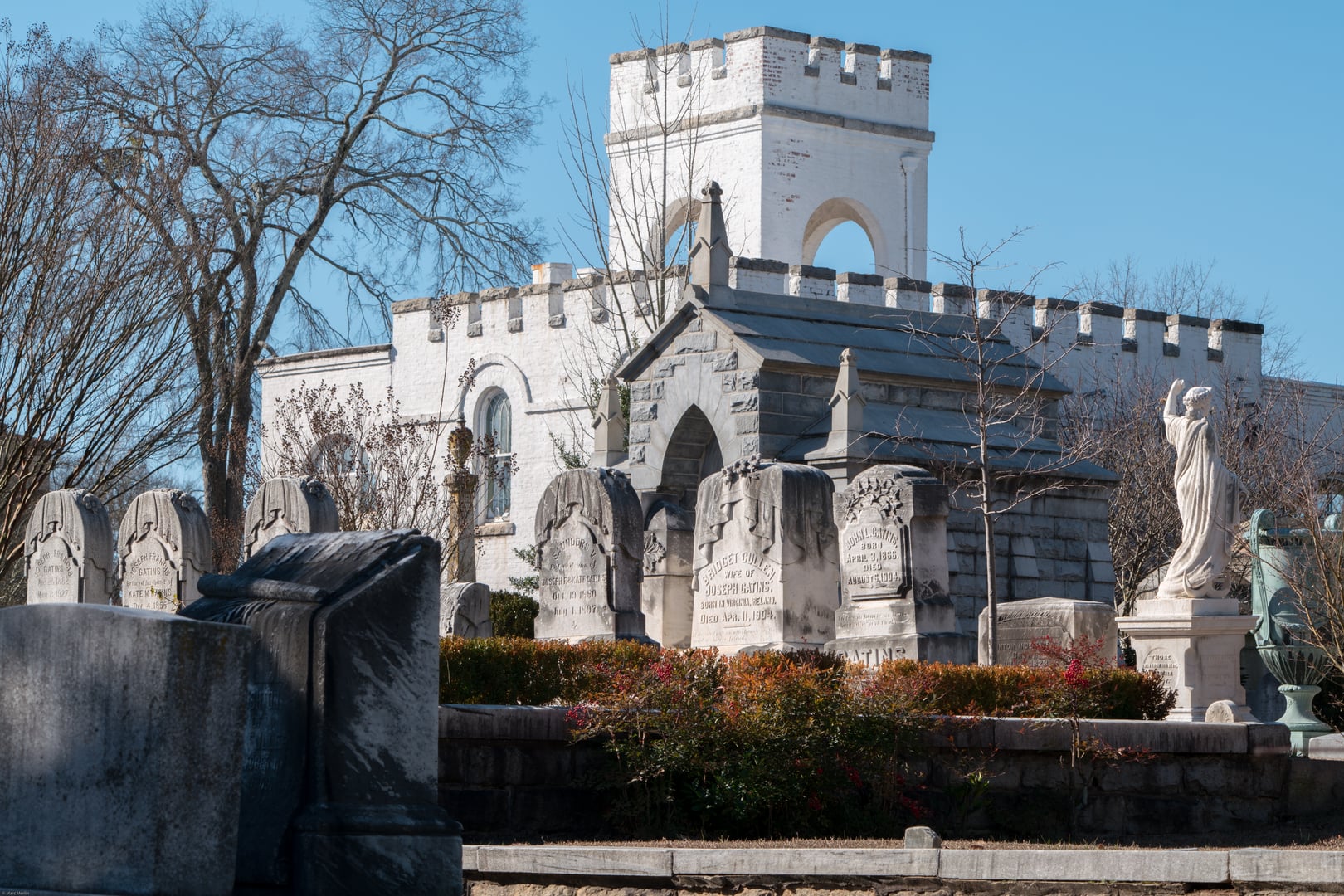
The cemetery contains a range of architectural burial features common to Iowa's Victorian-era burial grounds: family mausoleums, upright shaft monuments, carved stone markers, and a concrete gazebo structure used for shelter and contemplation. The mausoleum area and the surrounding sections house some of the cemetery's older sections, which contain markers dating to the 1870s and 1880s.
Charles M. Baker, interred in 1881, is among the burial ground's nineteenth-century residents. His tombstone's position and reflective stone properties have made it a distinctive feature under certain lighting conditions — specifically when light from the nearby interstate bridge strikes it at night, producing an effect that generations of Marshalltown residents have described as the stone appearing to glow.
The cemetery's gazebo and surrounding grounds have also accumulated independent reporting of anomalous visual activity in the area, distinct from the Baker tombstone legend. The two traditions — the death chair, the glowing stone, and the gazebo sightings — have made Riverside Cemetery a site of ongoing folk interest in central Iowa.
Sources
- https://www.983vibe.com/2022/09/15/the-death-chair-of-riverside-cemetery-in-marshalltown-iowa-video/
- https://www.findagrave.com/cemetery/95960/riverside-cemetery
Curse (death chair)Luminescent tombstoneApparition of elderly woman with infantVisual anomalies near gazebo
The death chair legend at Riverside Cemetery centers on a concrete bench-chair located near the mausoleum section. According to the tradition — documented in local media as recently as 2022 — anyone who sits in the chair will die within a year. The story's longevity in Marshalltown's oral tradition suggests it has circulated for at least several decades, drawing late-night visitors who debate whether to test the curse.
Separate from the chair, the Baker tombstone presents a more physically explicable but visually striking phenomenon. The grave marker belonging to Charles M. Baker, who died in 1881, sits at an angle and with a stone composition that reflects artificial light at night. When illumination from the nearby interstate bridge reaches the marker, witnesses describe the stone as visibly glowing — standing out against the surrounding graves in a way that has struck visitors as distinctly anomalous until the light source is identified.
The third tradition involves the cemetery gazebo, a shelter structure used for weather protection during services. Multiple independent accounts describe a female apparition — an elderly woman carrying an infant — appearing in and around the gazebo area. This figure has been reported as appearing suddenly and disappearing without movement, consistent with the visual categories of cemetery apparition reports documented elsewhere in Iowa.
Notable Entities
Charles M. Baker (d. 1881, glowing tombstone)