Est. 1904 · City of Monterey Historic Landmark · Downtown Historic District Contributing Structure · Continuously Operating Victorian Hotel
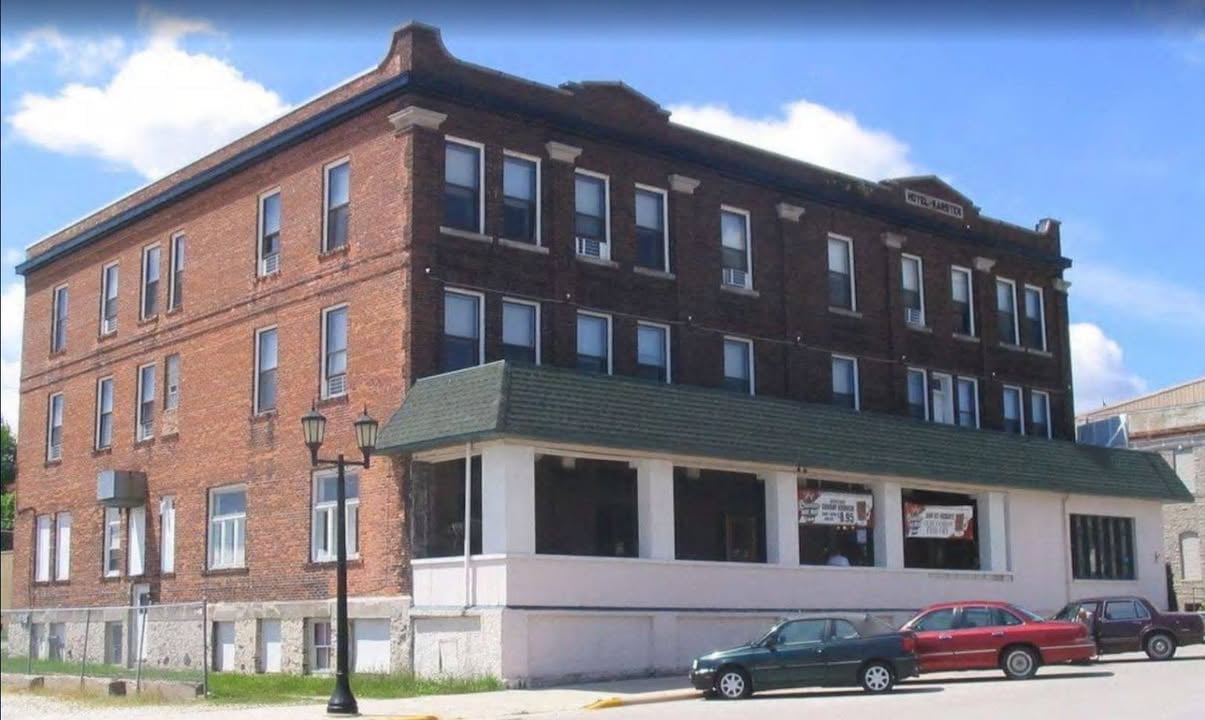
The building at 406–410 Alvarado Street was constructed in 1904 during a period of sustained growth in Monterey's tourism economy, when the railroad had recently connected the Monterey Peninsula to San Francisco and central coast travel was becoming affordable for the middle class. The three-story frame building with its hipped roof and two cross gables represents Victorian commercial hotel architecture at a modest scale.
The hotel operated through the twentieth century without major closure or conversion, an unusual record for buildings of its era and size. It is designated a historic landmark under the City of Monterey's Historic Preservation Ordinance and is classified as a contributing structure within the downtown historic district.
By mid-century, the hotel was well-established in Monterey's commercial core. The maintenance staff who kept the aging building's plumbing, heating, and electrical systems running were a near-permanent presence in its back corridors and service areas. One such worker, known to hotel staff as Fred, died while on the job sometime in the 1950s — the specific circumstances are not documented in public records, and no death date has been verified in available sources.
The hotel was eventually acquired by Moonstone Hotels and continues to operate as a full-service accommodation with 69 rooms in the original 1904 structure.
Sources
- https://www.montereyhotel.com/history
- https://en.wikipedia.org/wiki/Monterey_Hotel
- https://montereycountyhistoricalsociety.pixels.com/featured/the-monterey-hotel-1904-the-goldstine-block-building-1906-photo-california-views-mr-pat-hathaway-archives.html
Electronics manipulationApparitionsCold spotsPhantom voicesDoors moving independently
The Monterey Hotel's haunted reputation centers on a single figure: Fred, a maintenance worker the hotel identifies as having died on the premises in the 1950s while performing his duties. The hotel's own marketing acknowledges the legend, describing Fred as a playful rather than malevolent spirit who still considers the building his workplace.
Room 217 is where Fred's activity is most consistently reported. Guests in that room describe televisions switching on and off, clock radios activating at odd hours, and cell phones displaying unusual number sequences — reported by the hotel as the numbers seven and five, though no systematic documentation exists. A bellman is said to have resigned after seeing Fred's figure walk down a corridor and vanish behind a closed door. Staff members have reported icy sensations on their arms in the service passages.
Two other figures appear in the hotel's ghost inventory: an unidentified teenage girl seen on staircases and upper-floor hallways, and a man in Edwardian-era clothing believed by some staff to be the building's original architect, who reportedly died in 1936. That figure is most frequently described near the front desk mirror.
Author Jeff Dwyer documented a disembodied greeting heard on the second floor during research for a book on California's haunted locations. The hotel has been covered in multiple regional paranormal surveys and is included in at least one commercial ghost podcast episode recorded on-site.
Where this legend is told