Est. 1863 · Designed by Frederick Law Olmsted · Millionaires' Row — Crocker and Ghirardelli mausoleums · Elizabeth Short (Black Dahlia) buried here · Julia Morgan — Hearst Castle architect · National Register of Historic Places
Oakland's Mountain View Cemetery was founded in 1863 and laid out by Frederick Law Olmsted, the landscape architect who had recently completed New York's Central Park and would go on to design Prospect Park, the U.S. Capitol grounds, and dozens of other major American landscapes. Olmsted's design philosophy sought a harmony between human memorial space and natural setting, drawing simultaneously from Parisian grand monument traditions and American Transcendentalist ideas about the restorative value of designed nature.
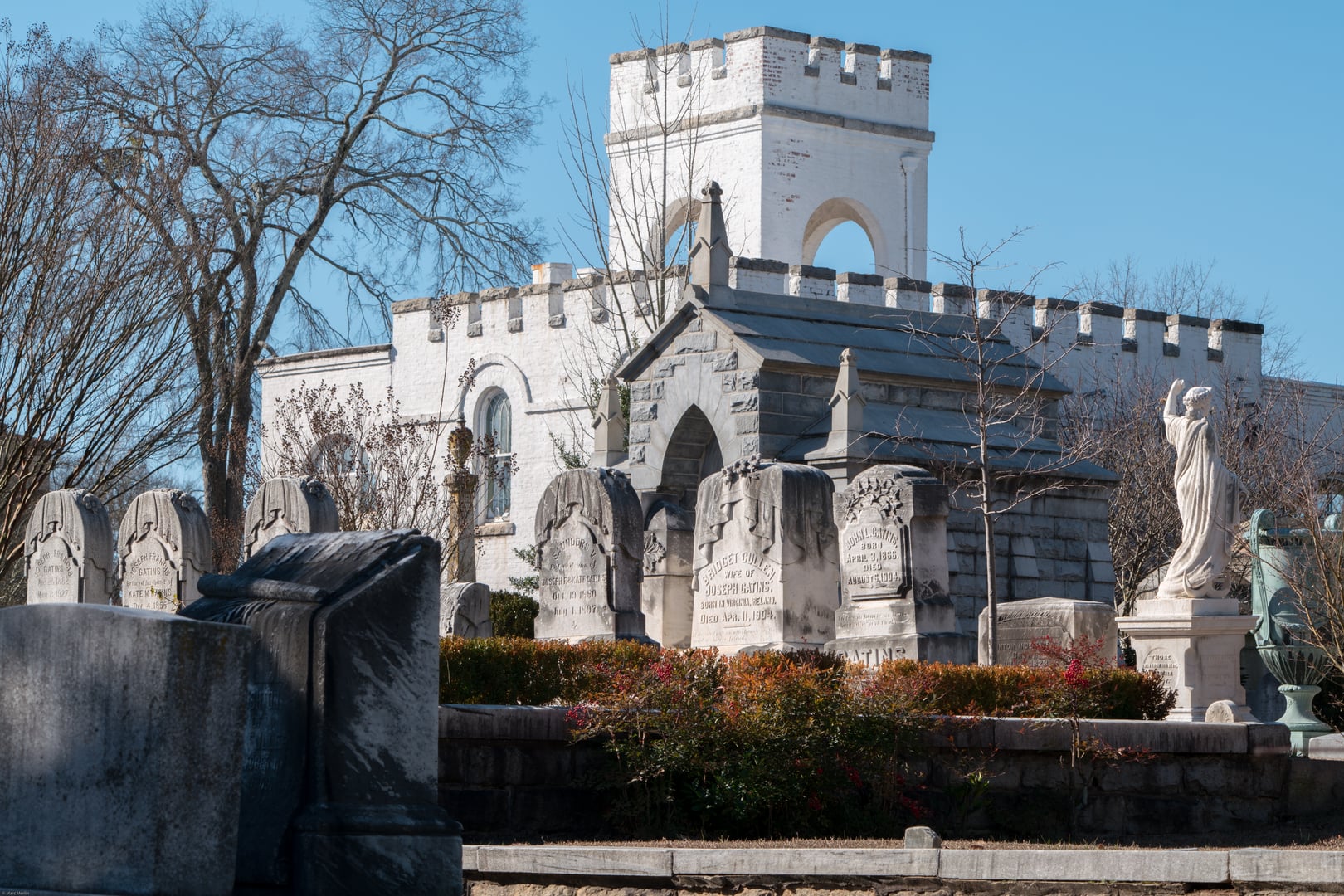
The 226-acre hillside cemetery became the preferred burial ground for the Bay Area's Gilded Age wealthy. The ridge section — known informally as Millionaires' Row — holds mausoleums of outsized scale: Charles Crocker, who helped finance the transcontinental railroad as a Central Pacific director, occupies one of the most prominent tombs. Domingo Ghirardelli, whose chocolate company became a San Francisco institution, is buried here. The sheer concentration of 19th-century industrial capital interred on a single hillside gives the cemetery an unusual weight.
Elizabeth Short, who became known posthumously as the Black Dahlia following her January 1947 murder in Los Angeles, was buried at Mountain View on January 25, 1947. Short grew up in Massachusetts; her mother Phoebe Short had moved to Oakland to be near two of her daughters. After Short's body was found in a Los Angeles lot — the murder remains unsolved — her mother brought her body north for burial. The case produced over 150 LAPD suspects and no arrests; Short's grave has drawn true-crime visitors since her burial.
Architect Julia Morgan, who designed Hearst Castle and dozens of California buildings, is buried here, as is Regent of the University of California Edward Dickinson Baker, namesake of the San Francisco cemetery.
Sources
- https://en.wikipedia.org/wiki/Mountain_View_Cemetery_(Oakland,_California)
- https://www.atlasobscura.com/places/mountain-view-cemetery
- https://www.roadsideamerica.com/tip/14634
- https://www.mountainviewcemetery.org
Ghostly singing near Crocker cryptEVP recordingsGeneral sense of unease in Strangers' PlotGhost lights
Mountain View Cemetery's paranormal accounts are relatively sparse given its size and history — a reflection of its ongoing operation as an active, well-maintained burial ground rather than an abandoned or neglected site. The Paranormal & Ghost Society has conducted investigations here and documented some EVP sessions, though specific findings are not detailed in publicly available records.
The most concrete individual account from the cemetery involves Millionaires' Row: a man driving through the grounds reportedly heard singing near the Crocker crypt, one of the most elaborate monuments on the property. The account comes from the Paranormal & Ghost Society's write-up rather than from any archival source, which gives it the standing of investigator testimony rather than independent documentation.
The Strangers' Plot section — which holds unmarked graves of people who died by drowning, gunshot, industrial explosion, and other violent ends — draws investigators who suggest its concentrated death-by-violence history produces lingering energy. This section's lack of markers means many of the people buried there have been largely forgotten, a fact investigators cite as explanation for the sense of unease reported there.
Elizabeth Short's grave remains the cemetery's primary dark-tourism draw. Speculation about her spirit seeking justice for her unsolved 1947 murder runs through true-crime and paranormal tourism circles, though this falls into the category of modern myth-making around an already heavily mythologized case rather than documented phenomena.
Notable Entities
Elizabeth Short (Black Dahlia)
Where this legend is told