Est. 1772 · Fifth California mission, founded September 1, 1772 · 2,268 documented burials through 1832 · Chumash labor under mission system — converts not permitted to leave · Developed fired-clay roof tiles that spread across Alta California · Active Catholic parish and public museum
Serra selected the site along San Luis Obispo Creek on September 1, 1772, partly for its proximity to a large Chumash population. The Obispeño Chumash — the local band of the broader Chumash nation — had inhabited the area, which they called Tilhini, long before Spanish contact. Under the mission system, baptized Chumash converts were not permitted to leave the compound, and the labor of building and maintaining the mission fell to them.
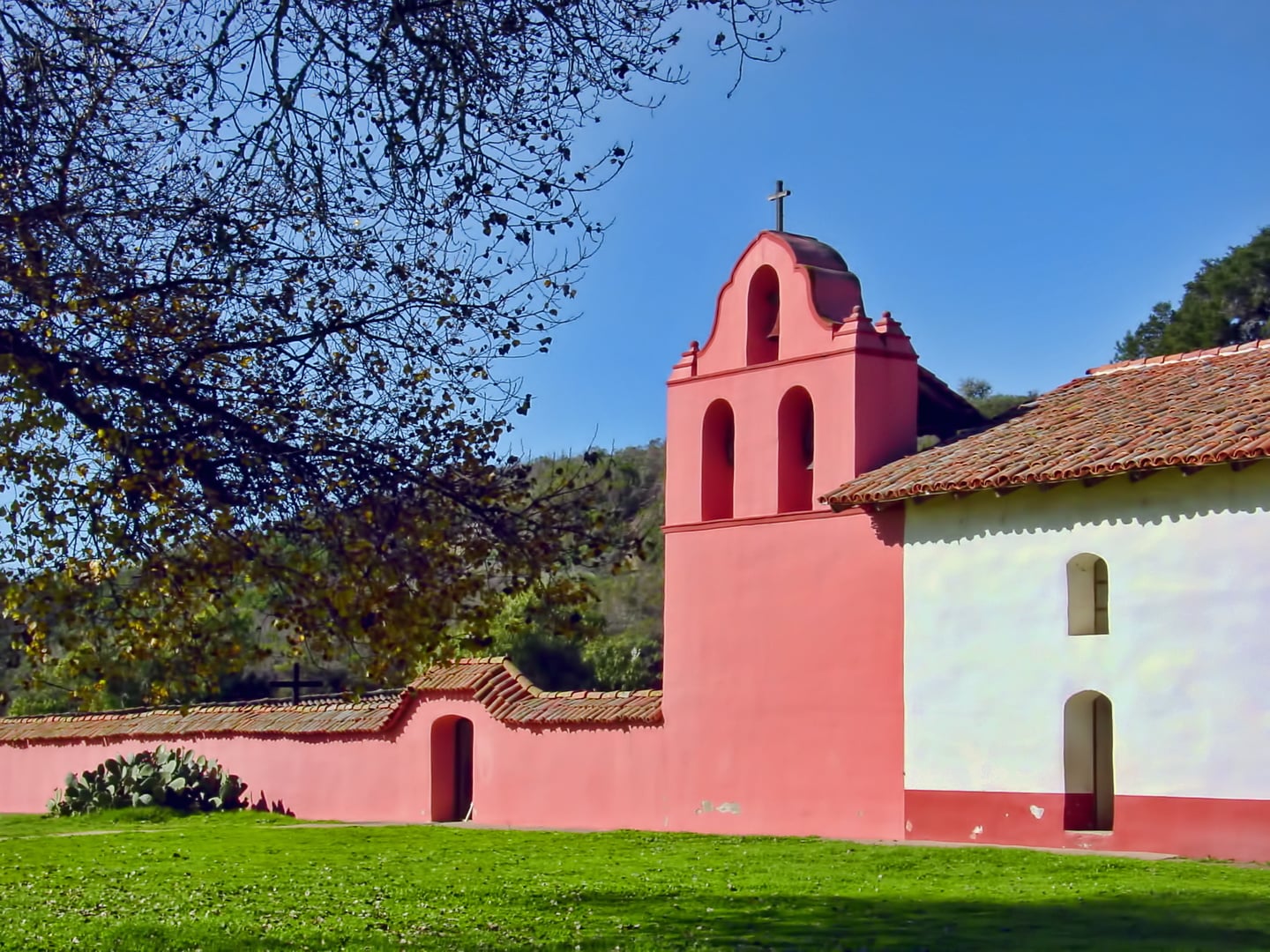
The initial structures were burned by resistant Native Americans in the years after founding; the mission responded by developing the fired-clay roof tile, which spread across Alta California as a standard construction material. Major adobe construction continued from 1794 through 1819. In 1845, Governor Pío Pico sold the mission to Captain John Wilson for $510. During the Mexican-American War in 1846, John C. Frémont's forces used it as a military base.
The mission archives record 2,644 baptisms, 763 marriages, and 2,268 burials through December 31, 1832. The grounds include burial areas for both friars and Chumash converts. The mission was returned to the Catholic Church and restored in the late nineteenth and early twentieth centuries, and it now operates as an active parish church and museum. Mission Preparatory Catholic High School, founded in the 1870s, occupies a separate campus approximately one block from the historic mission.
Sources
- https://en.wikipedia.org/wiki/Mission_San_Luis_Obispo_de_Tolosa
- https://www.slocal.com/blog/post/ghosts-of-san-luis-obispo-county/
Cassock-wearing apparition over friar burial siteDisembodied chanting in SpanishFaceless monk in gardens (full moon)
The primary firsthand account from Mission San Luis Obispo de Tolosa comes from an organist who practiced on the mission's instrument in the interior church balcony. Alone in the building after hours, she used a mirror positioned in front of her to monitor the congregation area behind her. In this mirror, she observed a man in a cassock standing over one of the friar burial sites in the church floor. The figure disappeared when she turned to look directly.
This account is documented in a September 2025 article by James Papp in the Visit SLO CAL blog, which presents it as the most specific firsthand report from the mission. The same source references disembodied chanting in Spanish heard inside the church — a phenomenon consistent with the documented Spanish-language liturgical history of the space — and a faceless monk seen in the mission gardens on full-moon nights, characterized as a recurring local tradition.
A ghost nun is associated with the adjacent Mission Preparatory Catholic High School, approximately one block from the historic mission. Reported phenomena there include lights turning on and off and doors opening; Papp notes he has not located anyone who directly witnessed this figure. The school and the mission are separate properties.
The mission's 2,268 documented burials and its documented history of Chumash confinement under the mission system give the site a historically grounded weight that distinguishes it from locations where the dark history is purely folkloric.
Where this legend is told