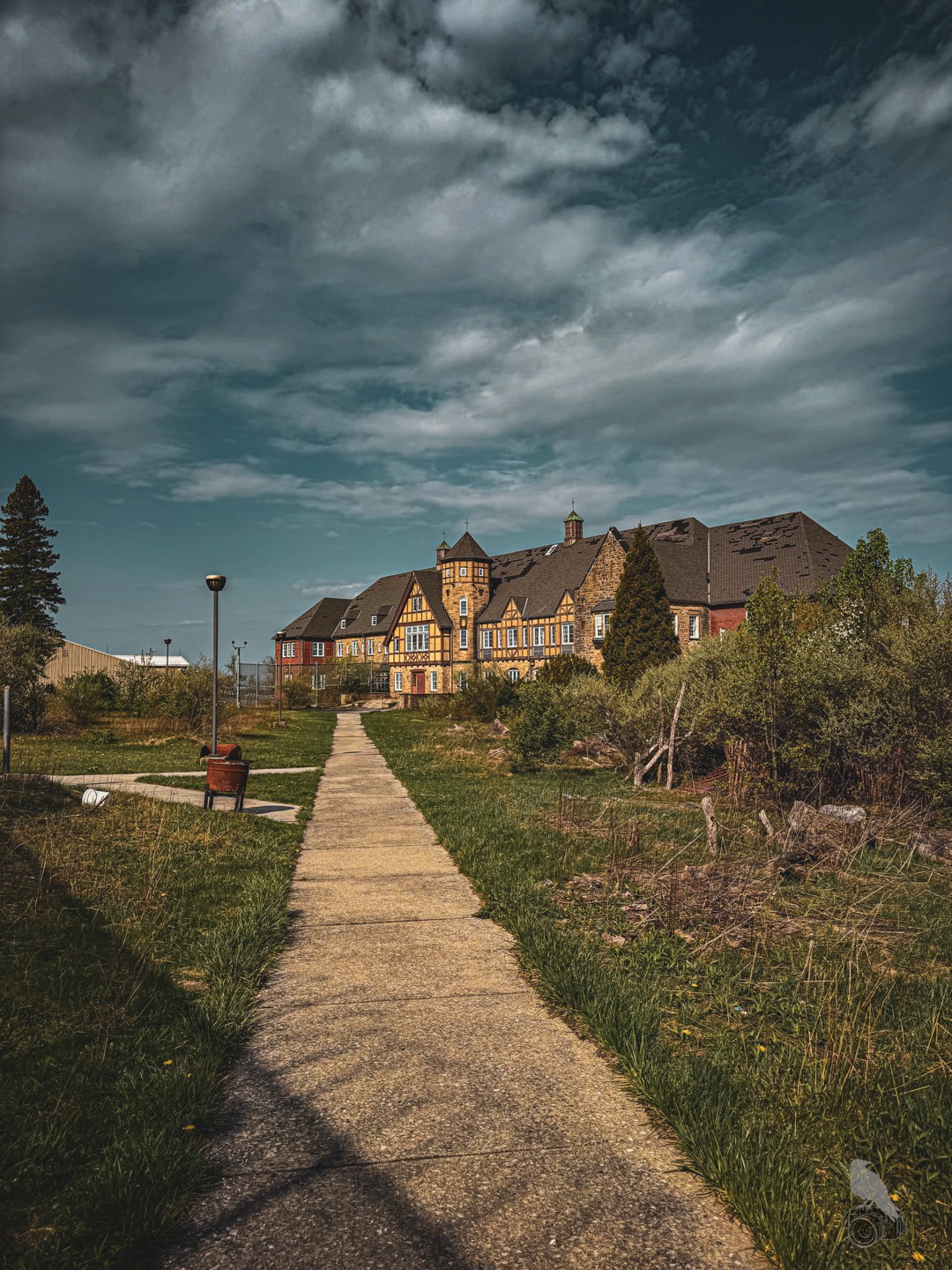
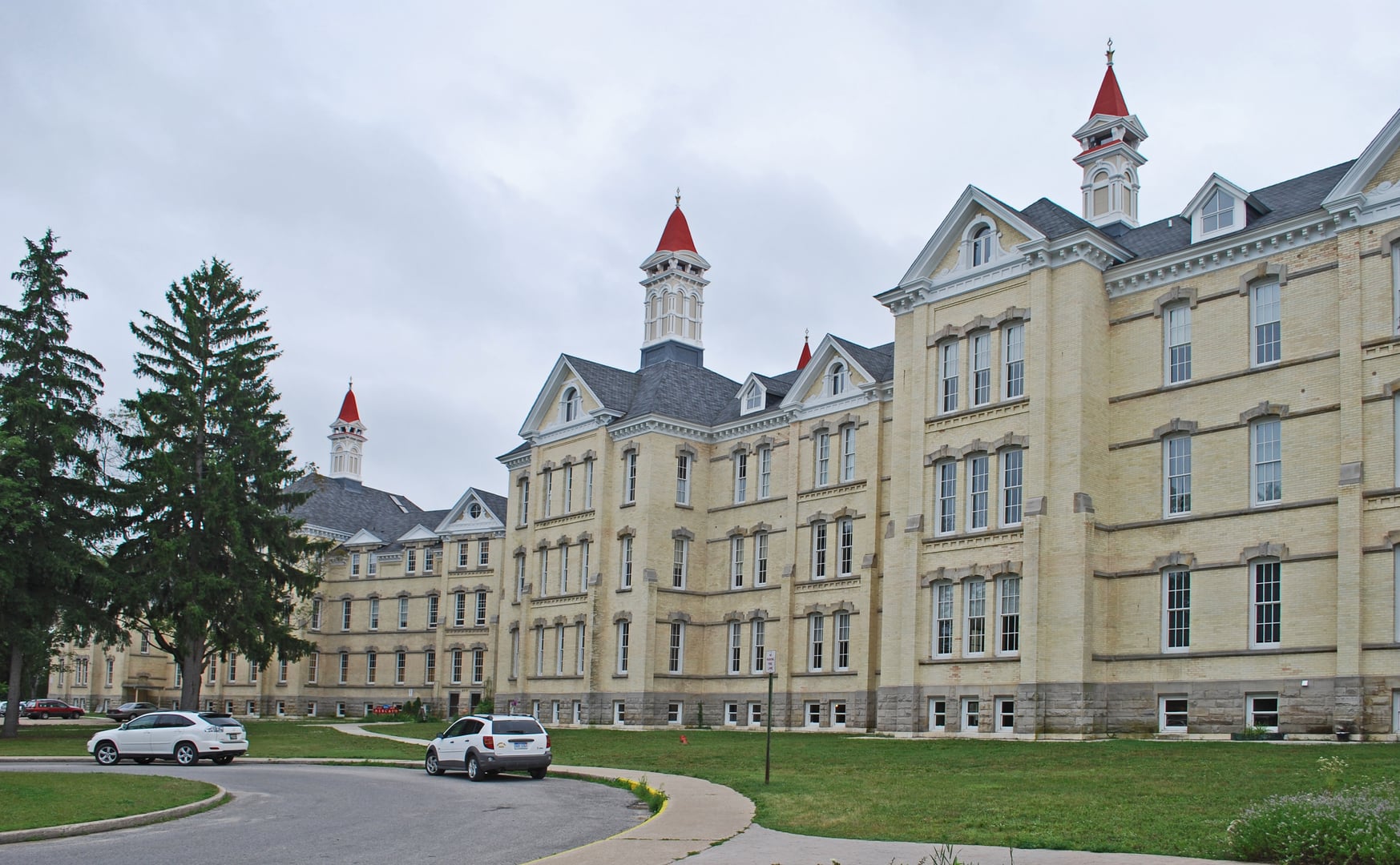
Est. 1893 · One of California's major state asylums operating under the 1909 eugenics sterilization law · Approximately 400 patients buried in a mass grave at Ukiah Russian River Cemetery · All original hospital buildings preserved intact, repurposed by City of Ten Thousand Buddhas since 1974
Mendocino State Asylum for the Insane opened in 1893 on a 488-acre site near the small community of Talmage, southeast of Ukiah in Mendocino County. Built in the era of large-campus asylum construction, the facility was designed to house California's growing population of patients committed under the broad and largely unchecked admission criteria of the period.
In 1909, California passed one of the nation's earliest and most aggressively applied eugenics laws, authorizing the forced sterilization of institutionalized patients deemed 'unfit.' Mendocino State Hospital implemented the program. The sterilizations continued for decades under the state's eugenics program, which was not formally repealed until 1979 — seven years after the hospital itself closed. California sterilized more patients under eugenics laws than any other state, and Mendocino was one of the facilities through which that program operated.
Roughly 1,600 patients died at the hospital during its 79 years of operation. Most were buried on or near the grounds, but approximately 400 were interred in a mass grave at the Ukiah Russian River Cemetery — a single large plot marked only by a granite headstone. A 2016 ceremony drew families and advocates seeking to commemorate the buried.
The hospital closed in 1972 as California began transitioning away from large institutional psychiatric care under the Lanterman-Petris-Short Act. The City of Ten Thousand Buddhas, a Chinese Buddhist community affiliated with the Dharma Realm Buddhist Association, purchased the site in 1974. All of the original hospital buildings were repurposed rather than demolished, making this campus one of the most intact former state asylum sites in California. The monastery's bookstore, restaurant, and gardens are open to the public.
Sources
- https://en.wikipedia.org/wiki/Mendocino_State_Hospital
- https://www.pressdemocrat.com/2016/09/19/forgotten-mendocino-mental-hospital-patients-commemorated-at-mass-graves/
- https://www.kirkbridebuildings.com/blog/the-lost-kirkbrides-mendocino-state-hospital
Cold spots in former ward corridorsShadow figures in historic building hallwaysUnexplained voices in unoccupied sectionsGeneral sense of unease in older ward buildings
The Mendocino State Hospital campus is unusual: its buildings survived because they were immediately reoccupied and remain in active daily use as a Buddhist monastery. There is no abandoned quality to the place — monks, nuns, and laypeople live and work in the same structures that once housed psychiatric patients. This coexistence of active spiritual community and dark institutional history shapes how the site is perceived.
Paranormal accounts are sparse and largely informal, circulating through regional ghost-tour aggregators and dark-tourism forums rather than through any organized investigation. Visitors who tour the grounds report a heaviness in the older ward buildings, cold spots in corridors that correspond to former patient dormitories, and what some describe as distant voices or movement in spaces that should be empty. None of these accounts are corroborated by local journalism or documented investigation.
The documented history carries enough weight that the folklore is largely secondary. The forced sterilizations under California's eugenics law, the roughly 400 patients buried in an unmarked mass grave outside Ukiah, and the 79 years during which patients died with minimal record-keeping are the primary reasons the site appears in dark-history documentation. The Buddhist community's presence has not erased that history; it has simply layered over it.
Where this legend is told