Est. 1872 · Oldest cemetery in Riverside · Civil War Soldiers' Lot — NRHP · Founding families of Riverside · Eliza Tibbets — California citrus industry · 1918–1919 influenza burials
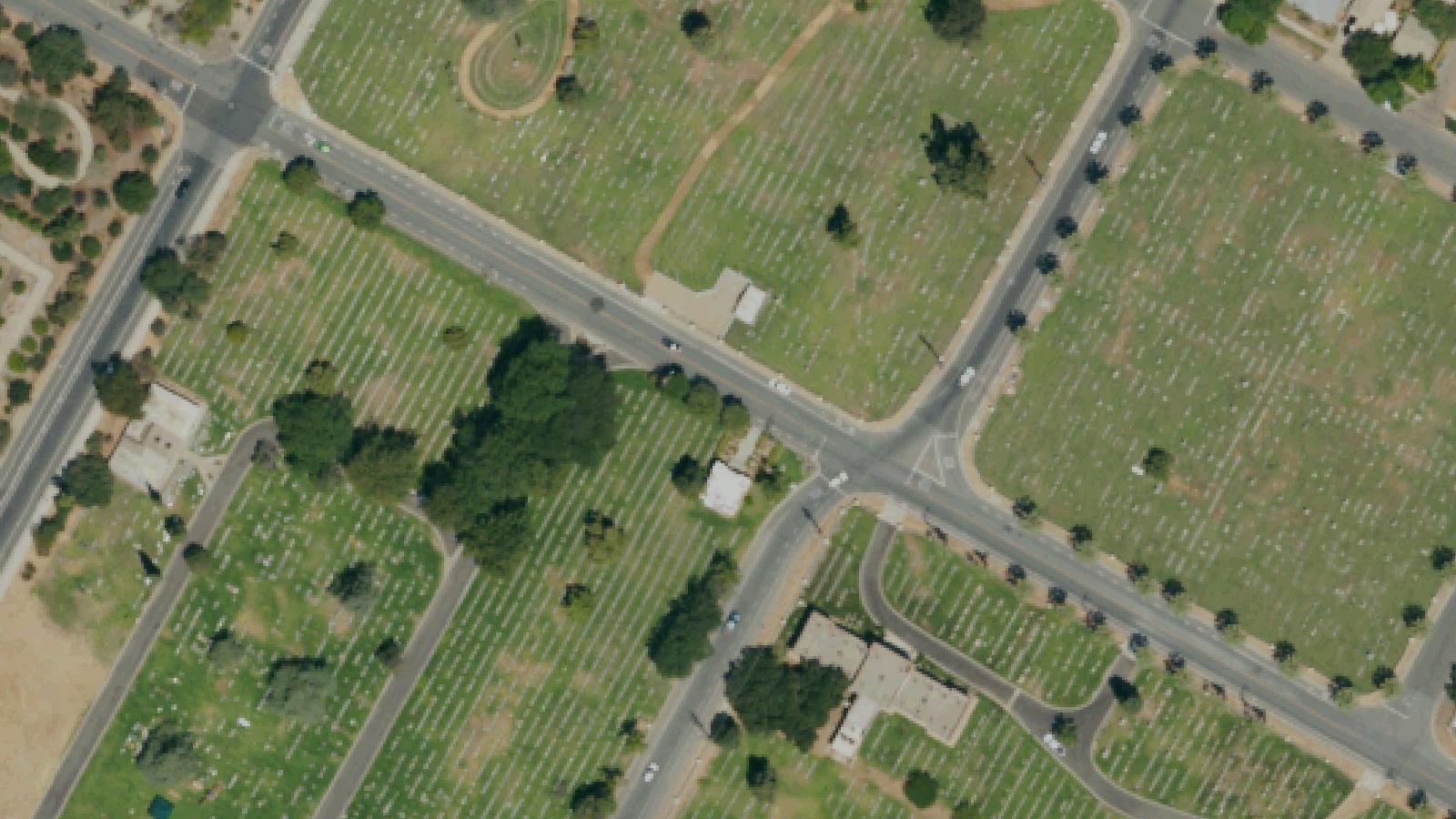
Riverside's oldest burial ground was established in 1872, two years after John Wesley North and associates founded the Southern California Colony Association that became the city of Riverside. The cemetery occupies a site at the foot of Mount Rubidoux, and its more than 27,000 interments reflect the region's demographic history from its earliest Anglo-American settlement through the twentieth century.
Among the notable burials: John Wesley North himself, the colony's founder and president of the 1870 Southern California Colony Association; Luther and Eliza Tibbets, who received two navel orange trees from the U.S. Department of Agriculture in 1873 and planted them in Riverside, launching the California citrus industry; and numerous Civil War veterans interred in the Soldiers' Lot, a section added to the National Register of Historic Places for its documentation of the Union Army's presence in Southern California.
The Spanish influenza pandemic of 1918–1919 produced a concentrated surge of burials at Evergreen. The pandemic killed an estimated 50 million people worldwide and moved through civilian populations in waves; Riverside, like other California cities, experienced multiple rounds of excess mortality between fall 1918 and spring 1919. Those burials are distributed across the cemetery rather than in a dedicated section.
A nonprofit, Evergreen Memorial Historic Cemetery, has led restoration efforts since 2003 under the direction of Judge Victor Miceli, stabilizing and cataloguing the historic section.
Sources
- https://en.wikipedia.org/wiki/Evergreen_Cemetery_(Riverside,_California)
- https://evergreen-cemetery.info/
- https://backpackerverse.com/haunted-riverside-the-dead-rise-in-evergreen-cemetery/
ApparitionsEVP recordingsAnomalous photography (green mist)Unexplained lights
The paranormal reputation of Evergreen Memorial is tied directly to its scale and the specific circumstances of its 1918–1919 influenza burials. Ghost investigators who have worked the cemetery at night describe a green mist that appeared in photographs but was not visible to the naked eye at the time of exposure. This kind of photographic anomaly is a standard claim in recreational ghost hunting and is not independently verified; lighting conditions, lens artifacts, and humidity can produce similar effects.
EVP recordings from Evergreen have been reported by multiple investigator groups over the years, with captured audio described as voices too faint to understand clearly. The investigators attribute these specifically to influenza victims, framing the mass mortality of the pandemic as an explanation for elevated paranormal activity — a logic that appears across cemetery investigations near large clusters of rapid-onset deaths.
What is concrete: Evergreen has more than 27,000 graves, a documented Civil War Soldiers' Lot, and a section of burials concentrated in the 1918–1919 period when the influenza pandemic moved through Southern California. The oldest sections of the cemetery, dating to the 1870s, include unmarked and deteriorated grave markers. Nighttime access is not permitted by the cemetery's operating rules, which means investigator accounts are typically from informal visits or organized ghost hunting events rather than official programming.
The cemetery has no theatrical paranormal events. Its reputation comes entirely from recreational investigators and regional ghost tour oral tradition.
Where this legend is told