Est. 1858 · One of the oldest cemeteries in Santa Cruz County (established 1850s) · Grand Army of the Republic section for Union Civil War veterans · Burial place of roughly 100 early Chinese immigrants · 2014 Chinese memorial gate erected by the Santa Cruz Museum of Art and History · Burials of Santa Cruz pioneers Isaac Graham and Hiram A. Imus Jr.
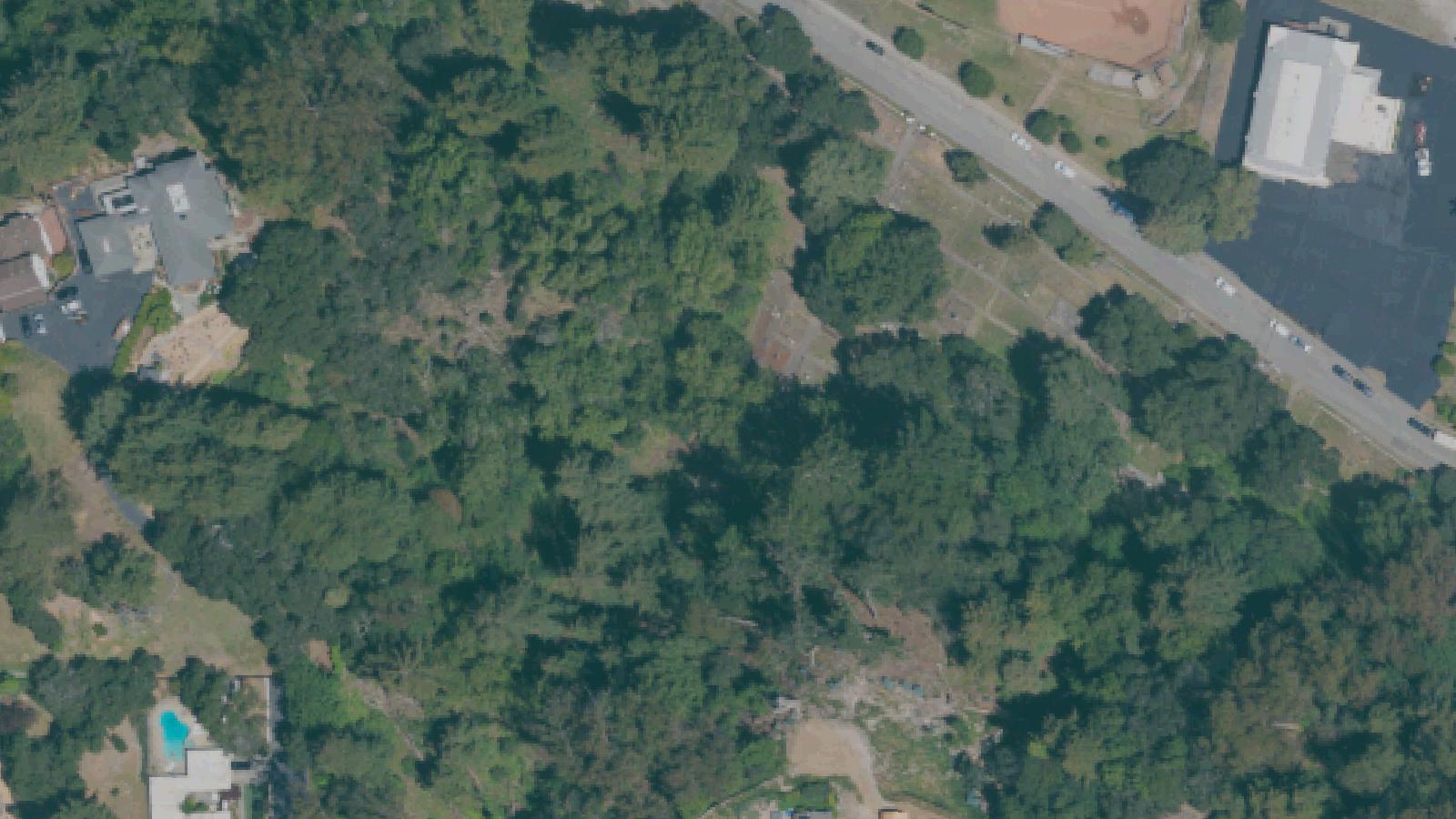
Evergreen Cemetery sits on a hillside on Evergreen Street in Santa Cruz, one of the oldest burial grounds in the county. Records place its establishment in the 1850s, with the first documented burial generally dated to 1858. Among those interred are early Santa Cruz settlers, including the fur trader and pioneer Isaac Graham (1800-1863) and politician Hiram A. Imus Jr. (1804-1875).
A Grand Army of the Republic section was set aside by the fraternal organization of Union Civil War veterans, honoring men who had fought to end slavery. That section, with its rows of veterans' markers, remains one of the cemetery's defining features.
The cemetery also holds a Chinese section, where roughly 100 Chinese immigrants who came to the Santa Cruz area during the 19th century were buried. Their graves were originally marked with wooden crosses and markers that deteriorated over the decades, leaving most of the burials effectively unmarked. Traditional practices at the site once included firecrackers, funeral processions, and a Chinese oven on the grounds for food offerings.
In 2014 the Santa Cruz Museum of Art and History oversaw the construction of a roughly 17-foot Chinese memorial gate to honor those buried in the Chinese section. The Museum has managed Evergreen Cemetery since 2008, organizing history walks and volunteer maintenance days at the site.
Sources
- https://en.wikipedia.org/wiki/Evergreen_Cemetery_(Santa_Cruz,_California)
- https://www.santacruz.org/blog/explore-the-haunted-points-of-santa-cruz-county/
General reputation as a haunted siteFolklore of unrested spirits tied to unmarked Chinese graves
Evergreen Cemetery appears on Visit Santa Cruz County's roundup of the area's haunted points, where it is described simply as said to be haunted. The folklore attached to the cemetery is bound up with its history rather than with named apparitions.
The focus is the Chinese section. Because the wooden markers over the roughly 100 Chinese immigrant burials decayed over the years, most of those graves became unmarked and their occupants effectively anonymous. When the Santa Cruz Museum of Art and History oversaw construction of the memorial gate in 2014, local accounts framed it not only as a historical acknowledgment but, in the language of Chinese folk tradition, as a gesture toward spirits who might otherwise remain unrested or restless.
That reading gives the cemetery a quieter kind of ghost story than the apparition-heavy legends of nearby Beach Hill sites. The reported atmosphere is one of neglected and forgotten graves rather than dramatic hauntings, and visitors who come for the folklore generally come to read the markers, find the GAR veterans' section, and stand at the Chinese gate.
Where this legend is told