Est. 1882 · First Legal Executions in Tombstone — Five Bisbee Massacre Gang Hanged Simultaneously March 28, 1884 · John Heath Lynching — February 22, 1884 · Cochise County Territorial Sheriff's Office and Jail · National Register of Historic Places 1972 · Arizona State Historic Park
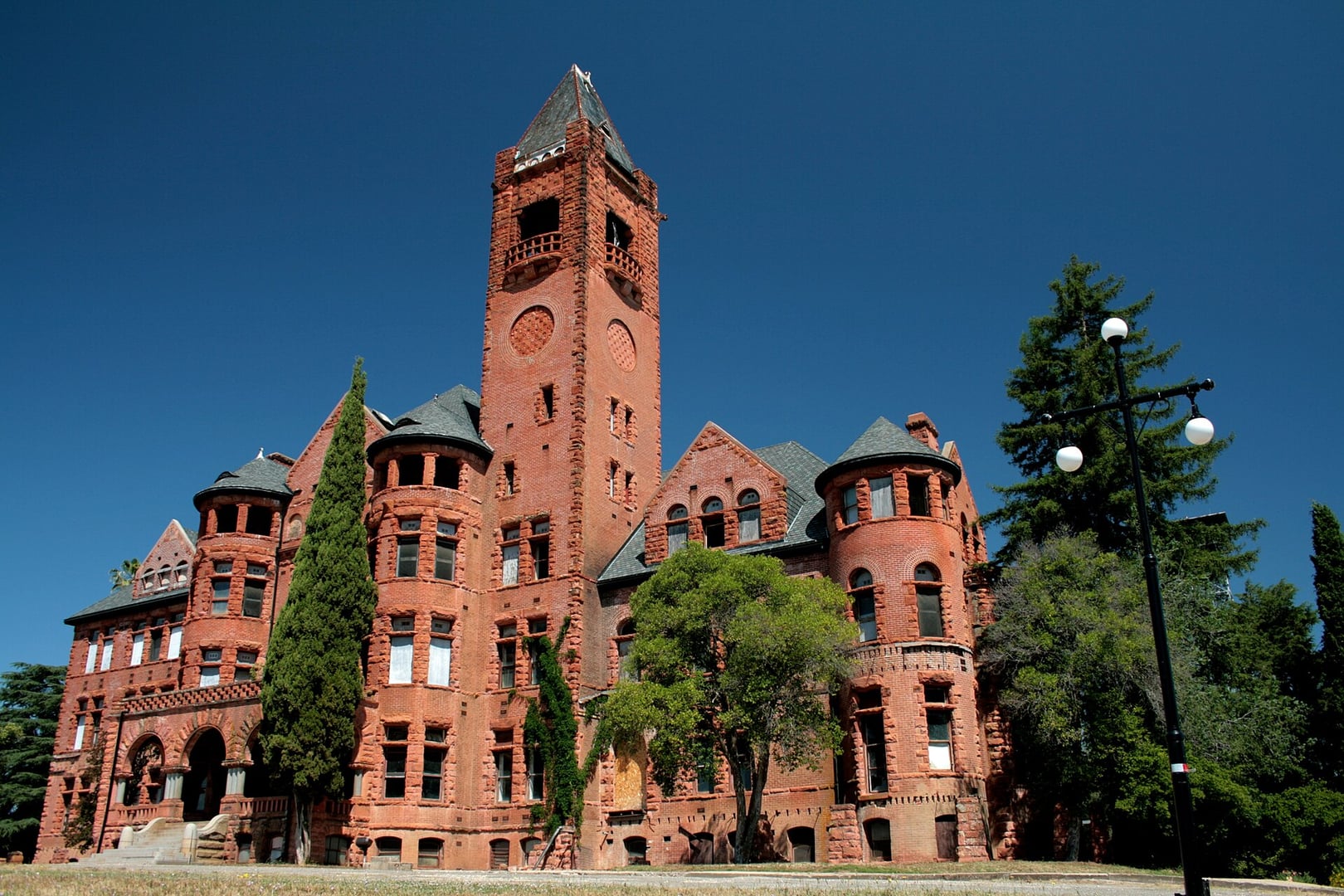
Tombstone, Arizona Territory, was incorporated in 1879 following the discovery of significant silver deposits. Within three years the town had grown to several thousand residents, and Cochise County — with Tombstone as county seat — needed a proper government complex. The courthouse was built in 1882 of red brick in a Victorian commercial style, with rooms designated for the county courts, the territorial sheriff's office, and a jail.
The building's most violent chapter came in 1884. In December 1883, five men — Dan Dowd, Red Sample, Tex Howard, Bill Delaney, and Dan Kelly — along with a sixth, John Heath, had robbed the Goldwater & Castaneda store in Bisbee, killing four people including a bystander and a deputy. The subsequent trial resulted in death sentences for the five gunmen. John Heath, who had allegedly planned the robbery, received a sentence of life imprisonment.
On February 22, 1884, a mob broke into the Tombstone jail, removed Heath, and lynched him from a telegraph pole. The Cochise County coroner's jury, reflecting the frontier sensibility of the moment, recorded Heath's cause of death as 'emphysema of the lungs — a disease common to high altitudes in Arizona, and especially Tombstone.' On March 28, 1884, Dowd, Sample, Howard, Delaney, and Kelly were simultaneously hanged in the courthouse courtyard in what became the first legal mass execution in Tombstone's history. The simultaneous hanging of five men drew spectators and was reported in newspapers across the country.
Tombstone's boom declined rapidly in 1886 after underground flooding made the silver mines unworkable, and the town's population collapsed. The courthouse was listed on the National Register of Historic Places in 1972 and transferred to Arizona State Parks. It is now an active state historic park, with museum exhibits, a replica gallows in the courtyard, and programming tied to the broader Tombstone heritage tourism economy.
Sources
- https://en.wikipedia.org/wiki/Tombstone_Courthouse_State_Historic_Park
- https://en.wikipedia.org/wiki/Bisbee_massacre
- https://azstateparks.com/tombstone
Cold spotsApparitionsShadow figures near gallows courtyardPhantom sounds
Tombstone Courthouse has a specific history of violent death that provides a grounded context for its paranormal reputation: five men hanged simultaneously in the courtyard in 1884, a mob lynching six weeks earlier, and the surrounding territorial frontier violence that defined Tombstone's identity. The courthouse's location at the center of that history has made it a natural target for paranormal investigation programming.
Ghost Adventures filmed at Tombstone Courthouse, documenting what the investigation team described as cold spots in the building's interior and visual anomalies near the courtyard. Visitor accounts from the state park's regular operation describe the area around the replica gallows as carrying unexplained cold, and several visitors have reported apparitions near the former jail cells.
The specific figures most often named in reports are the five Bisbee Massacre gang members executed in 1884, and John Heath, who was lynched nearby before the legal executions took place. The accounts describe shadows and figures associated with the gallows courtyard rather than any specific interior location.
For most visitors, the courthouse's primary draw is historical rather than paranormal. The combination of Wyatt Earp-era exhibits, the 1884 mass hanging story, and the replica gallows in the execution courtyard makes it a landmark in the Tombstone heritage tourism circuit — the paranormal reputation is supplemental to a site that would draw visitors on its documented history alone.
Notable Entities
Dan DowdJohn Heath
Media Appearances
- Ghost Adventures (Travel Channel)
Where this legend is told