Est. 1775 · Founding site of Tucson · Spanish colonial presidio · Archaeological reconstruction
On August 20, 1775, Spanish Army soldiers led by Captain Hugh O'Conor, an Irish officer in Spanish service, selected the site for a new presidio on the east bank of the Santa Cruz River. Soldiers marched north from the Tubac Presidio the following year and began building the fort. An Apache attack in June 1782 pushed the garrison to finish the walls, which was accomplished by May 1783. The adobe-walled fort enclosed soldiers, their families, and civilian residents, and it became the institutional seed of the city that grew up around it.
The presidio anchored Spanish, then Mexican, then American Tucson across the next century. Its walls came down as the town spread, and for generations the footprint survived only in property lines and the occasional excavated foundation. Between 2001 and 2006, archaeologists worked the northeast corner of the original fort, recovering the line of the wall, a torreón (corner tower), and earlier features on the same ground.
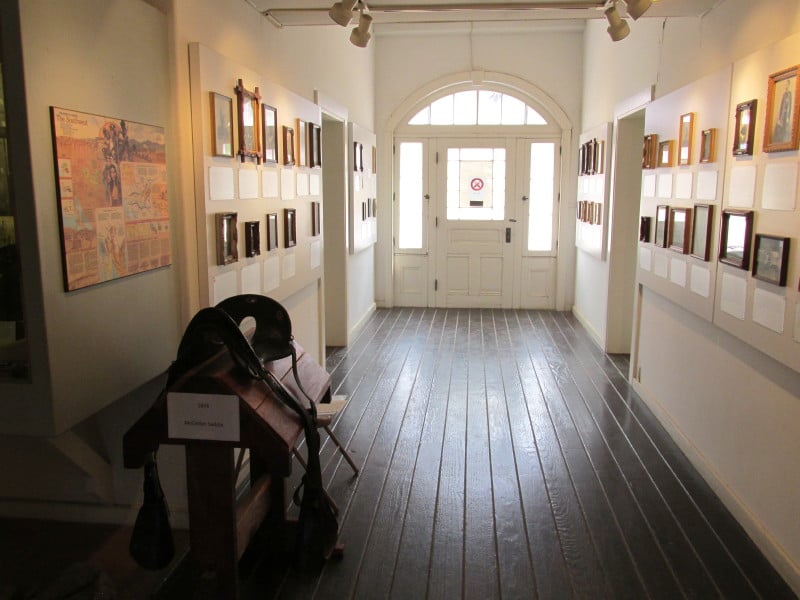
Using that archaeological evidence, the City of Tucson reconstructed the northeast bastion and a section of wall, and the Presidio San Agustín del Tucson Museum opened to the public in 2007. The grounds preserve a prehistoric pit house dated to roughly 2,000 years ago and an original 19th-century Sonoran row house, layering Hohokam, Spanish-colonial, and Territorial Tucson on a single block. The museum operates as a living-history site with costumed docents and is run today by the Tucson Presidio Trust for Historic Preservation.
Sources
- https://www.nps.gov/places/presidio-san-agustin-del-tucson.htm
- https://en.wikipedia.org/wiki/Presidio_San_Agust%C3%ADn_del_Tucs%C3%B3n
- https://tucsonpresidio.com/
ApparitionsDisembodied voicesCold spotsSense of presence
Because the museum stands on the documented footprint of an 18th-century fort and burial-adjacent ground, the paranormal lore at the Presidio leans on the people who occupied it rather than on any single named ghost. Local guides and after-dark event hosts describe a recurring impression of presence in the reconstructed rooms and along the wall line, generally framed as the soldiers and settlers of the original garrison.
Reported experiences are modest and consistent in type: figures seen briefly at the edge of vision and gone when looked at directly, low voices with no traceable source, and cold drafts that move through interior spaces on still days. Visitors on evening programs sometimes report the feeling of being watched in the courtyard.
These accounts circulate through Tucson ghost-tour operators and local legend collections rather than formal investigation reports, and the museum presents its history as living interpretation, not a haunted attraction. The reports are best understood as folklore attached to a genuinely old and well-documented site — the kind of place where two centuries of occupation make people listen a little harder in the dark.
Notable Entities
Presidio soldiersEarly settlers