Museum Visit
Self-guided pioneer village tour
Walk through twenty historic 19th-century buildings including the original Gordon Schoolhouse, blacksmith shop, sheriff's office, and church.
HauntBound archive · catalog record
Reported phenomena, as catalogued
+ 1 further entry on record
A 90-acre open-air history museum north of Phoenix with twenty historic 19th-century buildings, including the haunted Gordon Schoolhouse where caretakers report children's voices.
3901 W. Pioneer Road, Phoenix, AZ 85086
Research updated September 2026
Age
All Ages
Cost
$$
Adults $12; children 5–16 $10; veterans, public safety/police & fire and seniors $8; parties 15 or more $10 per person; children under 5 free. Admission includes Pioneer Village and the Telephone History Museum.
Access
Wheelchair OK
Paved pathways across 90 acres; an outdoor museum site.
Equipment
Photos OK
Personal photography is permitted with regular admission. Professional photography or video requires a signed release and a $25.00 one-time fee plus admission.
One of the largest open-air living history museums in the American Southwest · Preserves 10 original Arizona territorial-era buildings rescued from demolition · Founded by a bipartisan coalition including Goldwater, Hayden, and Governor Fannin
In 1956, a coalition of Arizona history enthusiasts — including former Governor Paul Fannin, Senator Barry Goldwater, Senator Carl Hayden, and Wesley Bolin — formed the Pioneer Arizona Foundation, Inc. to rescue historic buildings facing demolition across the state. They purchased 90 acres in what was then far-north desert outside Phoenix and began assembling a working pioneer village.
The museum opened to the public on February 15, 1969 with 30 historic structures: 10 original buildings dating from the 1870s through the 1910s, and roughly 15 authentically reconstructed buildings depicting territorial-era trades and homes. The collection includes a blacksmith shop, sheriff's office, opera house, church, miner's camp, ranching complex, and the Gordon Schoolhouse.
The Gordon School is one of the museum's most significant original structures. Originally a one-room building in Gordon Canyon in northern Arizona, it served as the home of William Gordon and his family before being converted to a school used from roughly 1885 to 1930. Classes ran K-8 in the single room from March through November. The building was disassembled piece by piece and transported over 150 miles to Pioneer Village, where it was the first original structure restored on site.
In 2010 the museum faced closure when its land was auctioned to Great Western Historical LLC, which cited water and wastewater complications. The City of Phoenix intervened, purchasing the land and installing a water line that allowed operations to continue. The museum remains active today, with seasonal living-history programming, school tours, and special events.
Sources
According to the museum's property caretaker, the Gordon Schoolhouse is the focal point of paranormal activity on the Pioneer Living History Museum grounds. Voices of children singing and whispering have been reported in and around the original 1880s schoolhouse, both during the day and after hours.
Guests and staff describe seeing apparitions of children, sometimes seated at the schoolhouse desks and other times appearing to play outside the building. Windows have reportedly opened on their own, and parts of the schoolhouse and other Victorian buildings remain icy cold despite the surrounding Arizona heat, according to caretaker accounts reported by AZHauntedHouses.com.
The museum has hosted public paranormal investigations led by Arizona ghost-hunting groups, who have used the events as fundraisers for the nonprofit foundation. According to coverage in The Foothills Focus, the investigations have produced enough reported anomalies — orb photography, EVP captures, and reported voices — that they have become a recurring event on the museum calendar.
The legend connects to the documented history of the Gordon School: a small frontier classroom where pioneer children attended for over four decades. No specific deaths or tragedies have been documented at the original Gordon Canyon site or after the building's relocation.
Notable Entities
Walk through twenty historic 19th-century buildings including the original Gordon Schoolhouse, blacksmith shop, sheriff's office, and church.
Periodic public paranormal investigation nights organized by Arizona ghost-hunting groups; advertised in local press.
Some links on this page may earn HauntBound a small commission when you book, at no extra cost to you. Our editorial picks are independent. Full disclosure
Every HauntBound history is researched from documented sources. We clearly separate verified historical fact from paranormal folklore.
Free Guide
10 verified stops, rated for families, mapped in order. Free.
One email to confirm, then the guide link. Unsubscribe anytime.
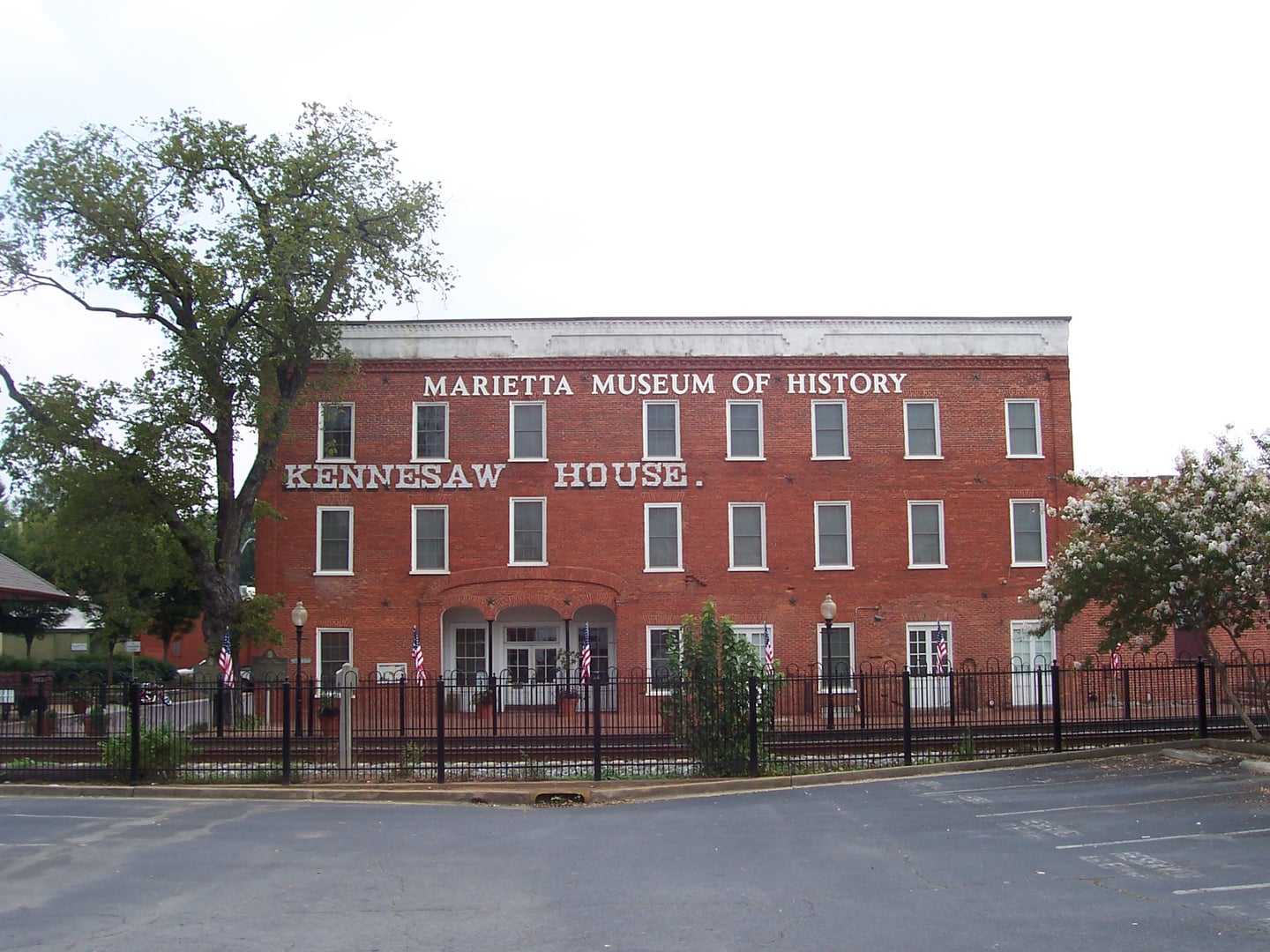
Marietta, GA
The Kennesaw House was built around 1845 as a cotton warehouse on what is now Marietta Square, adjacent to the railroad tracks that would define its Civil War history. Purchased by Dix Fletcher in 1855 and converted into the Fletcher House hotel, it served as both a staging point for the famous Great Locomotive Chase of April 1862 and as a hospital and morgue for Confederate and Union forces during Sherman's Atlanta campaign. Today it houses the Marietta History Center.
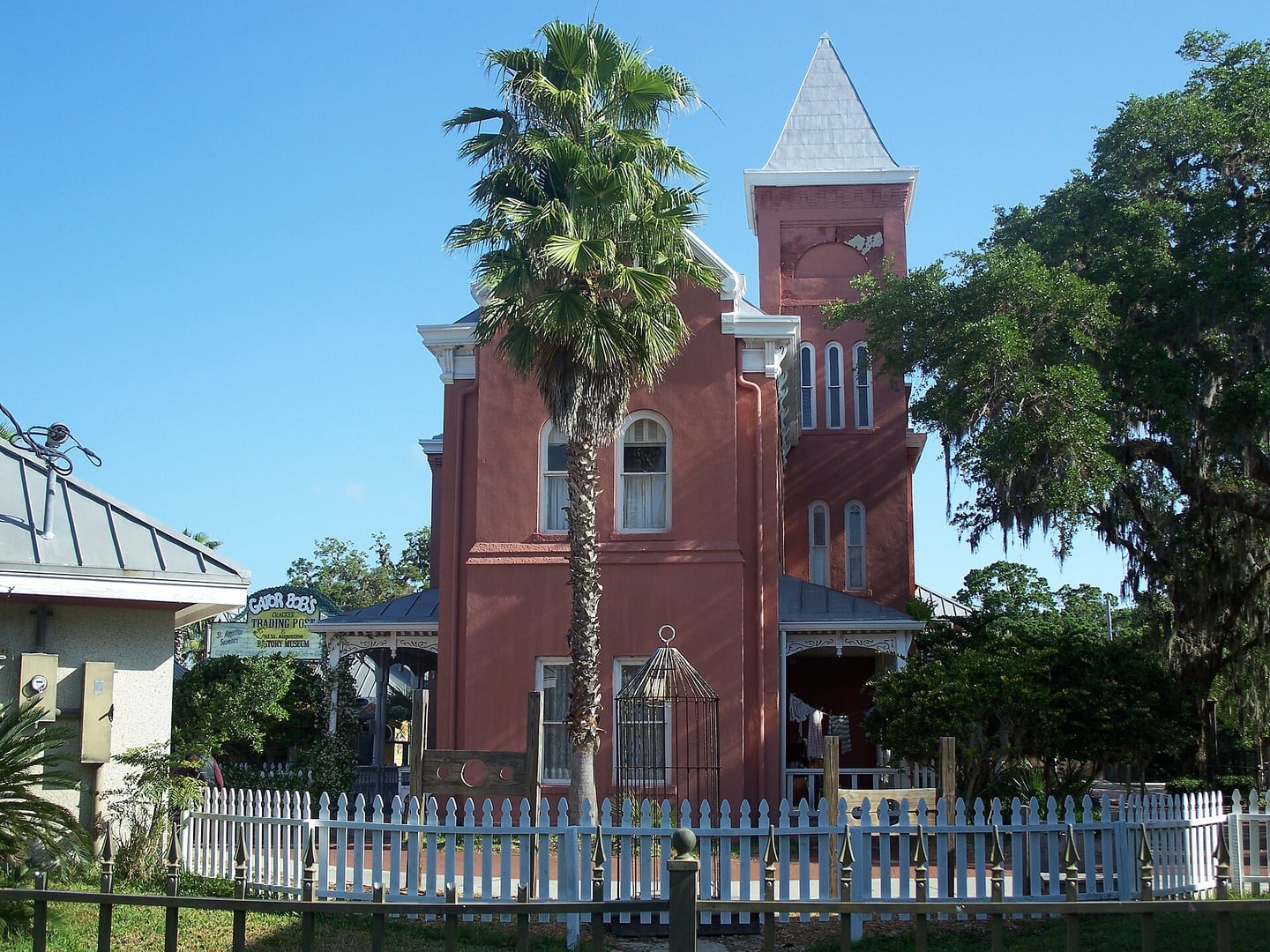
St. Augustine, FL
The Old St. Johns County Jail at 167 San Marco Avenue in St. Augustine, Florida was commissioned by railroad magnate Henry Flagler and constructed in 1891. Designed by the same architectural firm later used for Alcatraz, the facility housed prisoners under conditions so severe — one bucket per cell as a toilet, minimal diet, and labor in Flagler's fields — that it was closed in 1953. Eight documented executions occurred on site before the county converted the building to a tourist attraction in 1954.
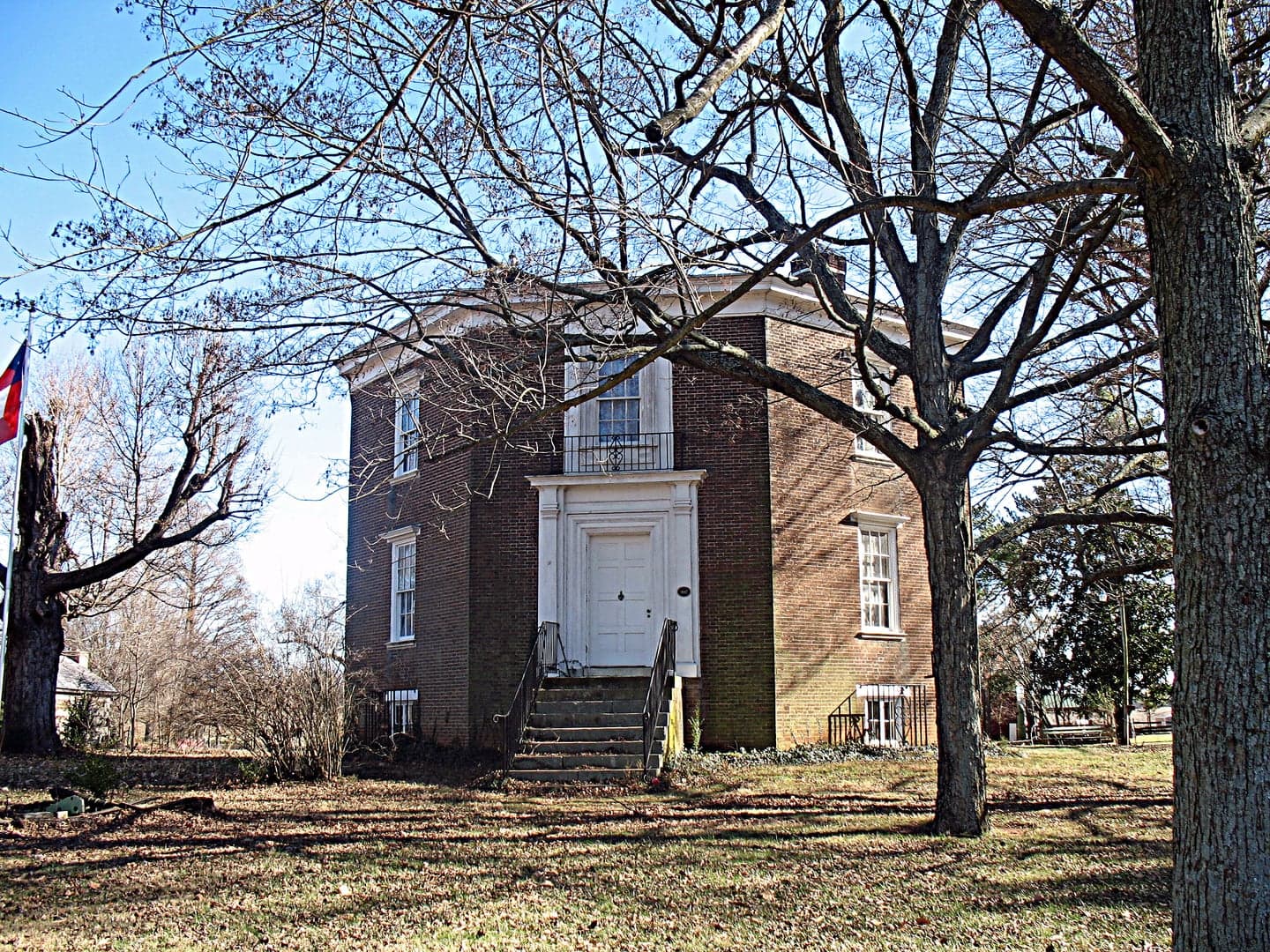
Franklin, KY
Andrew Jackson Caldwell laid the foundation of Octagon Hall in 1847, completing the distinctive eight-sided brick residence by approximately 1860. Built on 300 acres in Franklin, Kentucky, it served as a hospital for both Confederate and Union soldiers during the Civil War and as a hiding place for retreating Confederate troops. The Octagon Hall Foundation acquired the site in 2001 and operates it as a museum and investigation venue.