Est. 1842 · Oldest Active Courthouse West of Mississippi (claimed) · Civil War Military Post · 1877 Arson and Rebuild · Arkansas River Valley History
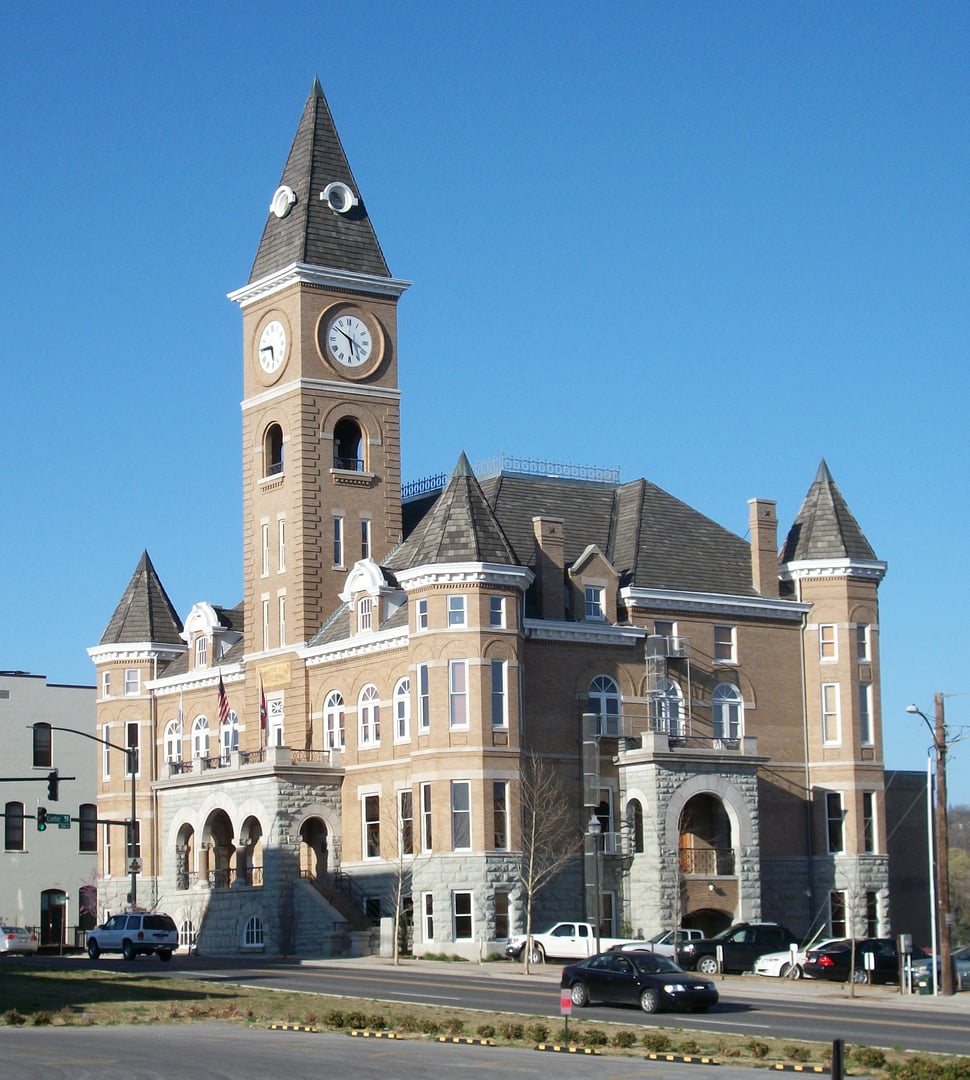
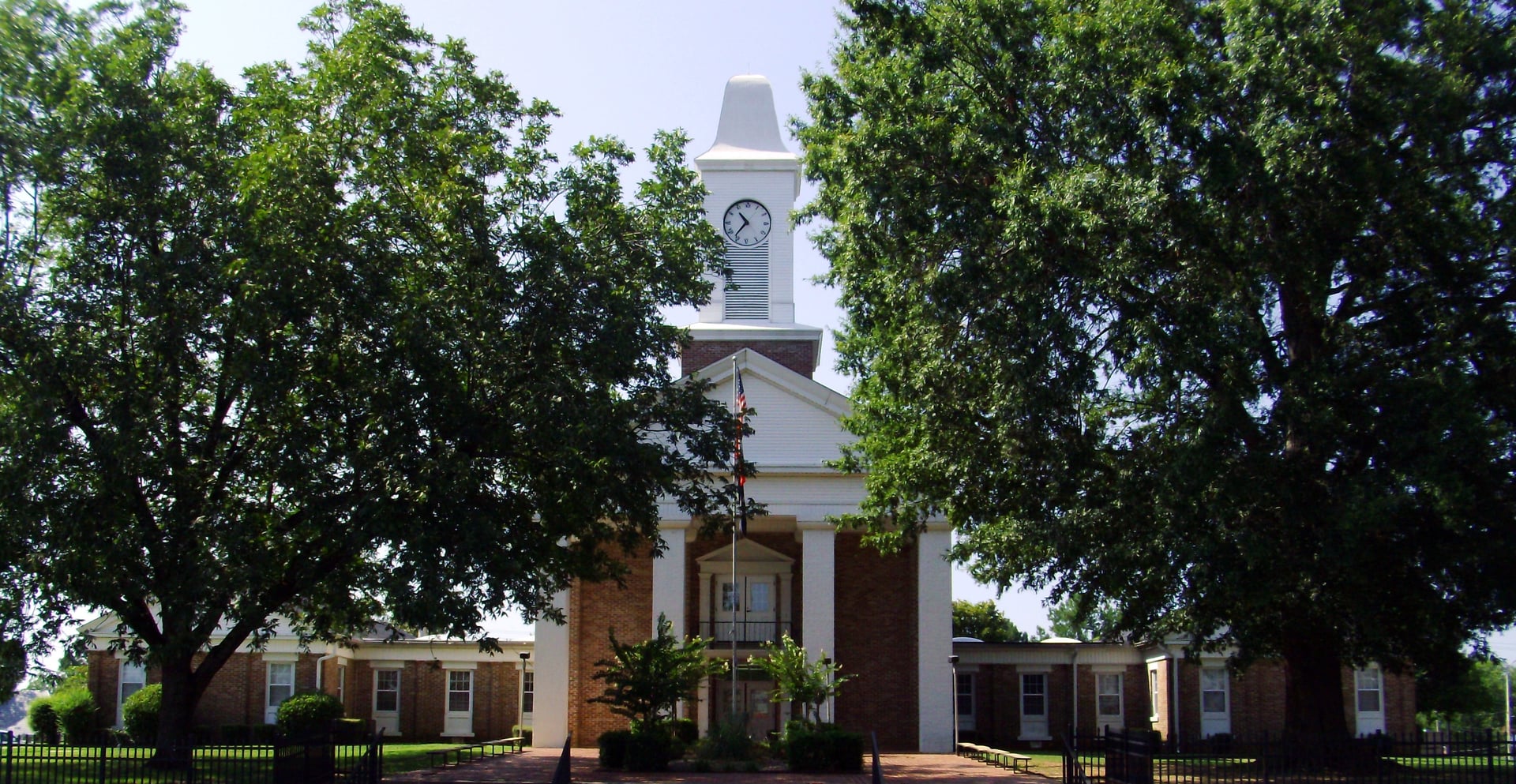
The Crawford County Courthouse at 300 Main Street in Van Buren is documented by the Van Buren Advertising and Promotion Commission as the oldest courthouse still in active use west of the Mississippi River, with the original section dating to 1842. That claim is common in American courthouse history and carries caveats, but the 1842 date is the documented origin for this building's continuous use as a seat of county government.
The courthouse's most dramatic historical episode came in 1877. A county-seat dispute — the kind of conflict that was settled in the post-Reconstruction South with more than parliamentary procedure — brought arsonists to the building, who gutted the interior. The surviving exterior and foundation walls were retained, and the courthouse was rebuilt within them. This pattern of destruction and rebuilding within original walls gives the structure a layered physical history that makes dating it straightforward: the walls are older than 1877, and the interior is substantially newer.
A Civil War Arkansas history blog documents the courthouse's significance during the 1862 military campaigns in the region, when the building served as a military post during the fighting that swept through the Arkansas River valley. Van Buren was at the edge of contested territory during much of the war. The Van Buren A&P Commission's documentation confirms the building's 1842 origin and its status as a still-operating county seat — a claim that distinguishes it from the many historic courthouses that have been converted to museums or other uses.
Sources
- https://www.vanburen.org/venue/crawford-county-courthouse/
- http://civilwararkansas.blogspot.com/2012/04/crawford-county-courthouse-civil-war.html
- https://www.hauntedplaces.org/van-buren-ar/
Sound of jail doors closing in empty roomsSound of gurneys rolling on carpeted floorsUnexplained sounds
The paranormal documentation attached to the Crawford County Courthouse is unusual for its specificity. Rather than general atmospheric claims, the accounts converge on two distinct sound phenomena: the sound of jail doors closing in areas where there is no jail, and the rolling sound of gurneys on carpeted flooring where no gurneys are present.
The jail door account is particularly suggestive of residual haunting theory, which holds that structures with long histories of specific activities may retain an acoustic or energetic impression of those events. A courthouse that sentenced people to death and likely held them in cells on or adjacent to the premises fits the framework for this category of claim. Whether the building ever contained a jail cell is not confirmed in the primary sources reviewed, though 19th-century courthouses commonly incorporated holding facilities.
The gurney sound is less easily explained by the building's historical function and has not been contextualized in the sources with a specific historical event. Both phenomena are documented through Haunted Places sources, which function as research aids and cannot be treated as primary documentation. A 2026-08-13 dossier review found the specific Haunted Places listing for the Van Buren area attaches an identical jail-door-and-gurney description to a different building, the Cherokee County Courthouse in Tahlequah, Oklahoma, roughly 48 miles away; the direct Haunted Places page for Crawford County Courthouse itself returns a 404. The building-level attribution here should be treated as unconfirmed pending a source that names this specific courthouse.