Est. 1839 · National Register of Historic Places · Clarksburg Downtown Historic District · Goff Family Heritage · Gray Barker UFO Archive
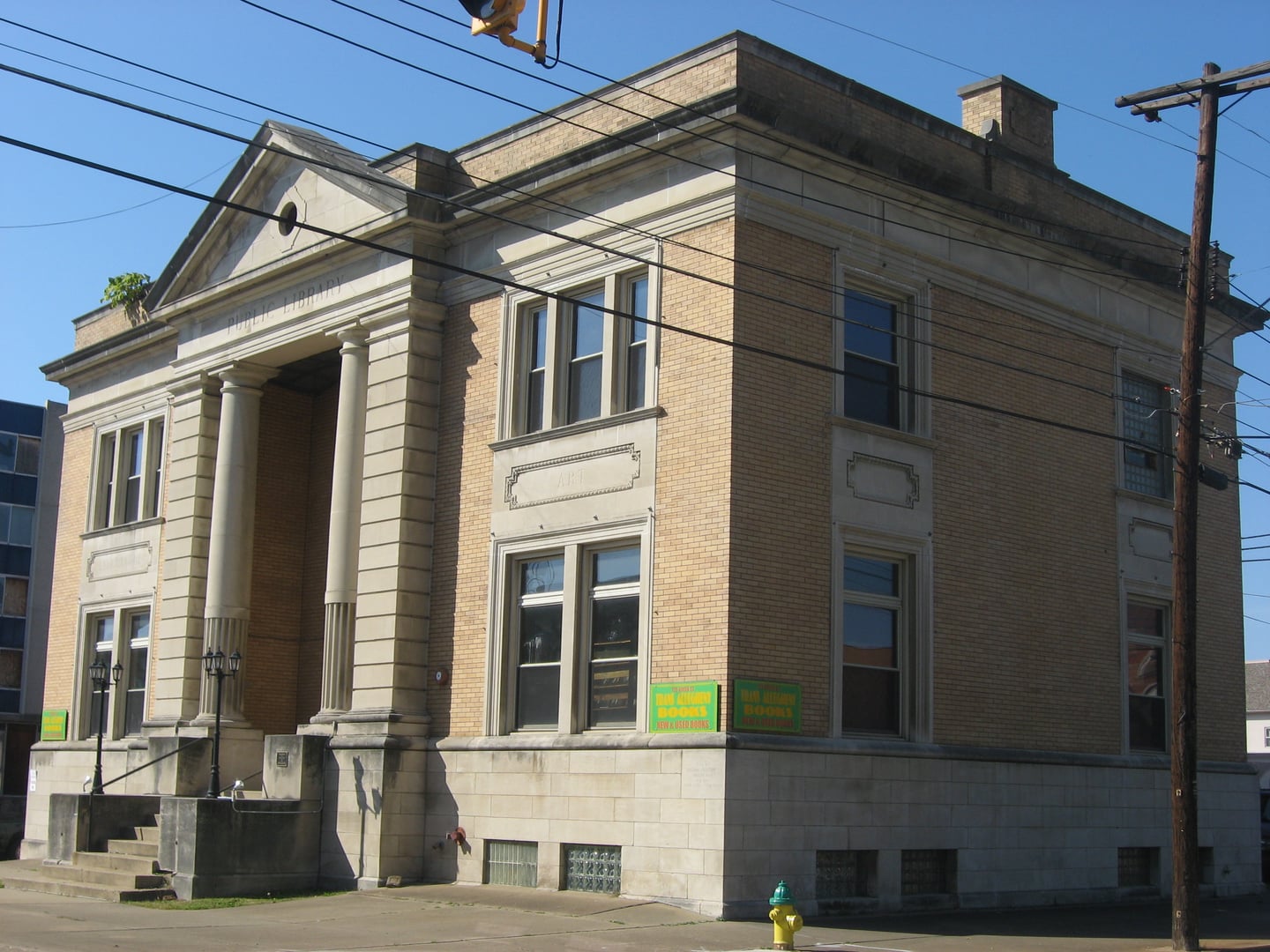
Waldomore was built in 1839 for Waldo P. Goff, a West Virginia state senator, who combined his first name with his wife's maiden name, Moore, to name the house. The two-story brick mansion blends Greek Revival and Neoclassical detailing and stands on West Pike Street in downtown Clarksburg. Goff's son Nathan Goff Jr., born at Waldomore in 1843, went on to serve as U.S. Secretary of the Navy under President Rutherford B. Hayes and as a U.S. congressman.
The house passed through the Goff family and was eventually deeded to the city. It became part of the Clarksburg-Harrison Public Library and today serves as the library's special-collections building, holding West Virginia history and culture materials, genealogical resources, and the papers of Clarksburg UFO writer Gray Barker. Waldomore was listed on the National Register of Historic Places on October 4, 1978, and is a contributing property in the Clarksburg Downtown Historic District.
The building's long institutional life — from family mansion to public library annex — has kept it in continuous use for more than 180 years, and its early librarians and former residents are the figures most often named in its ghost tradition.
Sources
- https://en.wikipedia.org/wiki/Waldomore
- https://www.southernspiritguide.org/guide-to-the-haunted-libraries-of-the-south-west-virginia/
- http://theresashauntedhistoryofthetri-state.blogspot.com/2013/07/waldomore-mansion-in-clarksburg.html
Woman in whitePhantom piano musicApparitions at windows
The Waldomore haunting is a quiet, domestic one. The most-repeated report is of a woman in white seen at the upper-floor windows, looking out over the street. The second recurring account is phantom piano music: notes heard coming from a Steinway in a closed parlor, its quilted cover reported to stay in place.
Local writers offer several candidate identities drawn from the building's history rather than from any documented tragedy. Names raised include Harriet Moore, an early member of the household; May Goff Lowndes, a Goff daughter who helped pass the house to the city; Julia Walker Ruhl, associated with the library's founding; and S. Scollay Page, said to have been the first librarian. The accounts note that some of these women died while connected to the house, but none is tied to the haunting by anything firmer than association.
The stories appear in regional haunted-library roundups rather than in formal investigation reports, and the building has no record of a violent death. We pass the woman-in-white and the phantom piano along as Clarksburg folklore, attached to a house that has been lived in and worked in for almost two centuries.