Dinner
Dine at the historic Cantonese restaurant
Order off the menu Bruce Lee favored and ask the staff about the preserved back booth he used; classic Cantonese-American cooking in a 1935 storefront.
- Duration:
- 1.3 hr
HauntBound archive · catalog record
Reported phenomena, as catalogued
Seattle's oldest continuously operating Chinese restaurant — open since 1935 in the Chinatown-International District — preserves Bruce Lee's favorite back booth and is said by Wikipedia and others to have a kuei-haunted cellar.
655 South King Street, Seattle, WA 98104
Research updated May 2026
Age
All Ages
Cost
$$
Classic Cantonese-American menu; cash and card accepted; reservations not typically required.
Access
Wheelchair OK
Single-story storefront entry from South King Street.
Equipment
Photos OK
Est. 1935 · Seattle's oldest continuously operating Chinese restaurant (1935-present) · Bruce Lee's preserved back booth still in use · Contributing cultural site of Chinatown-International District NRHP · Featured in 'A Taste of Home' (2015) and 'The Paper Tigers' (2020)
Tai Tung opened in 1935 in the ground floor of the Rex Hotel building at the corner of South King Street and Maynard Avenue South — the heart of what was then called Chinatown and is now Seattle's Chinatown-International District. It is, per Wikipedia and the University of Washington alumni magazine, the oldest continuously operating Chinese restaurant in Seattle.
The restaurant has been operated by the Chan family for multiple generations; the current proprietor, Harry Chan, has run it for decades and has spoken in interviews about preserving its traditions through changing tastes and successive neighborhood transformations. Cantonese-American is the house style: char siu, chow mein, wonton soup, and a deep multi-page menu of classics. Tai Tung is famously open on Christmas Day, when many Seattle restaurants are closed, and it has long been a holiday tradition for Seattle families.
The restaurant's most documented cultural association is with Bruce Lee, who lived in Seattle during his University of Washington years (1959-1964) and remained connected to the city's Chinese-American community throughout his adult life. Bruce Lee was a regular at Tai Tung, and the back booth where he typically sat has been preserved by the Chan family. He is buried, with his son Brandon Lee, at Lake View Cemetery just a few miles north on Capitol Hill.
Tai Tung has been featured in the 2015 documentary 'A Taste of Home' and served as a filming location for the 2020 martial-arts comedy 'The Paper Tigers.' It is recognized as a contributing cultural site of the Chinatown-International District, a designated historic district on the National Register of Historic Places.
Sources
Tai Tung's haunted reputation rests primarily on a tradition documented in print in the mid-1990s and carried forward by Wikipedia and Atlas Obscura: the restaurant's cellar is said to be haunted by kuei — a category of restless or troubled spirit in Chinese folk belief. Wikipedia cites a 1995 publication discussing 'uneasy spirits' at Tai Tung, and the lore has been re-circulated in Seattle Halloween features in the decades since.
The cellar of the Rex Hotel building, like many basement spaces in older Chinatown structures, has a long and complex use history that includes storage, prep, and at points in the building's earlier life living quarters. HauntBound has not been able to independently verify named historical residents associated with the cellar's spirit lore, and the kuei tradition here is presented as a cultural-folkloric reading rather than a single attributable historical event.
Reported phenomena are modest by haunted-restaurant standards: staff occasionally describe a sense of being watched in the cellar, footsteps on the wooden floors when the dining room is empty, and a feeling of unusual cold near the back of the building. No major paranormal-investigation series has documented Tai Tung publicly, and the restaurant does not market itself around the ghost stories.
A cultural note worth respecting: kuei in Chinese folk belief are not the same as Western 'haunted-house' ghosts. They are typically understood as the unsettled dead in need of remembrance or proper rites, and the Chan family's continued tradition of long-running ancestral honor is part of the cultural framing in which this lore lives. HauntBound presents the story in that spirit.
Notable Entities
Order off the menu Bruce Lee favored and ask the staff about the preserved back booth he used; classic Cantonese-American cooking in a 1935 storefront.
Some links on this page may earn HauntBound a small commission when you book, at no extra cost to you. Our editorial picks are independent. Full disclosure
Every HauntBound history is researched from documented sources. We clearly separate verified historical fact from paranormal folklore.
Free Guide
10 verified stops, rated for families, mapped in order. Free.
One email to confirm, then the guide link. Unsubscribe anytime.
Seattle, WA
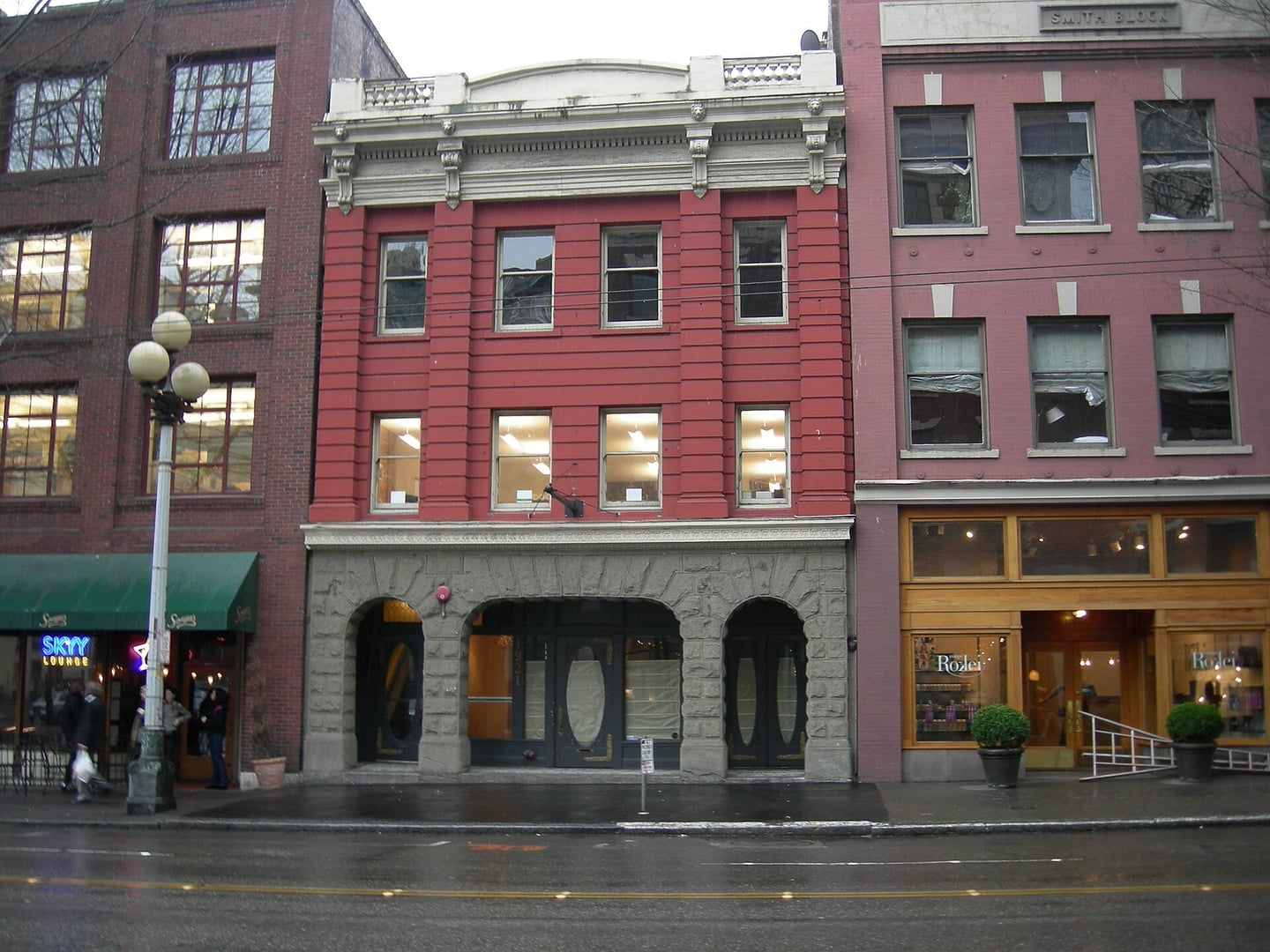
The Butterworth Building at 1921 First Avenue (with Post Alley access at 1916) was completed October 1, 1903 by Edgar Ray Butterworth as Seattle's first mortuary. Designed by architect John Graham, Sr., it included an elevator used to transport bodies. Kells Irish Restaurant & Pub has operated in the lower level since 1983.
Seattle, WA
Merchant's Cafe & Saloon occupies the Sanderson Block, a brick building at 109 Yesler Way in Pioneer Square built in 1889–1890 and designed by W. E. Boone, rebuilt after the Great Seattle Fire of 1889. The establishment claims status as the city's oldest continuously operating restaurant. Over its history the building has functioned as a saloon, gambling parlor, brothel, and Prohibition-era speakeasy.
Snohomish, WA
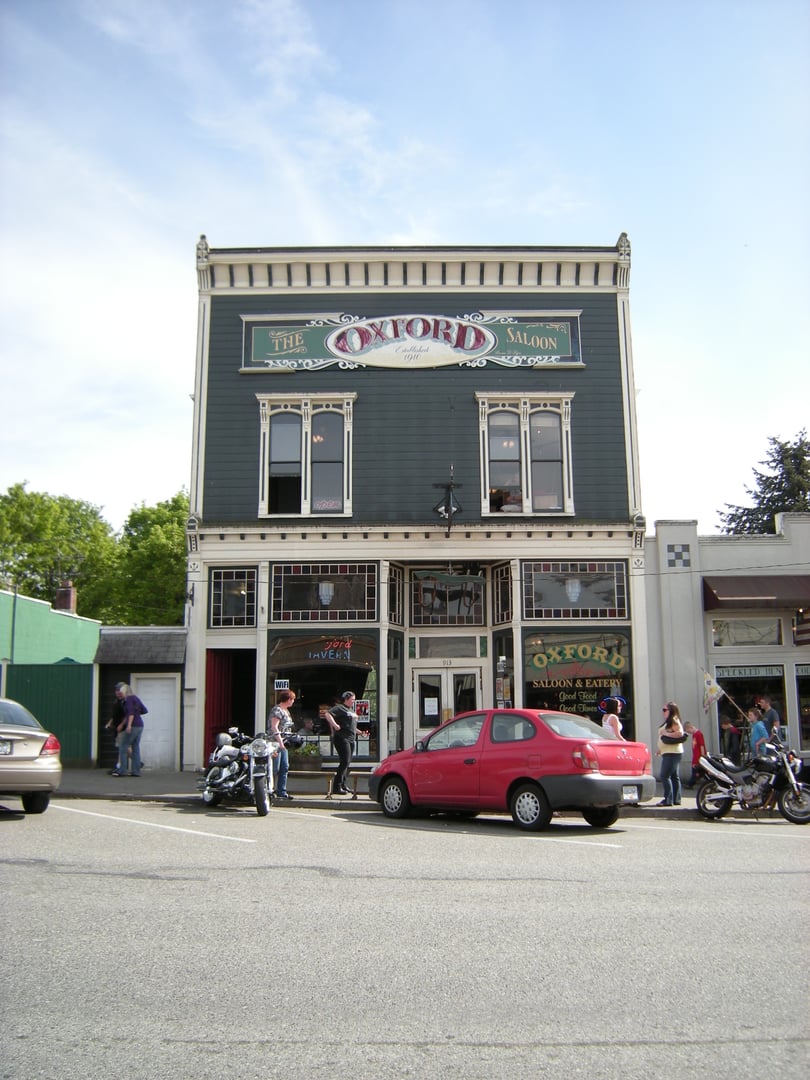
The Oxford Saloon was built in 1890 at 913 First Street in Snohomish, Washington. For two decades it operated as Blackman's Dry Goods store before being converted to a saloon in 1910. The building also housed a pool room during Prohibition, served as a speakeasy, and had a brothel operating on its second floor. The venue has documented ten killings over its history.