Self-Guided Visit
Film Screening or Live Event
Attend a film screening, concert, or community event at the 1924 Capitol Theater, operated by the Olympia Film Society since 1986. The theater hosts the annual Olympia Film Festival.
- Duration:
- 2 hr
HauntBound archive · catalog record
Reported phenomena, as catalogued
+ 3 further entries on record
A 1924 Joseph Wohleb-designed movie house that survived a 1937 nitrate film fire and a 2001 earthquake, now run by the Olympia Film Society and said to be haunted by a 1950s projectionist who never quite left.
206 E 5th Ave, Olympia, WA 98501
Research updated August 2026
Age
All Ages
Cost
$
Standard cinema and event ticket pricing; check Olympia Film Society website for current schedule and prices.
Access
Wheelchair OK
Historic downtown theater with accessible entrance and seating.
Equipment
Photos OK
Est. 1924 · Designed by architect Joseph Wohleb; opened October 7, 1924 · 1,500-seat capacity · Fire on April 24, 1937 caused by spontaneous combustion of nitrate film reel · Olympia Film Society operating venue since 1986 · Hosted International Pop Underground Convention in 1991 · 2001 Nisqually earthquake damaged ornate plaster ceiling
The Evergreen State Amusement Corporation commissioned Olympia architect Joseph Wohleb to design a movie house for the corner of East Fifth Avenue in downtown Olympia. The Capitol Theater opened on October 7, 1924, with a 1,500-seat capacity and an interior that included ornate plaster ceiling work.
The theater's most dramatic incident came on April 24, 1937, when a nitrate 35mm film reel that had been delivered the previous night and stored temporarily in the mezzanine janitor's closet underwent spontaneous combustion. The fire caused significant interior damage — charred seating, smoke-stained walls — but occurred in the early morning hours before staff arrived, and no one was injured. After repairs, the theater reopened on August 25, 1937.
Financial difficulties during the Great Depression strained the operation. Henry Caldwell purchased the theater in 1942 and attempted revival through live musical programming, but ultimately could not sustain it financially. The Olympia Film Society took over operations in 1986 and has run the theater since, developing it into a community cinema and event hub. The theater hosted significant cultural events, including the International Pop Underground Convention in 1991 and multiple Yoyo A Go Go festivals through the 1990s and 2000s.
The 2001 Nisqually earthquake, a 6.8-magnitude event, caused severe damage to the ornate plaster ceiling, which cracked and partially collapsed. Repairs restored the theater to operation. The marquee, added in 1940, was removed in January 2008.
Sources
The ghost story at Olympia's Capitol Theater centers on the projection booth. According to accounts documented by Ghostly Activities and others, a 1950s-era projectionist named Frank Miller became so devoted to the theater that he allegedly never truly left. Staff and volunteers have reported the projector operating on its own, lights flickering in the booth when no one is scheduled to be there, and shadowy figures visible in the booth from the auditorium floor.
The Ghostly Activities account is explicit that Frank Miller's identity as the specific spirit is unverifiable: "There is no proof available that the spirit really is Frank Miller." No documentary evidence of Miller's death at the theater or under unusual circumstances has surfaced. The attribution appears to be a workplace folk narrative built around unexplained equipment behavior.
Additional phenomena reported at the theater include phantom footsteps on the balcony, sudden cold spots in the seating area, and occasional sightings of a figure described as wearing vintage clothing — sometimes called the "Lady in White" — near the back of the house. Backstage, props have reportedly moved and doors opened without apparent cause.
The 1937 fire, while dramatic, is not consistently cited in the haunting tradition; the lore focuses on the more recent mid-century projectionist figure.
Notable Entities
Attend a film screening, concert, or community event at the 1924 Capitol Theater, operated by the Olympia Film Society since 1986. The theater hosts the annual Olympia Film Festival.
Some links on this page may earn HauntBound a small commission when you book, at no extra cost to you. Our editorial picks are independent. Full disclosure
Every HauntBound history is researched from documented sources. We clearly separate verified historical fact from paranormal folklore.
Free Guide
10 verified stops, rated for families, mapped in order. Free.
One email to confirm, then the guide link. Unsubscribe anytime.
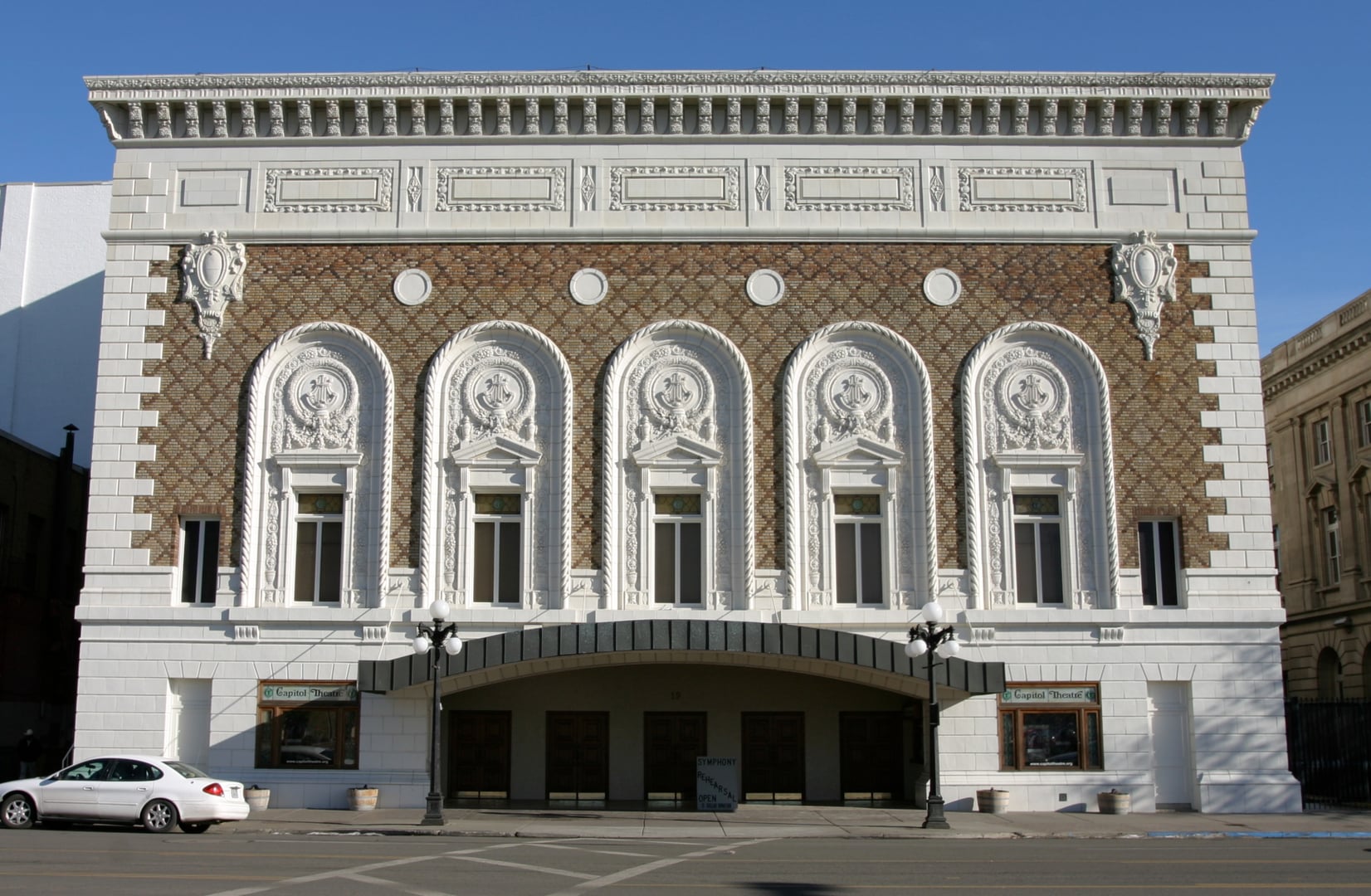
Yakima, WA
Designed by B. Marcus Priteca and opened April 5, 1920 as the Mercy Theatre — at the time the largest theater in the Pacific Northwest — the Capitol Theatre in Yakima survived a devastating fire on August 11, 1975, was rebuilt with original muralist Anthony Heinsbergen coming out of retirement to restore the ceiling dome, and was rededicated November 4, 1978.
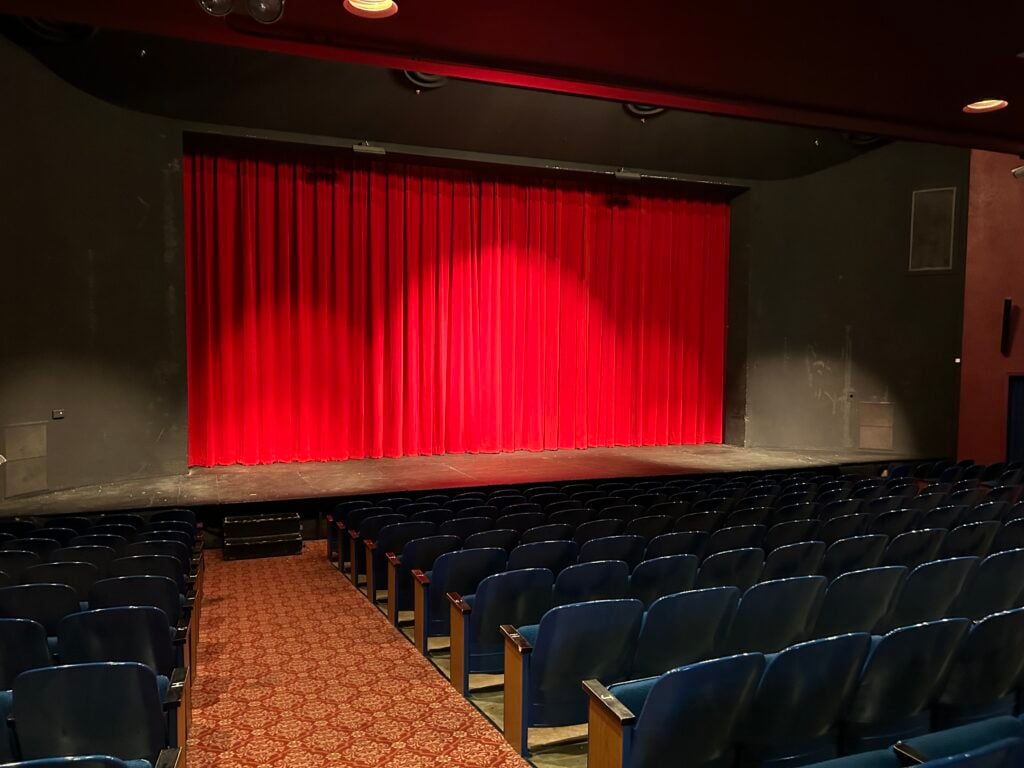
Jonesboro, AR
Built in 1926 as the Strand Theatre, the Forum Theatre has operated as a downtown Jonesboro performance venue for nearly a century. The Foundation of Arts, a non-profit arts organization, has managed it for decades and continues to produce community theater and musical productions.
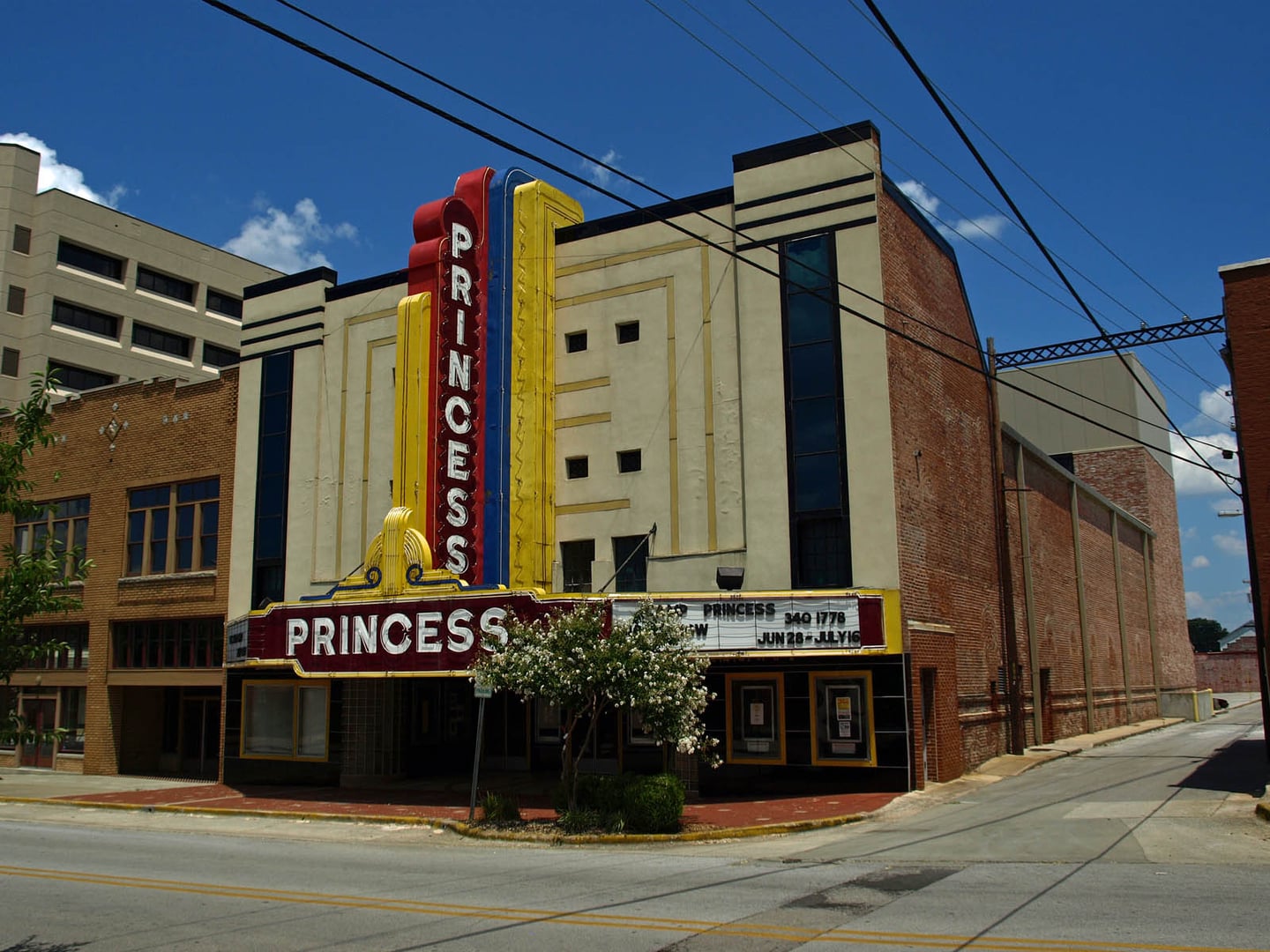
Decatur, AL
The building at 112 Second Ave NE was constructed in 1887 as a livery stable. It was converted to a theater in 1919 and named the Princess Theatre, becoming a central institution in Decatur's downtown. The building was listed on the National Register of Historic Places in 1995 and remains an active performing arts venue.