Est. 1879 · Strand Historic District · Galveston 1900 Hurricane · American Red Cross Relief Headquarters · Historic Preservation
The original Tremont House opened in 1839 in what was then the Republic of Texas, predating statehood by six years. It became a gathering place for Texas political life — Sam Houston reportedly addressed a crowd from the hotel's north gallery in 1861, cautioning of the bloodshed to come if Texas joined the Confederacy. That building burned in a Strand District fire in June 1865 and lay in ruins for years. A second Tremont House opened in 1872 to the designs of architect Nicholas Clayton, a grand four-story structure that served visiting dignitaries until the 1900 hurricane accelerated its decline. It was condemned and demolished in 1928.
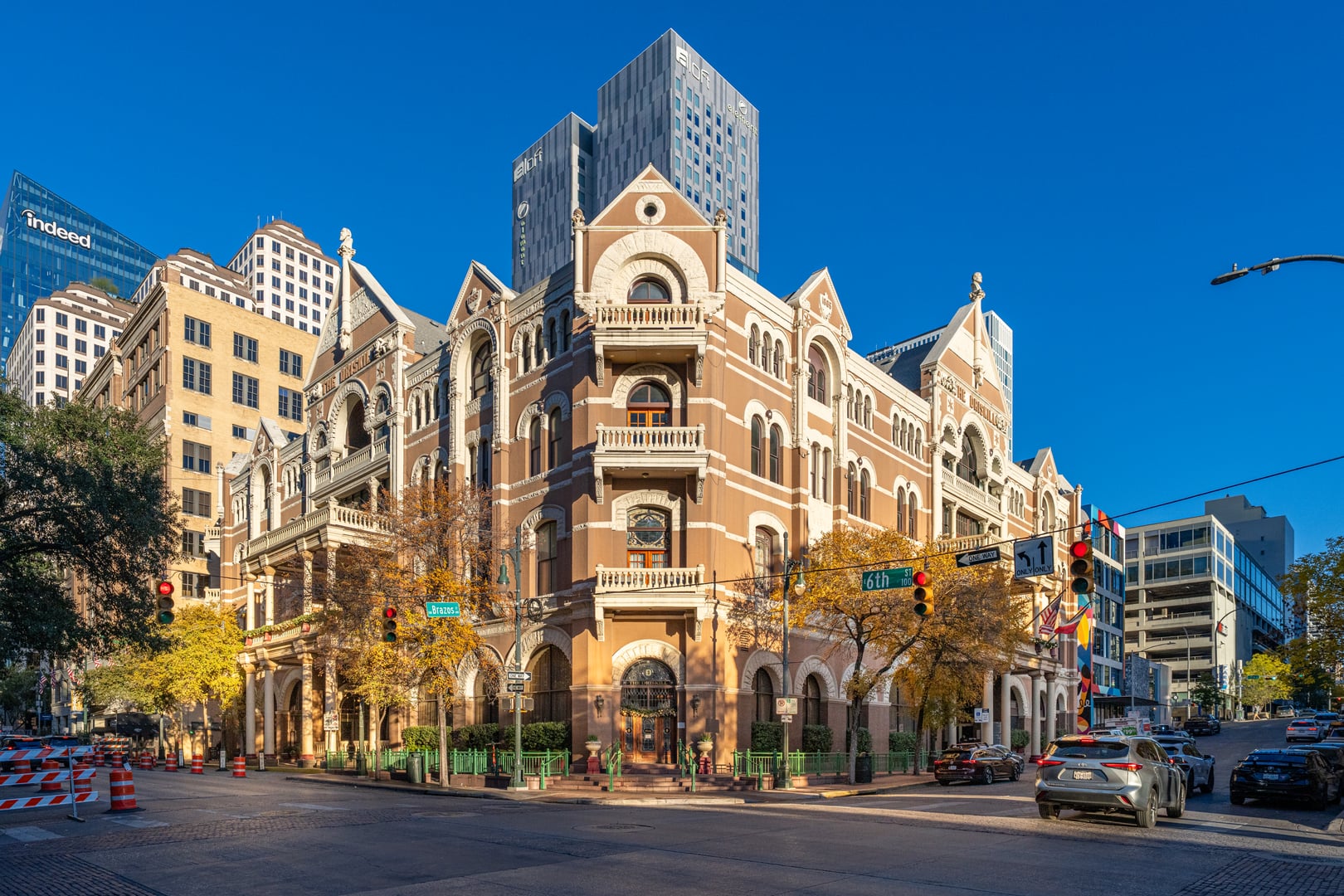
The current building is the 1879 Leon & H. Blum Building, a commercial dry goods warehouse that occupied Ship Mechanic Row in Galveston's Strand District. The building survived the catastrophic 1900 hurricane — the deadliest natural disaster in U.S. history, killing more than 6,000 people. In the storm's aftermath, Clara Barton arrived in Galveston to coordinate American Red Cross relief operations; the Tremont area of the Strand served as a staging ground for those efforts.
The building sat through various commercial uses until George and Cynthia Mitchell acquired it in the early 1980s and began a comprehensive historic preservation campaign in the Strand District. The third Tremont House opened in 1985 as the first major downtown Galveston hotel in sixty years, consciously evoking the name and spirit of its predecessors. Today it operates as a Tribute Portfolio property, with 119 rooms, three food and beverage venues, and Galveston's only rooftop bar.
Sources
- https://www.thetremonthouse.com/history/
- https://ghostcitytours.com/galveston/haunted-galveston/tremont-house-hotel/
- https://texastimetravel.com/directory/tremont-house/
ApparitionsPhantom footstepsUnexplained knockingObject movementElectrical anomalies
The Tremont House carries three named spirits in Galveston ghost-tour tradition, each tied to the building's pre-hotel history or the catastrophe that defined this stretch of the island.
The Civil War soldier appears in the front lobby — described as an armed figure crossing the floor, identifiable mainly by the clatter of boots on the historic flooring. The figure does not interact with observers and moves as if the lobby were something other than what it is.
Lucky Man Sam is said to have won big at gambling and was subsequently murdered in one of the upper rooms. Reports describe a figure with a noticeable limp and a pattern of unexplained knocking from walls and doors near the rooms associated with the story.
A boy called Jimmy is linked to the building's Strand District past rather than the hotel itself. Accounts describe him as visible only at the edge of vision and prone to overturning cups and moving small objects left on surfaces.
A fourth category of reports connects to the 1900 hurricane. During storms that move through Galveston, guests have reported televisions and ceiling fans activating without apparent cause, and staff have documented unexplained sounds from unoccupied rooms. Whether or not one accepts the supernatural framing, these reports form a consistent pattern tied specifically to storm weather — which, in a building that witnessed the deadliest hurricane in American history, is its own kind of record.
Notable Entities
Lucky Man SamCivil War soldierJimmy (boy)
Where this legend is told