Est. 1924 · Austin's first high-rise hotel (1924) · Recorded Texas Historic Landmark · Congress Avenue Historic District · Lyndon B. Johnson 1937 campaign headquarters · Presidents George H.W. Bush and George W. Bush campaign base
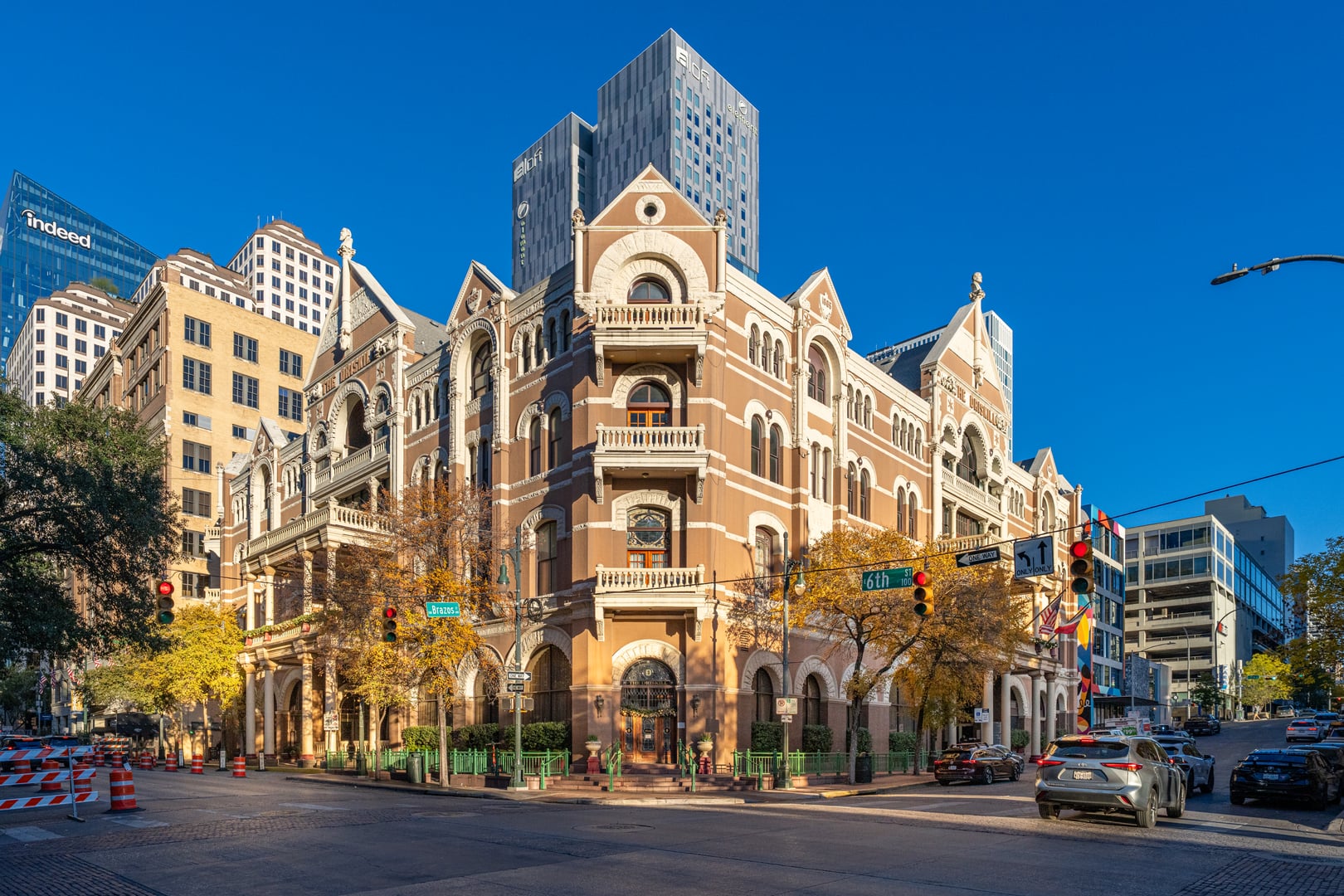
When the Stephen F. Austin Hotel opened on May 19, 1924, it was the tallest building in Austin other than the State Capitol, rising ten stories above Congress Avenue at a construction cost of $600,000 — a sum raised entirely from local investors. The building was originally named 'The Texas,' but the Austin Business and Professional Women's Club mounted a successful campaign to rename it for Stephen F. Austin, reasoning that a more specifically Texan name would give the hotel stronger local identity.
Architect Seth Temple designed the hotel in a Neoclassical style, with a rooftop ballroom terrace that became a central piece of Austin social life. Lyndon B. Johnson made the hotel his campaign headquarters when he won his first race for the U.S. House of Representatives in 1937. Presidents George H.W. Bush and George W. Bush both used the hotel as their Texas campaign base.
In 1938 five additional stories were added to the original ten, bringing the hotel to its current fifteen-story height and making it again one of the taller downtown structures. A major restoration completed in 2000 preserved the Neoclassical exterior detailing and restored the interior public spaces. The hotel is a Recorded Texas Historic Landmark and is listed in the Congress Avenue Historic District. It has operated under the Royal Sonesta brand since December 2020.
Ghost City Tours and other Austin paranormal operators describe the hotel site as the location of a Civil War-era hospital and morgue. That specific claim does not appear in the hotel's official historical documentation, the Texas historical marker, or the Texas Time Travel registry entry, and should be treated as tour-operator tradition rather than documented fact.
Sources
- https://6amcity.com/city/stephen-f-austin-royal-sonesta-hotel-centennial
- https://communityimpact.com/austin/south-central-austin/business/2024/04/18/royal-sonesta-hotel-celebrates-100-years-eyes-more/
- https://texastimetravel.com/directory/stephen-f-austin-royal-sonesta-hotel/
- https://ghostcitytours.com/austin/haunted-austin/royal-sonesta-hotel/
Flashing lights in Room 408Self-opening bathroom doorUnexplained electrical phenomenaCold spots on upper floorsApparitions (ghostly nurses, phantom soldiers — per tour-operator accounts)
The Stephen F. Austin Royal Sonesta Hotel actively markets its paranormal reputation and packages it as 'The Haunted Austin Experience,' making it one of the few Austin hotels with official ghost-tourism programming. The most specific account in circulation involves Room 408. A guest's first-person report documented on Ghost City Tours describes lying down shortly after check-in and watching the room light turn on and begin flashing repeatedly — five or six times — before the bathroom door, which the guest had closed, slowly swung open on its own. The lights then shut off.
Ghost City Tours characterizes the hotel as built over a Civil War hospital and morgue and attributes the paranormal activity to 'spirits from various eras' — including ghostly nurses and phantom soldiers. That foundational historical claim (the Civil War hospital site) is not confirmed in the hotel's centennial documentation, the Texas historical marker text, or the Texas State Historical Association record; the building was constructed in 1924 on a downtown commercial block and the site's earlier history as a hospital has not been independently verified. Paranormal claims deriving from that premise should be treated accordingly.
The self-opening door and flashing lights in Room 408 appear in multiple independent guest reports and represent the most documentable anomaly. Other recurring reports include unexplained electrical activity on upper floors, cold spots, and a general sense of presence that hotel staff and repeat guests associate with the building's age and downtown history.
Where this legend is told