Overnight Stay Booking Required
Overnight Stay in the Former County Jail
Book a room in the 1878 limestone block. Rooms 312, 503, and 517 are commonly cited as the most paranormally active.
- Duration:
- 12 hr
HauntBound archive · catalog record
Reported phenomena, as catalogued
+ 1 further entry on record
An 1878 limestone county jail with an internal third-floor gallows, in use until 1962 and converted to a Holiday Inn Express — where guests still report cold spots and unexplained movement.
120 Camaron St, San Antonio, TX 78205
Research updated May 2026
Age
All Ages
Cost
$$
Standard Holiday Inn Express room rates apply; lobby and history wall are open to non-guests.
Access
Wheelchair OK
Modern hotel interior with elevators and accessible rooms.
Equipment
Photos OK
Est. 1878 · 1878 Romanesque limestone Bexar County Jail · Internal third-floor gallows with trap-door drop for executions · Operated continuously as a jail from 1878 to 1962 · Converted to hotel use in the early 21st century
The Bexar County Jail at 120 Camaron Street was constructed in 1878 in a Romanesque revival style of locally quarried limestone. The building served as the principal Bexar County jail facility from 1878 until 1962, when the county opened a modern detention center elsewhere in downtown San Antonio. The 1878 structure was a typical 19th-century county jail layout, with administrative offices and a sheriff's residence on the lower floors and cell blocks on the upper floors.
A distinguishing feature of the jail was an internal gallows on the third floor, with a trap-door drop through the floor used for executions. According to the hotel's own history materials and ghost-tour operators, San Antonio's last public hangings were carried out at this facility before public executions ceased in Texas. The exact figure for executions performed at the site is not consistently documented in primary sources accessible during this research.
After the jail closed in 1962, the building passed through several institutional uses. In the early 2000s it was redeveloped for hotel use; the building was rehabilitated around 2002, retaining the limestone exterior facade, and converted in stages over several years into modern hotel rooms. It first operated as a Comfort Inn before being rebranded as a Holiday Inn Express. Today it is the Holiday Inn Express San Antonio N-Riverwalk Area.
Sources
Because the building operated as a county jail with an active gallows for 84 years, paranormal lore associates its hauntings with the prisoners who died on the third floor and the inmates who served — or died of illness — in the original cell blocks. According to Ghost City Tours and the Holiday Inn Express N-Riverwalk's own history page, the most consistently reported phenomena are: sudden temperature drops in specific rooms (most often cited as 312, 503, and 517), unexplained tactile sensations on guests' arms and backs while alone, doors closing without anyone in the corridor, and items moved or rearranged overnight in occupied rooms.
The hotel actively engages with its haunted reputation: the lobby includes historical interpretation of the jail era, and staff regularly answer guest questions about the gallows location. Some ghost-tour operators report orb captures, EVP whispers, and shadow figures near the third-floor corridors that align with the original gallows position.
None of the reported phenomena are independently scientifically corroborated; reports are guest-experiential and tour-collected. Specific room-number patterns are persistent across multiple independent sources, which is a more durable signal than isolated single-source claims.
Book a room in the 1878 limestone block. Rooms 312, 503, and 517 are commonly cited as the most paranormally active.
Some links on this page may earn HauntBound a small commission when you book, at no extra cost to you. Our editorial picks are independent. Full disclosure
Every HauntBound history is researched from documented sources. We clearly separate verified historical fact from paranormal folklore.
Free Guide
10 verified stops, rated for families, mapped in order. Free.
One email to confirm, then the guide link. Unsubscribe anytime.
Louisville, KY
The Old Jefferson County Jail at 514 West Liberty Street was built in 1905 in the Chicago architectural style by D.X. Murphy & Bros. It replaced an 1844 jail on Jefferson Street that had become structurally derelict. The building incarcerated prisoners until the 1980s, was converted to an office complex in 1983, and today houses the Commonwealth's Attorney, the Circuit Court Clerk, and the Archives and Records Department.
Roby, TX
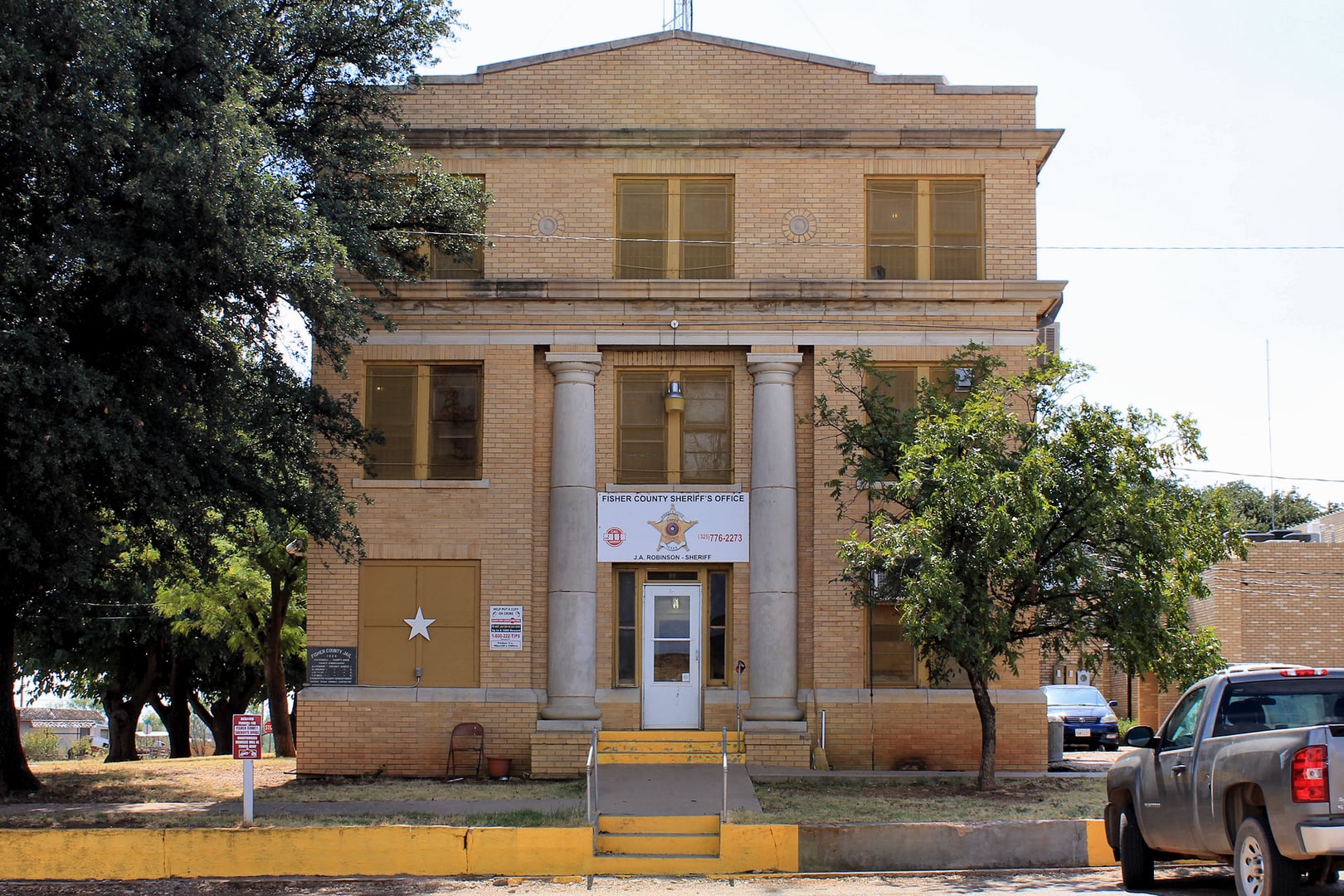
Roby has served as the county seat of Fisher County, Texas, since the 1880s, and the county's first stone jail was built in 1892. A brick jail replaced the original stone structure in 1926, then served as the primary detention facility until 2016, when a new modern jail opened. The 1926 brick jailhouse was subsequently designated a historic landmark and remains part of the active Fisher County Sheriff's Office complex.
Richmond, TX
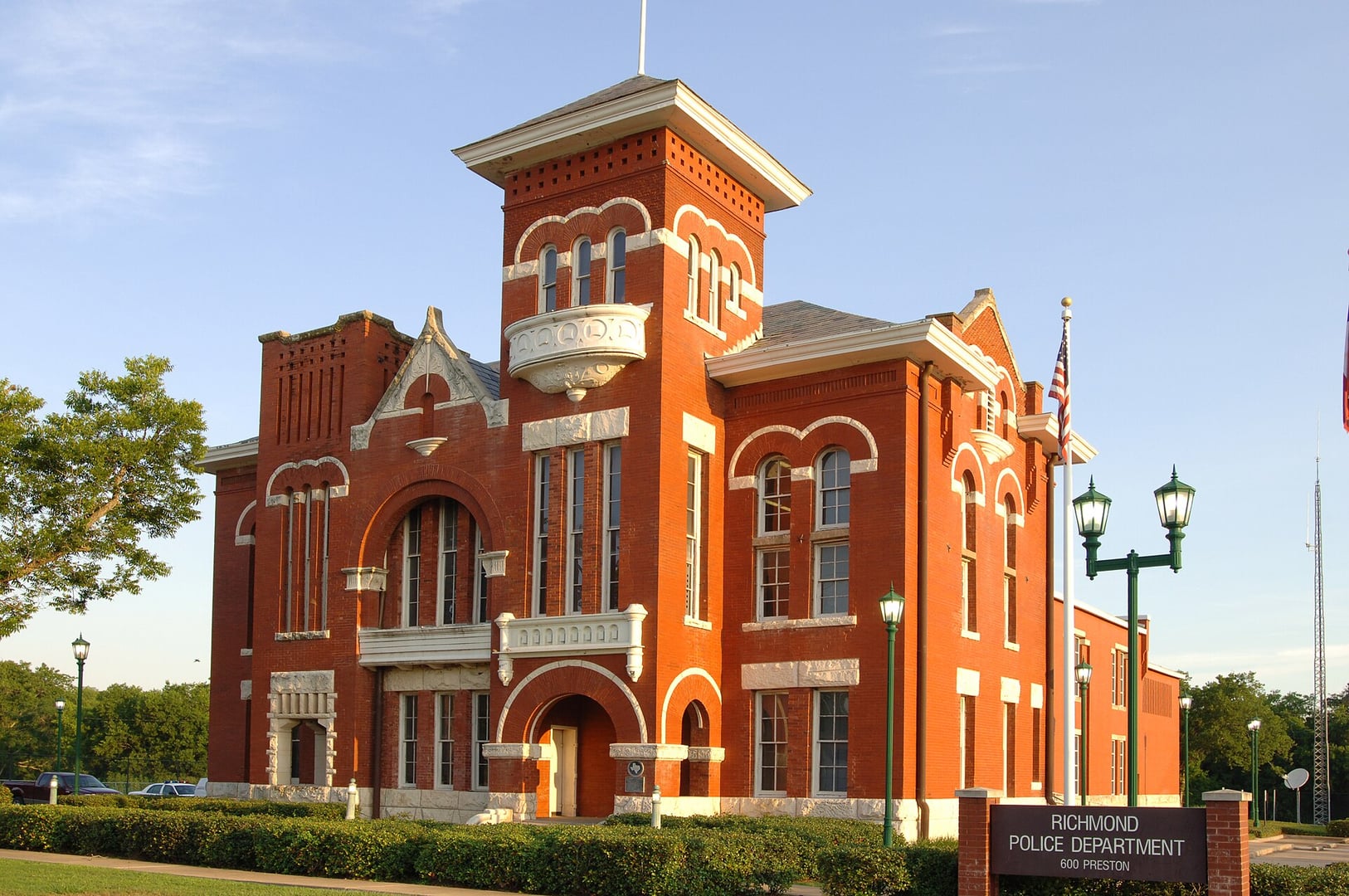
The Old Fort Bend County Jail at 600 Preston Street in Richmond, Texas was completed in 1897 as the third county jail. The Romanesque Revival building, designed for both incarceration and the sheriff's family residence, served until 1955 and was renovated in 1996 to house the Richmond Police Department. A Texas Historical Commission marker was installed in 1985.