Outdoor Exploration
Campus Exterior View
Mays Hall's exterior is visible from campus walkways. The building's basement — the former hospital morgue — is kept locked and inaccessible to the public.
- Duration:
- 15 min
HauntBound archive · catalog record
Reported phenomena, as catalogued
A Stephen F. Austin State University dormitory that served as an infirmary and later a hospital with a basement morgue before its conversion to student housing — the locked basement is the focus of student reports.
519 Horseshoe Dr, Nacogdoches, TX 75962
Research updated September 2026
Age
All Ages
Cost
Free
Public university campus; exterior accessible to visitors. Basement is locked and not open to the public.
Access
Wheelchair OK
Flat paved university campus
Equipment
Photos OK
WWII military training facility infirmary · Former campus hospital with active morgue · Contains 1940s bomb shelter in basement · Part of SFA campus repurposing history
Before Stephen F. Austin State University expanded into its postwar civilian form, portions of the campus were used for military training during World War II. Mays Hall served as the infirmary for that military training facility, providing medical care for trainees on the grounds.
As the campus transitioned back to full civilian operation, the building was repurposed as a campus hospital. The basement housed a morgue used to hold the bodies of patients who died on the property. A separate section of the basement was built in the early 1940s as a bomb shelter — a feature of many institutional buildings constructed during wartime. Campus lore holds that a false wall in the basement separates the old morgue from the bomb shelter, though no documented investigation has confirmed the specific layout.
At some point the building was converted to student residential use, and the basement was sealed with a lock. Current and former SFA students have described the building as one of the most unusual dormitory histories on the campus, noting that the building's previous functions have left a physical imprint in the architecture — the locked lower level, the rumored false wall, and the general layout of a structure designed around medical rather than residential use.
Sources
Paranormal accounts from Mays Hall center almost entirely on the basement. Unlike the specific apparitional reports at Griffith Hall nearby, the Mays Hall accounts are primarily atmospheric — students describe an overwhelming sense of negativity, sadness, and 'heaviness' in the lower level that they distinguish from ordinary discomfort in an old, dark room.
Texas Escapes and the Her Campus SFA publication each cite student accounts of the basement generating a residual distress tied to what they describe as the energy of confinement or medical trauma. Several students who gained access before the basement was fully secured report the feeling intensifying as they approached the area near the false wall — the rumored boundary between the former morgue and the 1940s bomb shelter.
The sealed nature of the basement has amplified rather than dampened the folklore: the locked door prevents verification of the false-wall claim and ensures that each student generation encounters the building through rumor rather than inspection. The building has been used as a haunted house event space by student organizations during Halloween season, which has further embedded the hospital-morgue narrative in campus culture.
Where this legend is told
Mays Hall's exterior is visible from campus walkways. The building's basement — the former hospital morgue — is kept locked and inaccessible to the public.
Some links on this page may earn HauntBound a small commission when you book, at no extra cost to you. Our editorial picks are independent. Full disclosure
Every HauntBound history is researched from documented sources. We clearly separate verified historical fact from paranormal folklore.
Free Guide
10 verified stops, rated for families, mapped in order. Free.
One email to confirm, then the guide link. Unsubscribe anytime.
Weatherford, TX
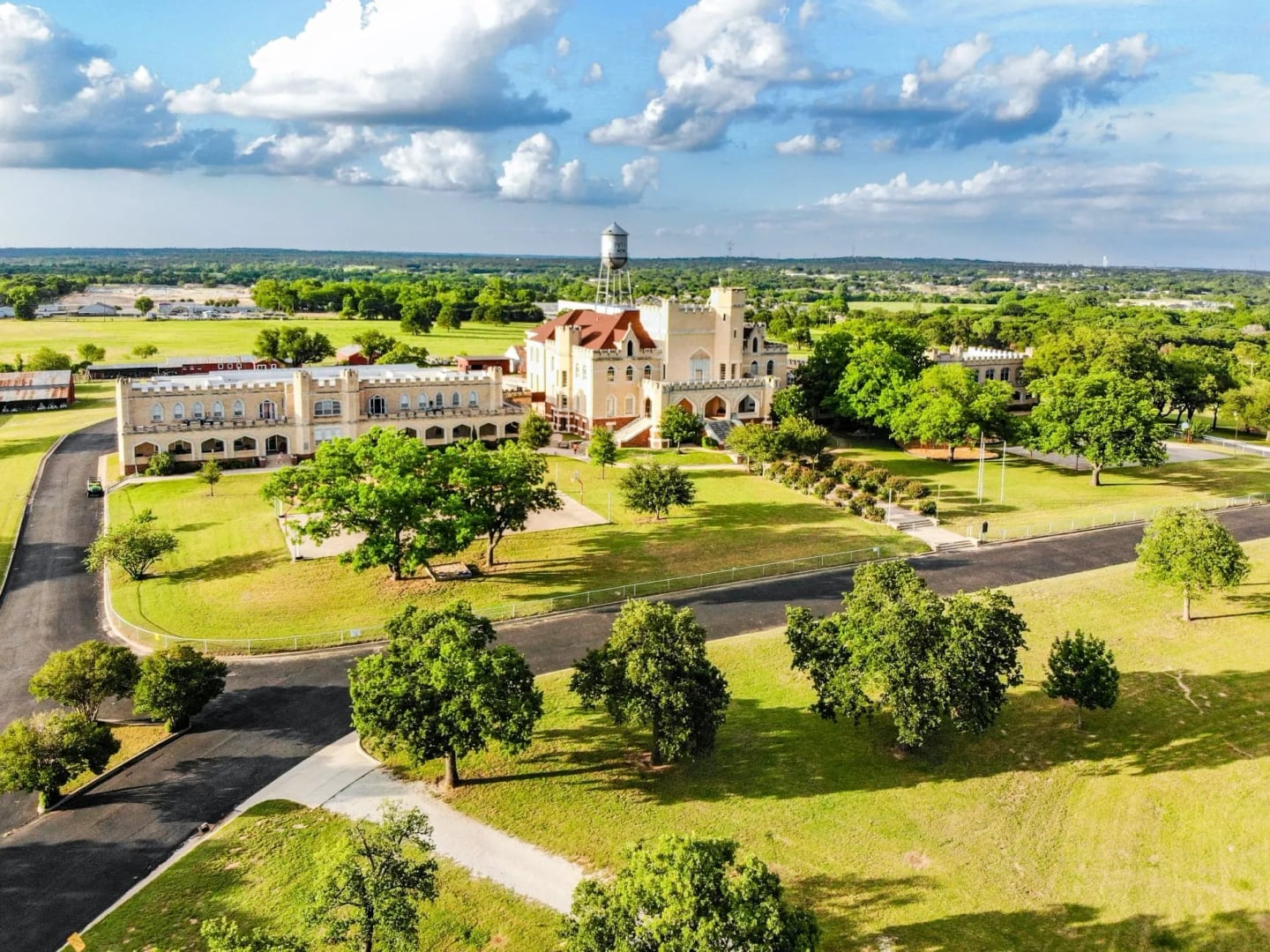
The Texas Pythian Home opened March 1, 1909, as a 52-room residential facility for widows and orphaned children of Knights of Pythias members. The Moorish-influenced brick structure in Weatherford was funded by the fraternal order and served as both school and home for over six decades before transitioning to its current use as a senior-living community.
Hot Springs, AR
The United States Army-Navy General Hospital at Hot Springs opened in 1887 as the nation's first joint Army-Navy medical facility, built to take advantage of the city's therapeutic mineral springs. Rebuilt as a 412-bed brick complex in the early 1930s, it treated more than 100,000 veterans during World War II before closing permanently in 2019.
Newtown, CT
Fairfield Hills Hospital opened in 1931 in Newtown as Connecticut's second state psychiatric hospital, built in a Georgian Colonial style across 16 interconnected brick buildings. At its peak, the campus held approximately 4,000 patients. The facility was known for its use of psychosurgery — over 100 lobotomies performed in the first year after lobotomy was introduced — as well as electroconvulsive therapy and insulin shock therapy. The hospital closed in 1995; the campus was listed on the National Register of Historic Places in September 2024.