Est. 1866 · One of the oldest commercial structures in downtown Austin · German immigrant commercial heritage along Guadalupe Street · Bricked-over tunnel openings in basement · Proximity to Austin's 1880s Guy Town district
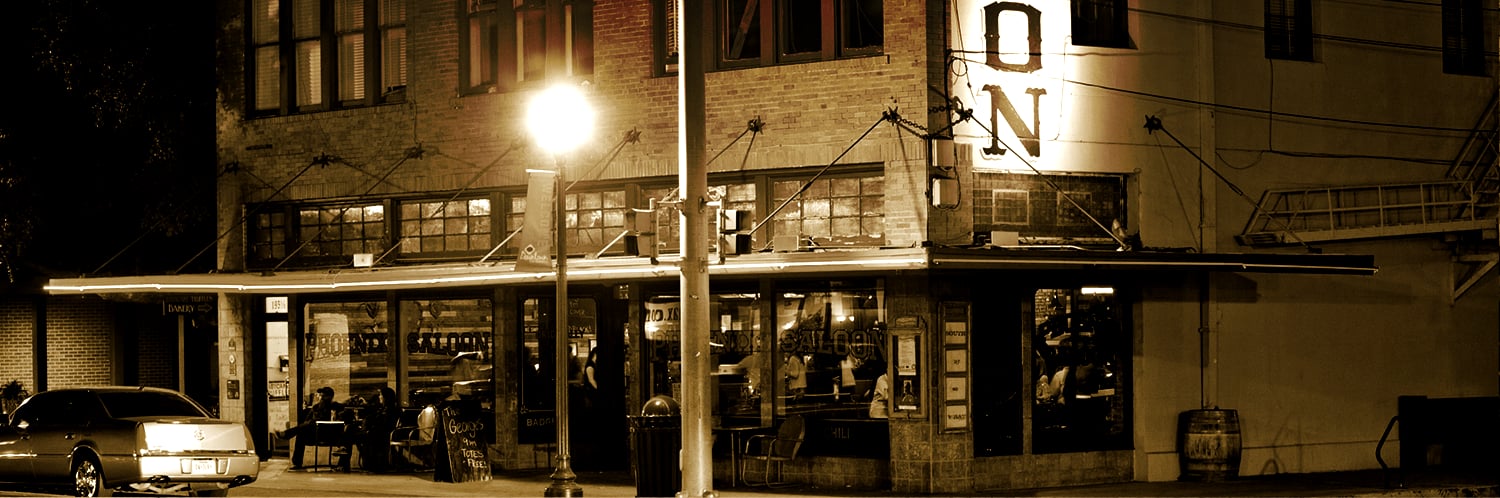
Rudolph Bertram arrived in Austin from Germany in 1853 and purchased the city block bounded by 16th Street and Guadalupe sometime between 1860 and 1862. By 1866 he had built the limestone commercial structure that still stands. The ground floor housed a general merchandise store, saloon, blacksmith shop, and wagon yard serving farmers and traders along Georgetown Road (now Guadalupe Street). In 1880 Bertram opened a grocery business and saloon on the first floor. The Bertram family's living quarters were above.
The building's history carries multiple losses within the Bertram household. Carl, born in 1864, died in 1866. Two daughters died within six days of each other in December 1879. Their son Rudolph, age 10, died of typhoid fever in October 1880 in an upstairs quarantine room; Oakwood Cemetery records confirm his burial. The 1880s also coincided with the peak of Austin's 'Guy Town' red-light district, which operated in the neighborhood to the south.
Legend holds that a network of underground tunnels connected the Bertram basement to other buildings in the area, including possibly the Driskill Hotel. The City of Austin officially denied for decades that such tunnels existed, but when the Clay Pit converted the basement, workers found bricked-over openings that remain visible today.
The Clay Pit opened in December 1998 and has operated continuously as a nationally recognized contemporary Indian restaurant. The building is described as one of the oldest commercial structures remaining in downtown Austin.
Sources
- https://paranormaltraveler.com/4605/the-clay-pit-hauntings-beneath-austins-historic-bertram-building/
- https://communityimpact.com/central-austin/news/2018/11/21/clay-pit-celebrates-20-years-downtown-this-december/
- https://claypit.com/our-story
Child's face at second-floor windowsCold spots and battery drain in the basement and women's restroomTemperature drops near the basement stairsPhantom saloon soundsBricked-over tunnel openings in the basement
The most frequently reported presence in the Bertram Building is that of a child. Paranormal investigators and Austin ghost tour operators attribute it to Rudolph Bertram Jr., the 10-year-old who died of typhoid fever in October 1880 in an upstairs quarantine room. Reports include a child's face visible at second-floor windows from the street and unexplained temperature drops and equipment anomalies in the upper areas of the building.
The basement carries a separate legend. During the Guy Town era of the 1880s, a woman was reportedly murdered in the basement, strangled by an unknown assailant. She is referred to in Austin ghost tour documentation as the Scarlet Lady. Reports from the women's restroom — located adjacent to the basement stairs — describe cold spots, battery drain in electronic devices, and sudden temperature changes attributed to her presence.
The bricked-over tunnel openings visible in the Clay Pit's basement are a physical feature that anchors the haunting narrative. Whether the tunnels once connected to the State Capitol, the Driskill Hotel, or other nearby buildings has never been officially confirmed, but the sealed mouths are real and visible. Austin Ghosts and the Paranormal Traveler both document visitor experiences in the basement area, and the KXAN local news station covered the hauntings as a Halloween feature. Austin's PBS 'Strange Town' series included the Clay Pit in a 2015 episode.
Notable Entities
Rudolph Bertram Jr. (died 1880, age 10, typhoid — Oakwood Cemetery records confirm burial)The Scarlet Lady (unnamed murder victim, 1880s — lore attribution only)
Media Appearances
- Strange Town (PBS Austin) (television, 2015)
Where this legend is told