Guided Tour Booking Required
Concert or Event Attendance
Attend a concert, comedy show, or event in the restored Meso-American-themed auditorium.
- Duration:
- 2.5 hr
HauntBound archive · catalog record
Reported phenomena, as catalogued
+ 1 further entry on record
A 1926 Meso-American-themed movie palace by Meyer & Holler, bombed during a 1932 projectionists' strike, and now reportedly haunted by a phantom projector operator.
104 N St Mary's St, San Antonio, TX 78205
Research updated May 2026
Age
All Ages
Cost
$$
Ticket prices vary by show; the theater is operated as a concert and event venue.
Access
Wheelchair OK
Accessible seating; historic interior with grand staircase.
Equipment
No Photos
Est. 1926 · Opened June 4, 1926 — Meyer & Holler's San Antonio Meso-American movie palace · Site of the May 4, 1932 sulfur-bomb attack during the projectionists' labor dispute · Listed on the National Register of Historic Places October 1992 · Operated by Live Nation since 2015 as a concert venue
The Aztec Theatre opened on June 4, 1926, on North St Mary's Street in downtown San Antonio. It was designed by Los Angeles architectural firm Meyer & Holler — best known for Grauman's Egyptian and Chinese Theatres in Hollywood — in collaboration with constructors Robert Bertrum Kelly and H.C. Woods, and financed by Commerce Realty. The interior is an elaborately ornamented Meso-American fantasy, with motifs drawn from Aztec, Maya, and other Mesoamerican cultures applied to capitals, friezes, and the proscenium.
On April 18, 1932, thirty union projectionists at downtown theaters in San Antonio were fired after going on strike for additional staffing; the theaters replaced them with nonunion workers from out of town. On May 4, 1932, the Aztec was struck by a sulfur (stench) bomb on the lower level, burning six moviegoers, two seriously. The bombing was the fourth in a series of theater bombings in San Antonio that spring, part of a national wave of labor unrest at movie houses during the Great Depression. Suspicion fell on the dismissed projectionists, but no one was ever arrested.
The theater closed as a movie house in the late 20th century, was nearly demolished, and was rescued in a major preservation campaign. It was listed on the National Register of Historic Places in October 1992 and reopened after restoration as a live-events venue. In 2015, Live Nation acquired the building and has operated it since as a concert, comedy, and corporate-event venue.
Sources
According to Ghost City Tours and RJA Ghost Tours, the most consistently named entity at the Aztec is a phantom projector operator, reported by staff and contractors as a presence in the projection booth and adjacent corridors. The figure is said to interfere with equipment, flip switches, and create cold spots near the projector windows. Tour operators link the lore to the 1932 strike and bombing: among the moviegoers seriously burned in the May 4, 1932 sulfur-bomb attack, several were treated at the scene, and the wider strike resulted in a small number of San Antonio theater deaths in subsequent incidents.
Visitors also report phantom applause from empty seats during sound checks, shadowy figures wandering the balconies, and what staff describe as a 'heavy' atmosphere on quiet nights between events. A folkloric rumor that the building is 'cursed' to drive successive owners to sell circulates among local ghost tour operators; like most claims here, it is anecdotal and tour-collected rather than independently verified.
All paranormal claims at the Aztec are experiential; the 1932 bombing itself is historically documented and provides the narrative anchor.
Notable Entities
Attend a concert, comedy show, or event in the restored Meso-American-themed auditorium.
Some links on this page may earn HauntBound a small commission when you book, at no extra cost to you. Our editorial picks are independent. Full disclosure
Every HauntBound history is researched from documented sources. We clearly separate verified historical fact from paranormal folklore.
Free Guide
10 verified stops, rated for families, mapped in order. Free.
One email to confirm, then the guide link. Unsubscribe anytime.
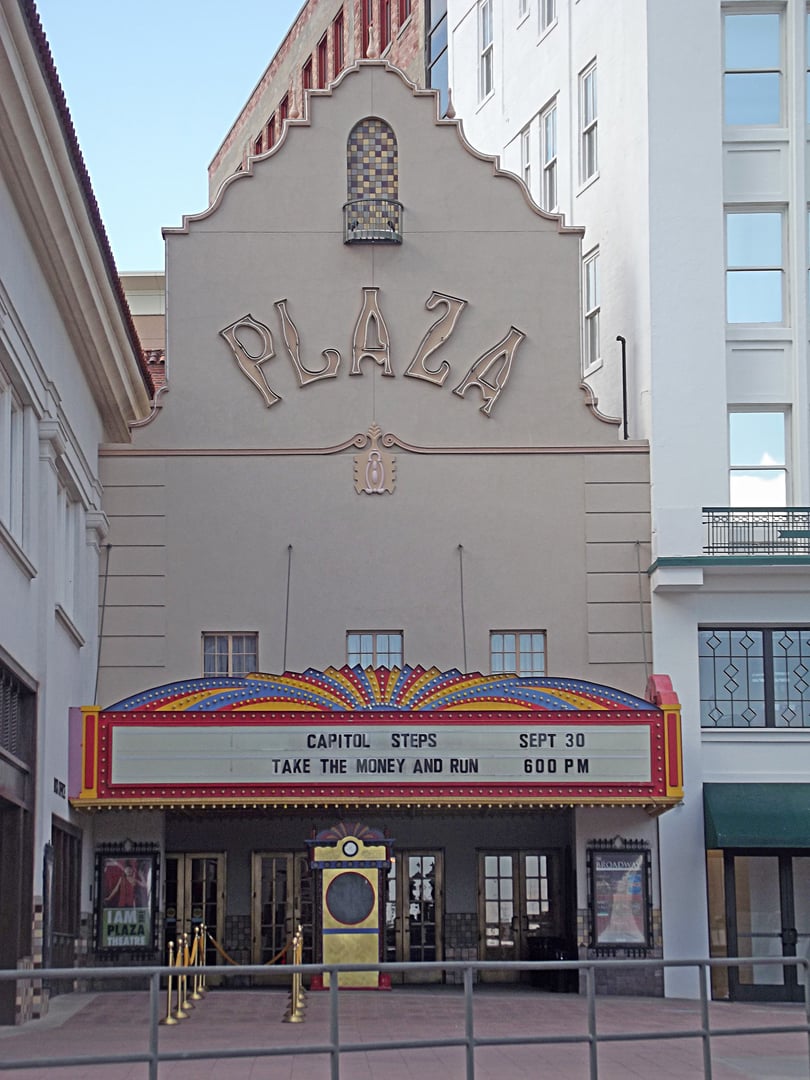
El Paso, TX
The Plaza Theatre opened September 12, 1930 on Pioneer Plaza in downtown El Paso. Developer Louis L. Dent commissioned the Spanish Colonial Revival movie palace in 1927, and the inaugural night drew a crowd of 2,410. Its lavish interior was designed to evoke 'the fabled beauty of Old Spain and the charm of Old Mexico.' After decades of decline, the theatre was extensively restored and reopened as a performing-arts venue, now home to the Plaza Classic Film Festival and a wide range of touring performances.
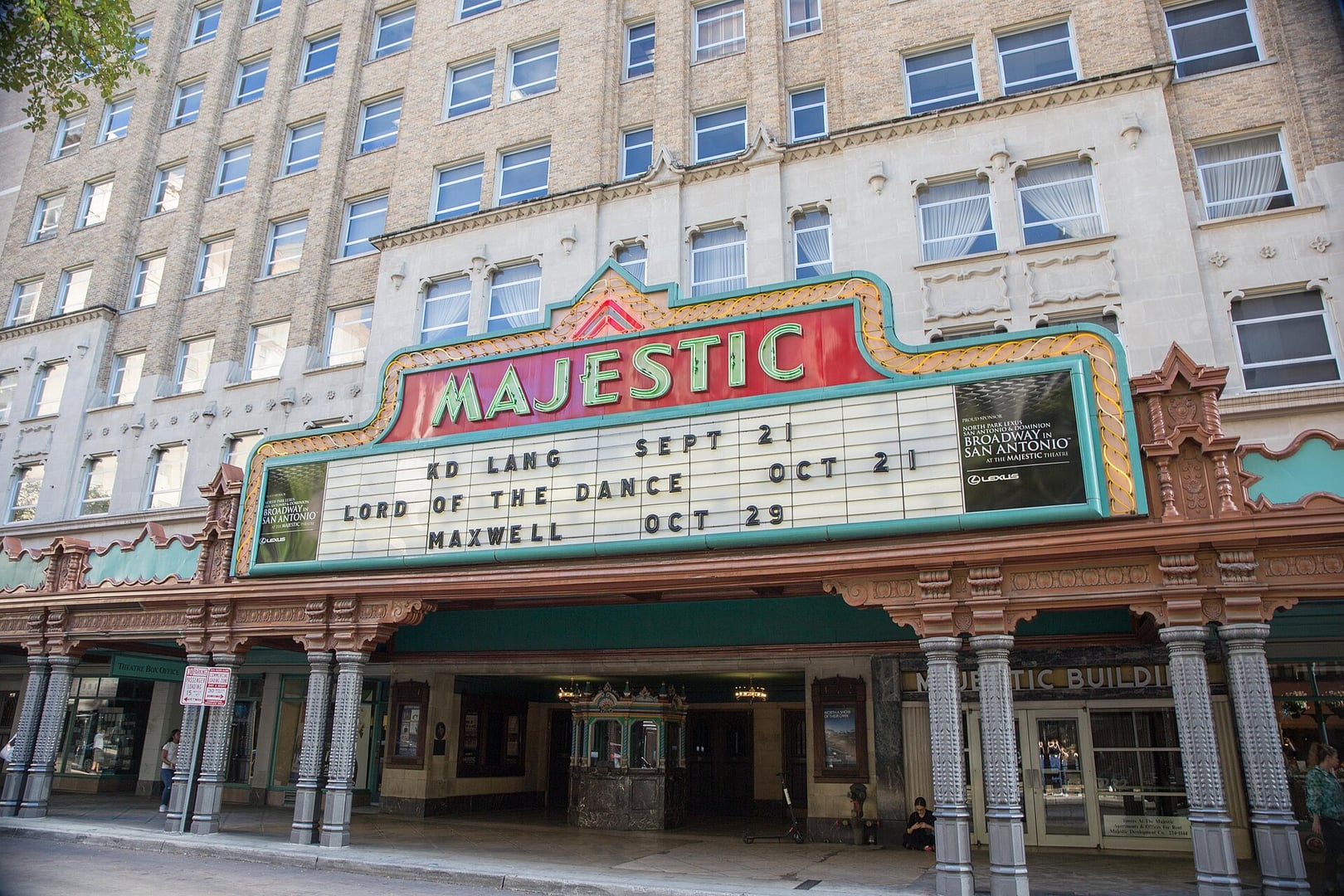
San Antonio, TX
Designed by atmospheric-theater pioneer John Eberson for Karl Hoblitzelle's Interstate Theatres and opened June 14, 1929, the Majestic was the first fully air-conditioned theater in Texas. With 2,264 seats, an elaborate Mediterranean-village interior, and a star-and-cloud ceiling, it is a National Historic Landmark and is operated today by the Ambassador Theatre Group.
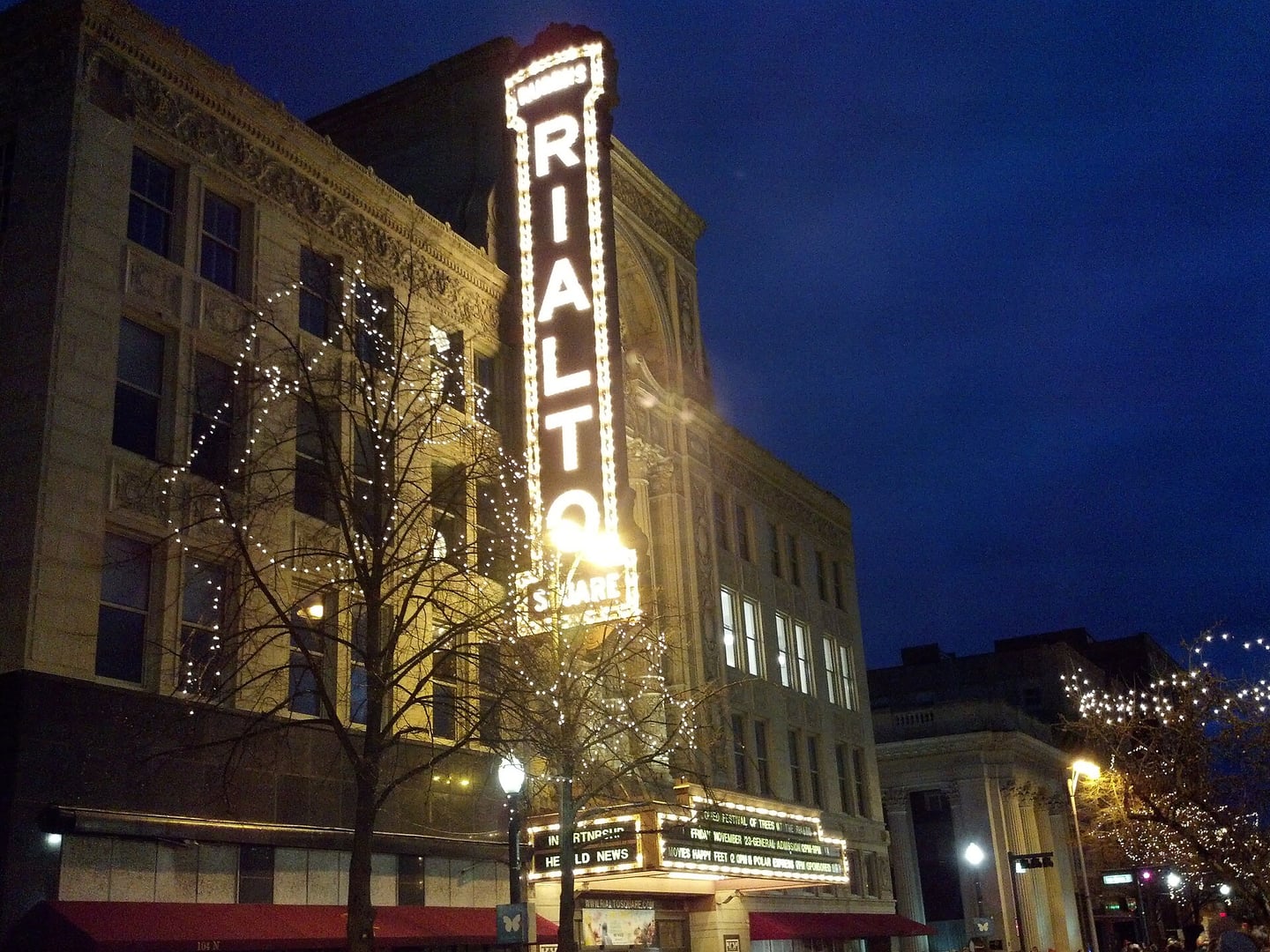
Joliet, IL
The Rialto Square Theatre opened May 24, 1926, designed by Chicago firm Rapp & Rapp for the six Rubens brothers. Its Neo-Baroque interior — modeled in part on the Hall of Mirrors at Versailles — earned it a place on the American Institute of Architects's '150 Great Places in Illinois' and a listing on the National Register of Historic Places.