Est. 1801 · Built 1801 by Col. Thomas Lloyd Halsey, French consular agent and shipping merchant · One of the finest surviving Federal-style mansions on College Hill · Literary model for the Ward family home in H.P. Lovecraft's 'The Case of Charles Dexter Ward' (1927) · Documented as a fixture of Providence literary and ghost-tour traditions
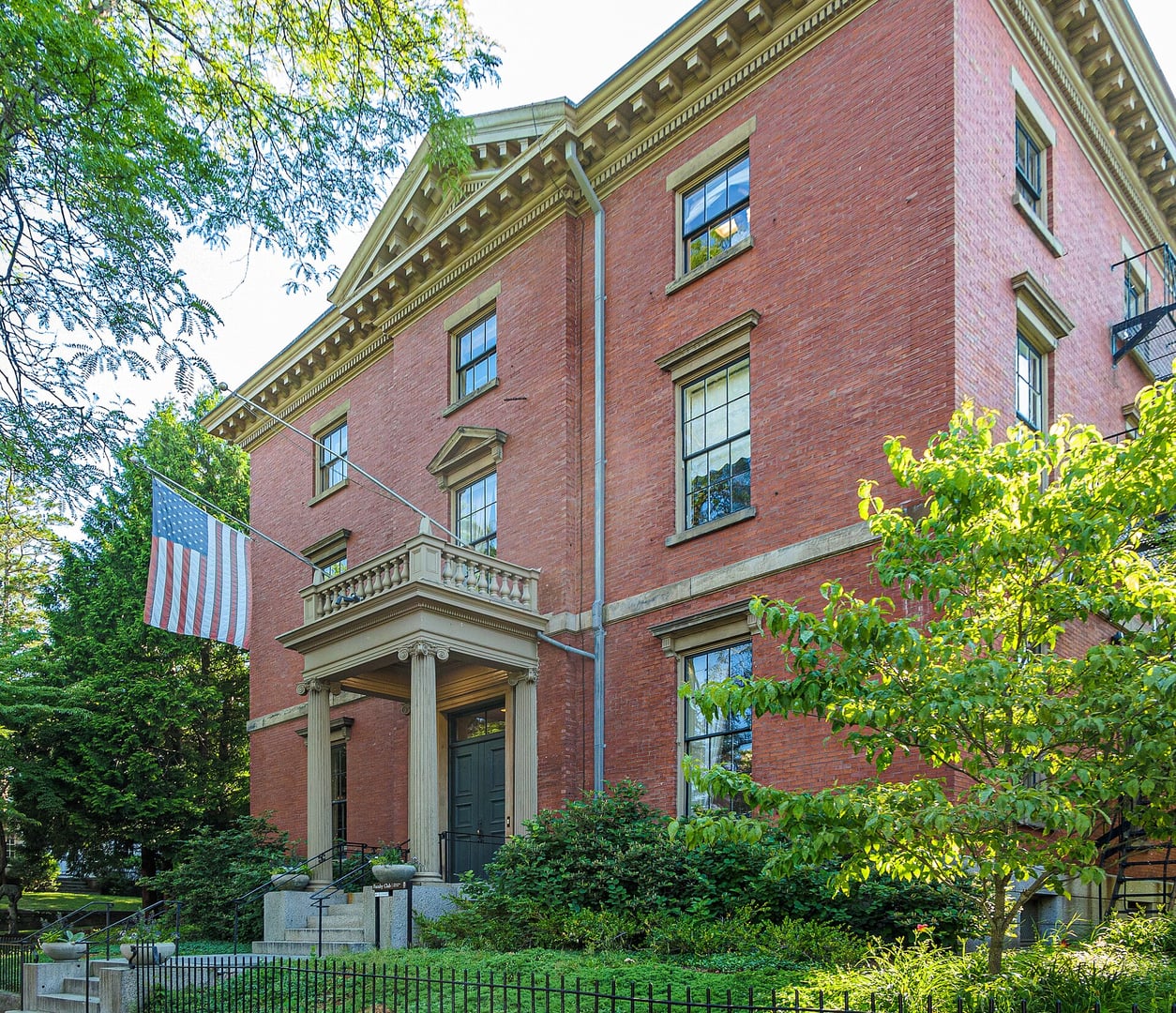
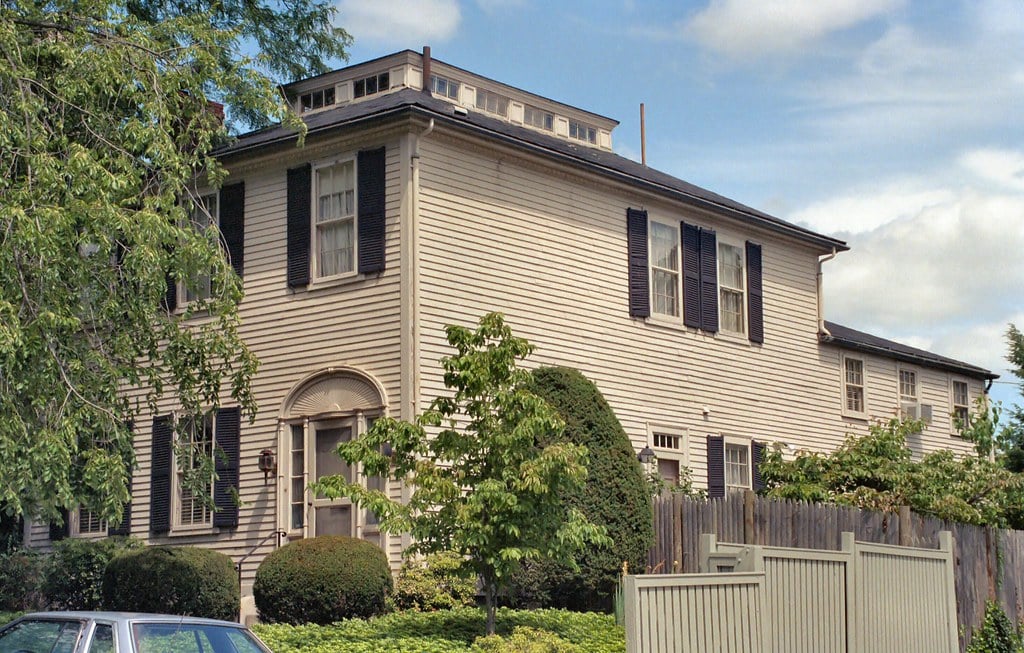
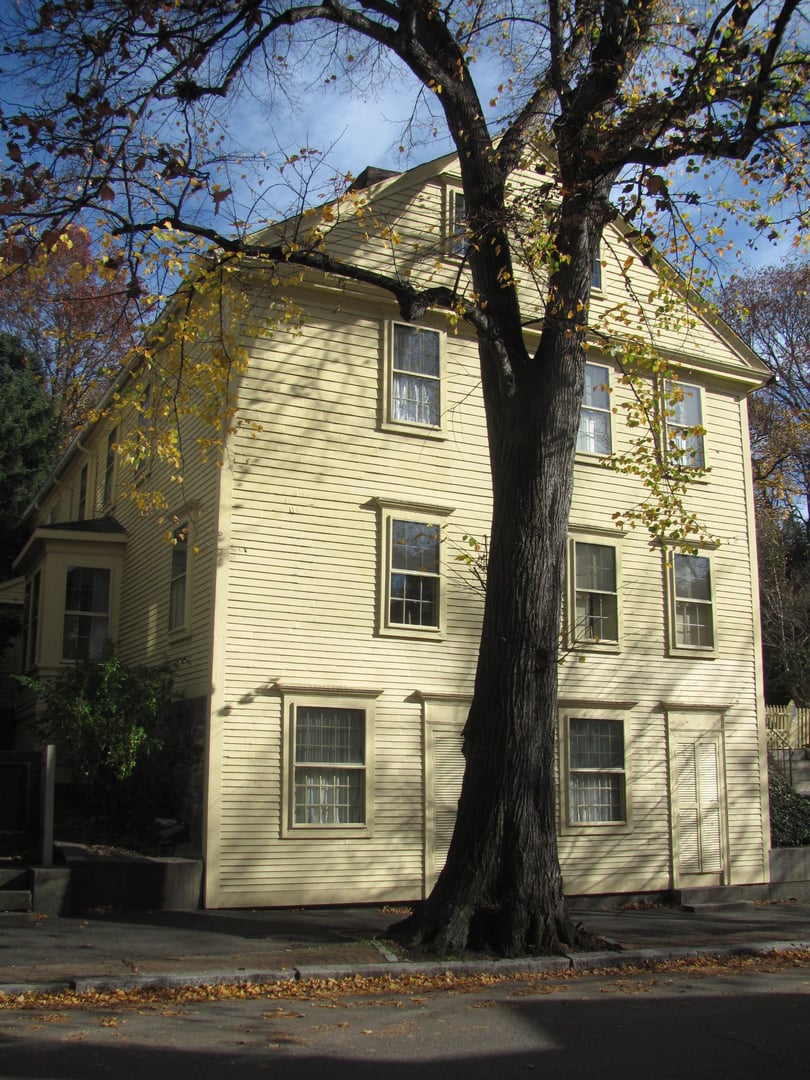
The Thomas Lloyd Halsey House at 140 Prospect Street was built in 1801 by Colonel Thomas Lloyd Halsey, a wealthy Providence shipping merchant who served as French consular agent in Rhode Island during the Revolutionary era. The Federal-style brick mansion sits on the crest of College Hill above the Providence River and is documented by the Providence Preservation Society as one of the finest surviving Federal houses on the East Side.
Halsey's son, known locally as 'Wild Tom' Halsey, reportedly kept live terrapins in the cellar — a detail that survived in family lore and would later resurface in H.P. Lovecraft's correspondence about the building's supposed haunting. The house passed through several owners over the 19th and 20th centuries and was eventually subdivided into apartments, a use it retains today.
The Halsey House is most celebrated as the literary model for the Ward family home in Lovecraft's novel 'The Case of Charles Dexter Ward,' written in 1927 and published posthumously in 1941. Lovecraft renumbered the building as 100 Prospect Street in the novel, but the physical description matches 140 Prospect exactly, and Lovecraft's correspondence makes the source explicit. William Lippitt Mauran, who lived in the Halsey house and was famously wheeled in a carriage in front of it, has been identified by Lovecraft scholars as a possible real-world model for the character Charles Dexter Ward.
In 2018 the property was acquired by Joseph Paolino Jr. of Paolino Properties, who continues to operate it as residential apartments. The exterior is preserved largely as Lovecraft would have seen it during his lifetime in Providence.
Sources
- https://guide.ppsri.org/property/thomas-lloyd-halsey-house
- https://www.hplovecraft.com/creation/sites/pics.aspx?id=halsey
- https://pbn.com/college-hill-mansion-with-lovecraft-connection-bought-by-paolino114999/
- https://paolinoproperties.com/portfolio/halsey-house/
- https://en.wikipedia.org/wiki/The_Case_of_Charles_Dexter_Ward
Early-20th-century haunting reputation noted in H.P. Lovecraft's 1925 correspondenceAtmospheric Lovecraftian associations — site of the fictional Ward necromancy
According to H.P. Lovecraft's preserved correspondence (HPLovecraft.com) and the Providence Preservation Society's architectural guide, the Halsey House's haunted reputation dates at least to the mid-1920s. In August 1925, Lovecraft's Aunt Lillian Clark wrote to him in New York with an anecdote about the Halsey House being haunted. Lovecraft's reply survives: 'So the Halsey house is haunted! That's where Wild Tom Halsey kept live terrapins in the cellar — maybe it's their ghosts. Anyway, it's a magnificent old mansion, & a credit to a magnificent old town!'
The quip became part of Lovecraft lore and is repeated by Providence Business News (PBN), HPLovecraft.com, and the Providence Preservation Society in their writeups of the building. While Lovecraft framed the haunting joke-fully, he was clearly familiar enough with the local tradition to use the house as the literary basis for his Ward family home two years later in 'The Case of Charles Dexter Ward,' a novel whose plot centers on a Providence ancestor's necromantic experiments resurrected by a descendant in the same Prospect Street mansion.
No independent paranormal investigation of the building has been published; the lore here is primarily literary and tour-tradition. The Halsey House appears on the official Lovecraft Walking Tour of College Hill and remains a frequent stop on Providence ghost tours. Because it is a strict private apartment building, all paranormal interest must be appreciated from the public sidewalk on Prospect Street.
Notable Entities
Unspecified 'ghost' referenced in 1925 Lovecraft-family correspondence